Enliven Therapeutics’ Leukemia Drug Shows Promise in New Study

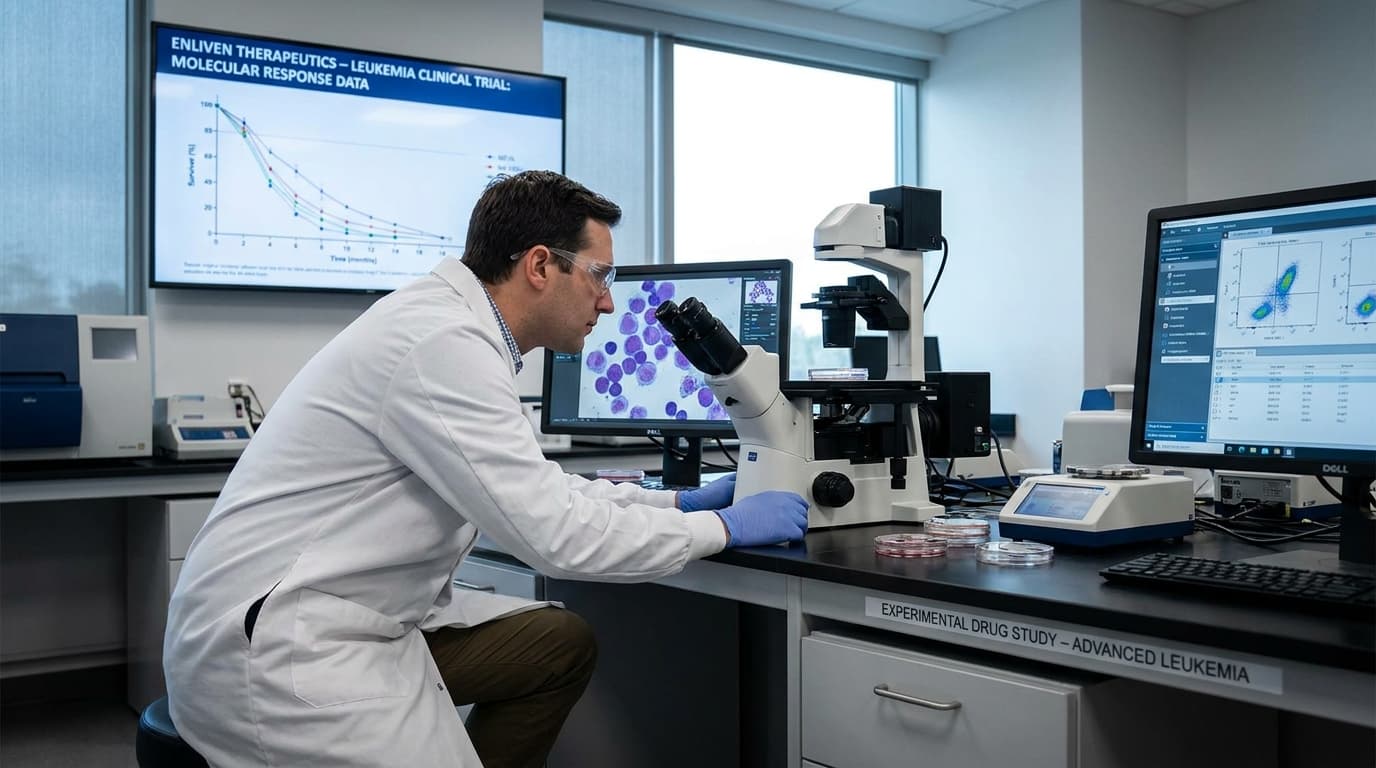
Initial results from Enliven Therapeutics point toward progress in targeted leukemia treatment, as its experimental drug achieved notable molecular responses in advanced-stage patients. Experts believe this may signal new directions for future leukemia care while highlighting ongoing challenges in the development and clinical validation of precision oncology therapies.
The landscape of cancer research and treatment is rapidly evolving, as breakthrough therapeutic strategies start to reshape the outlook for patients with even the most challenging diagnoses. Among these advances, new data from Enliven Therapeutics has ignited considerable interest by showcasing meaningful molecular responses in a significant subset of patients with advanced leukemia—a disease that has long resisted durable solutions from conventional chemotherapy or broader-spectrum treatments.
Targeted Therapies: Redefining Expectations in Leukemia
Leukemia, a complex group of blood cancers, often presents particular challenges for clinicians and researchers, owing to its genetic variability and rapid progression. In recent years, a growing focus on targeted therapies has ushered in a new era, using molecular and genetic insights to design drugs that interfere with the disease at its source. Such precision approaches aim to reduce harmful side effects associated with standard chemotherapies and, most critically, improve outcomes by striking at cancer’s biological underpinnings.
Enliven Therapeutics’ drug fits into this strategic framework. According to recently unveiled study results, this experimental medicine managed to trigger molecular responses in nearly half the patients participating in a clinical trial for advanced leukemia. While the specific drug and genetic targets have not been expressly detailed in the headline or snippet, industry experts are closely watching how these early results might point the way towards more effective, individualized cancer treatments.
Why Molecular Responses Matter
In cancer research, a “molecular response” typically refers to a measurable biological effect at the cellular or genetic level—such as the suppression of cancer-driving genes or the restoration of healthy function in critical signaling pathways. For leukemia, where malignant cells often carry unique molecular signatures, achieving such a response suggests an agent’s ability to disrupt the disease at a fundamental level. This early signal from Enliven Therapeutics' trial is thus seen as a positive harbinger, warranting further investigation while also underscoring the complex path from laboratory promise to clinical impact.
Opportunities and Obstacles: What Comes Next?
While these results foster optimism for future drug approvals and patient care, several stages of research and regulatory scrutiny still lie ahead. For new cancer medicines, early studies are crucial for informing further development: they help determine safe dosing, monitor for adverse effects, and chart whether initial biological changes ultimately translate into long-term patient benefits, such as overall survival or remission.
Enliven’s findings also transcend the technical—they fuel broader debates in oncology around which technologies and research strategies are most likely to yield transformative therapies. Precision medicine, which underpins much of modern cancer drug development, faces the challenge of heterogeneity—no two patients’ diseases are exactly alike, and drugs that work for some subgroups may be less effective for others. Studies like this both propel scientific optimism and serve as reminders of the continued need for rigorous, large-scale validation.
Implications for Investors, Patients, and the Industry
Data suggesting that nearly half of trial participants respond at the molecular level is significant, not only for patients who might gain access to new options but also for the biotech sector writ large. Successful programs can attract investment, enable partnerships, and generate momentum that drives research into related indications or next-generation therapies.
Yet, the path to approval for targeted cancer therapies remains fraught with scientific and regulatory hurdles. The industry has learned, sometimes painfully, that initial signals do not always translate into improved survival outcomes or lower toxicity in larger populations or over longer follow-up. Hence, while the news from Enliven Therapeutics will be welcomed as an important milestone, it will also be viewed through the prism of ongoing clinical development and expanded trials to fully establish safety and efficacy.
The Broader Context: Leukemia Drug Development in 2026
As of 2026, the leukemia treatment space is characterized by rapid experimentation with novel mechanisms of action, from immunotherapies to gene-editing approaches. Enliven Therapeutics' promising data is a reflection of how the industry is increasingly turning to precision, molecularly targeted solutions for complex diseases. The competitive landscape remains fierce, with major pharmaceutical and emerging biotech companies all aiming to carve out new niches in the management of hematologic malignancies.
Expert Perspectives and Industry Watchpoints
The enthusiasm surrounding Enliven’s data is tempered by the knowledge, hard-won across decades of oncology research, that drug development is a marathon rather than a sprint. Experts note that molecular response rates are an essential first step—providing proof-of-concept for further research and flagging candidates for regulatory fast-tracking or additional investment—but they are not, in themselves, a guarantee of clinical benefit. Key questions for the field moving forward will include:
- Can Enliven’s drug extend survival or improve quality of life compared to standard of care?
- What are the side effect profiles, and are there risks unique to this new mechanism?
- How broadly applicable is the drug across patient subgroups or leukemia types?
- What biomarkers might predict who will benefit most?
These considerations underscore the complexity and the promise of targeted therapy development—a duality that defines modern cancer research and provides fertile ground for continued innovation.
The Path Forward
For patients facing advanced leukemia, every new therapeutic option offers a glimmer of hope. For scientists and drug developers, each milestone achieved in clinical studies like this one propels both ambition and accountability. The journey from molecular response in a controlled study to broad clinical adoption is a long one, requiring persistence, collaboration, and transparency across all stakeholders—patients, clinicians, regulators, and industry leaders alike.
As the story of Enliven Therapeutics and its experimental leukemia drug unfolds, the biotech community will be watching closely—drawing lessons, refining approaches, and, ultimately, working toward a future where headline-grabbing results regularly become practice-changing therapies.
Join the BioIntel newsletter
Get curated biotech intelligence across AI, industry, innovation, investment, medtech, and policy delivered to your inbox.