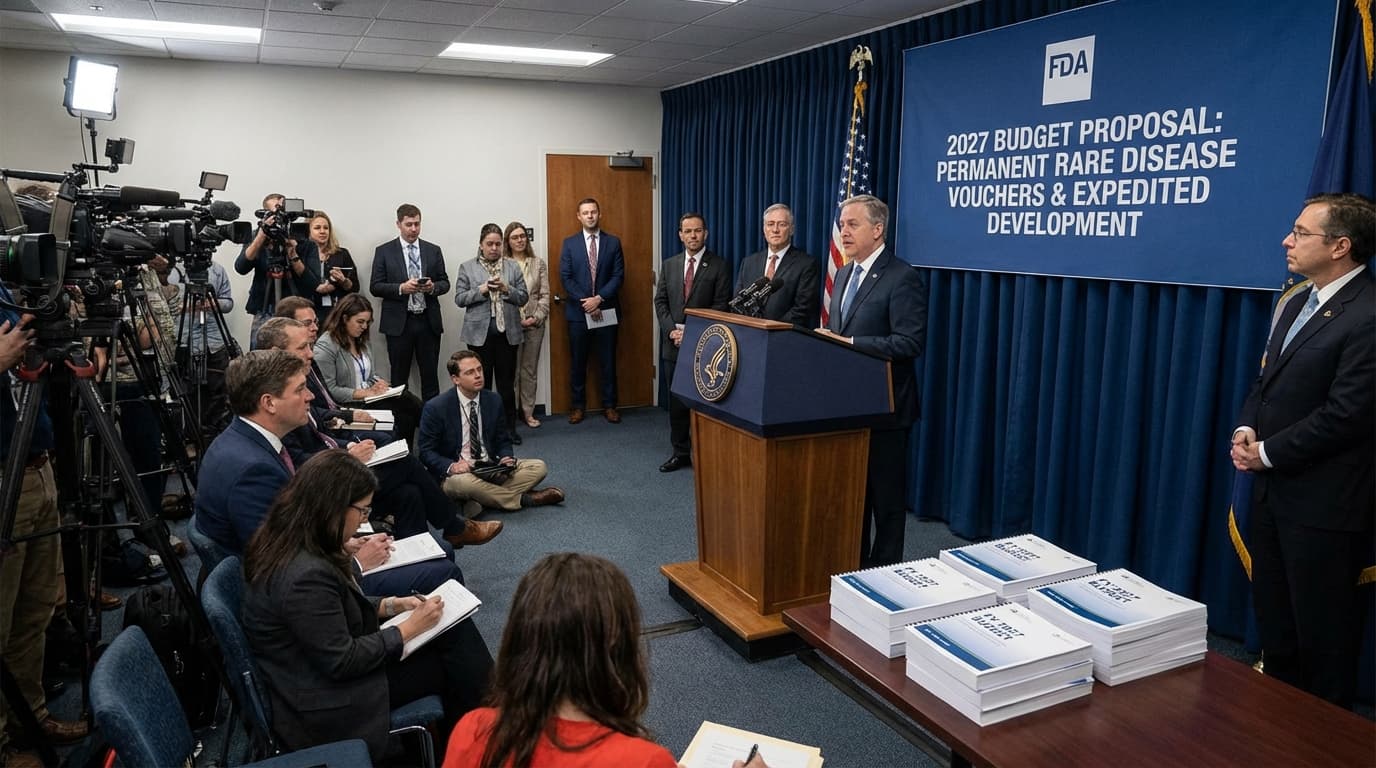
FDA’s 2027 Budget Proposal to Permanently Include Rare Disease Vouchers and Expedite Drug Development

With a focus on accelerating pharmaceutical innovation and enhancing public health, the FDA plans to make rare disease vouchers a permanent program and facilitate easier clinical entry for new therapeutics. These changes aim to support faster development pathways for treatments addressing rare and complex conditions.
The U.S. Food and Drug Administration (FDA) has unveiled an ambitious budget proposal for the year 2027, reflecting a $200 million increase aimed at strengthening its regulatory and development frameworks. Among the critical elements of this proposal is the permanent adoption of rare disease vouchers and initiatives designed to facilitate easier access for drugs entering clinical trials.
Rare diseases, often overlooked due to small patient populations, pose unique challenges in drug development. Historically, the FDA has used rare disease vouchers as incentives for pharmaceutical companies to develop treatments for such conditions, offering benefits like priority review vouchers which can expedite the approval process for other drugs. Making these vouchers permanent signals a long-term commitment to supporting innovation in the rare disease space.
Furthermore, the budget outlines plans to ease the pathway for clinical trial entry, a move expected to accelerate the translation of scientific discoveries into available therapies. Easier clinical entry can reduce the time and administrative burden faced by developers, encouraging more rapid advancement of promising therapies into human trials.
The proposed budget also includes enhancements aimed at boosting national security, reflecting the FDA's role in safeguarding the medical supply chain and public health infrastructure. Another noteworthy component is the promotion of "radical transparency," which suggests an intention to make regulatory activities more open and accessible to the public, potentially improving stakeholder trust and engagement.
These budget-driven programs collectively align with broader public health priorities by fostering an environment where novel treatments, particularly for rare and complex diseases, are more efficiently developed, assessed, and approved. The anticipated expansion of resources will enable the FDA to execute these initiatives effectively while maintaining rigorous standards for safety and efficacy.
Given the complexities inherent in drug development and the urgent need for therapies targeting rare diseases, the FDA's budget proposals for 2027 represent a significant step toward a more responsive and innovative regulatory landscape.
For a comprehensive understanding of the FDA's budget plans and implications, please visit the original article at BioSpace.
Join the BioIntel newsletter
Get curated biotech intelligence across AI, industry, innovation, investment, medtech, and policy delivered to your inbox.