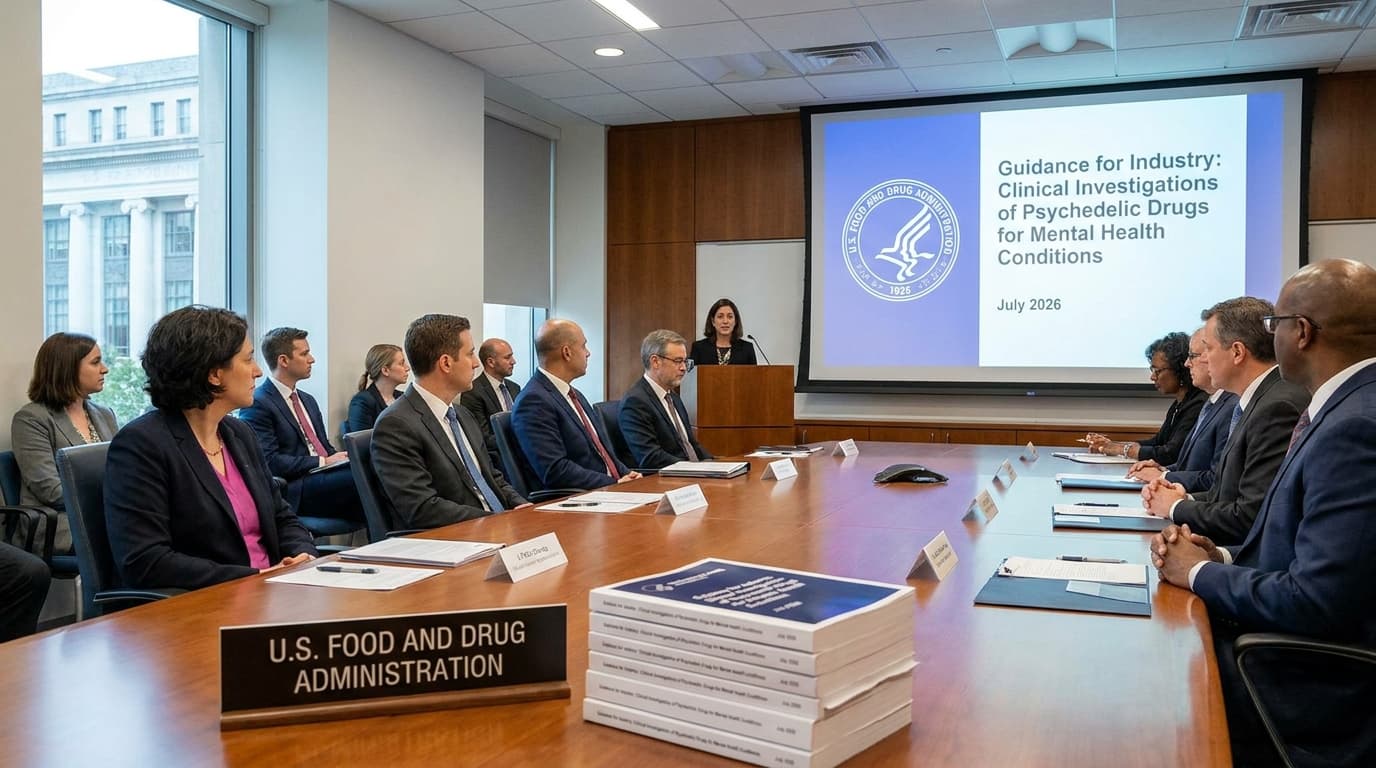
Final Psychedelics Guidance: FDA Signals Regulatory Openness to Mental Health Therapies

The U.S. FDA has issued final recommendations for the clinical development of psychedelic drugs in mental health, reflecting a shift toward regulatory receptivity. This comprehensive look assesses what these changes mean for the industry, the prospects for new therapies, and the implications for patients and innovation.
Introduction
Once subject to controversy and prohibitive legal status, psychedelic compounds are increasingly the focus of scientific inquiry and commercial interest as potential treatments for a host of mental health conditions, including depression, PTSD, anxiety, and substance use disorders. On July 14, 2026, the U.S. Food and Drug Administration (FDA) took a historic step by issuing its finalized recommendations for the clinical development and testing of psychedelic drugs for mental health indications. This regulatory act not only marks a transformative moment for psychedelic research and industry investment, but it also sends a clear signal regarding the FDA’s willingness to help companies bring such therapies to market through scientifically grounded pathways.
This feature provides an exhaustive analysis of the regulatory guidance, the likely impact on stakeholders from drug developers to clinicians and patients, and the broader landscape of psychedelic research in mental health therapeutics.
Understanding the New FDA Guidance
The finalized FDA guidance outlines specific protocols, safety considerations, and scientific standards developers must follow to investigate psychedelic compounds—such as psilocybin, MDMA, and similar agents. While the details of the guidance address several scientific and logistical issues, its issuance is, at its core, a regulatory green light. The agency is communicating that it is receptive to the scientific and clinical promise these treatments may offer.
Key Themes Identified in the Guidance Include:
- Clear expectations for trial design, including control arms, dosing, safety monitoring, and endpoints appropriate for the unique effects of psychedelics
- Emphasis on patient safety and risk minimization, considering the potential for adverse psychological outcomes
- Encouragement of rigorous methodologies to ensure the reproducibility and reliability of efficacy signals
Implications for Industry and Developers
The guidance arrives at a strategic moment for drug developers and investors, many of whom have placed significant bets on psychedelic therapies. For example, companies like Compass Pathways, with a psilocybin-based treatment for treatment-resistant depression, now have a more defined regulatory roadmap and could become the first to secure mainstream FDA approval in this evolving drug class.
For industry stakeholders, the new guidance:
- Reduces regulatory uncertainty, a major deterrent for biotech funding and large-scale trials
- Lays out a feasible path for clinical development, increasing the confidence of potential investors
- Standardizes requirements, allowing for meaningful comparisons between compounds and approaches
Clinical Trials: Challenges and Opportunities
Developing psychedelic therapies requires a nuanced understanding of both the pharmacological agent and the therapeutic context. Clinical trials involving these agents are often more complex than those for conventional medications, as they typically incorporate psychotherapy or structured psychological support.
Key challenges include:
- Recruiting and selecting appropriate trial participants
- Blinding and placebo issues, due to the overt psychoactive effects of the drugs
- Training and regulating therapists or support staff to ensure consistent administration of therapy
- Addressing long-term safety and efficacy, especially as repeated use or exposure may lead to unpredictable outcomes in a small subset of individuals
The FDA’s guidance attempts to address these through recommendations on monitoring, follow-up, and data collection.
Regulatory and Policy Dynamics
The FDA’s finalized guidance sits within a rapidly changing social and policy context. At the state and federal level, there is growing momentum toward the decriminalization and medical use of certain psychedelics. However, the FDA remains the ultimate arbiter of scientific safety and efficacy.
By clarifying its expectations, the agency signals openness not only to current applications but also to innovation in related fields, including next-generation psychedelics, digital health interventions coupled with drug therapy, and novel delivery formats.
What This Means for Patients
The potential for FDA-approved psychedelic therapies in mental health is profound. Patients suffering from treatment-resistant conditions may soon find alternative options that differ fundamentally from conventional pharmacotherapy:
- Psychedelic-assisted therapies, when administered in controlled settings, have shown encouraging results in clinical trials for refractory depression, PTSD, and other syndromes.
- Regulatory clarity allows doctors and patients to anticipate access to evidence-based, FDA-approved treatments, as opposed to navigating unregulated clinics or underground markets.
- Safety is paramount: FDA review ensures standards in purity, dosing, and informed consent.
Nevertheless, the unique psychological impact of psychedelics means these therapies will likely remain highly regulated, prescribed, and administered only under carefully controlled circumstances.
Industry Prospects: Companies Poised to Benefit
With the FDA’s clear guidelines, companies well-advanced in clinical development stand to benefit most. Compass Pathways, for example, is among the most visible, having developed a psilocybin-based therapy specifically for major depressive disorders that are unresponsive to traditional antidepressants. If the company’s data meet regulatory requirements, the U.S. could see the approval and commercialization of the first true psychedelic for a mainstream mental health indication in the modern era.
Other companies are pursuing MDMA, LSD analogs, and next-generation psychedelic molecules, all of which now have a more secure and predictable path to development and regulatory decision.
Barriers and Outstanding Questions
Despite regulatory progress, there remain significant barriers and questions:
- Will insurance payers reimburse such therapies?
- How will U.S. state and federal law evolve to reconcile the gap between medical regulation and residual criminal statutes on psychedelics?
- What educational and training standards will be required for providers?
- How will activity outside the regulated clinical trial space be policed?
The answers to these questions will largely determine the speed, scale, and impact of psychedelics’ entry into the U.S. healthcare system.
Global Perspective
The FDA’s signal is likely to influence regulators and policymakers globally. As the U.S. becomes more open to psychedelic therapies, similar moves could follow in Canada, Europe, Australia, and elsewhere. This may spur international collaborations, harmonization of guidelines, and potentially, greater investment in cross-border research and development.
Ethical Considerations and Social Impacts
With increasing access to psychedelic-derived treatments, new ethical and social questions must be addressed. These include:
- Ensuring equitable access, especially for historically marginalized groups who have suffered the most from lack of mental health care
- Countering stigma and misinformation about psychedelic drugs
- Addressing potential for misuse or diversion outside licensed channels
- Setting up protections for vulnerable patients undergoing intense psychological experiences during therapy
Conclusion
The FDA’s finalized guidance for clinical testing of psychedelic compounds for mental health represents a pivotal shift in U.S. regulatory policy. By offering clear, science-based pathways for developers, the agency is inviting further innovation, investment, and rigorous research. While challenges remain—in clinical design, policy harmonization, and ethical oversight—the prospects for new treatments for some of society’s most intractable mental health problems are brighter than ever.
All stakeholders, including biopharmaceutical companies, clinicians, patients, payers, and policymakers, must now work toward responsible and equitable integration of psychedelic therapies into mainstream healthcare, with an unwavering commitment to safety, efficacy, and public trust.
Source: BioSpace
Join the BioIntel newsletter
Get curated biotech intelligence across AI, industry, innovation, investment, medtech, and policy delivered to your inbox.