FDA Issues First AI-Focused cGMP Warning Letter—What it Means for Manufacturers

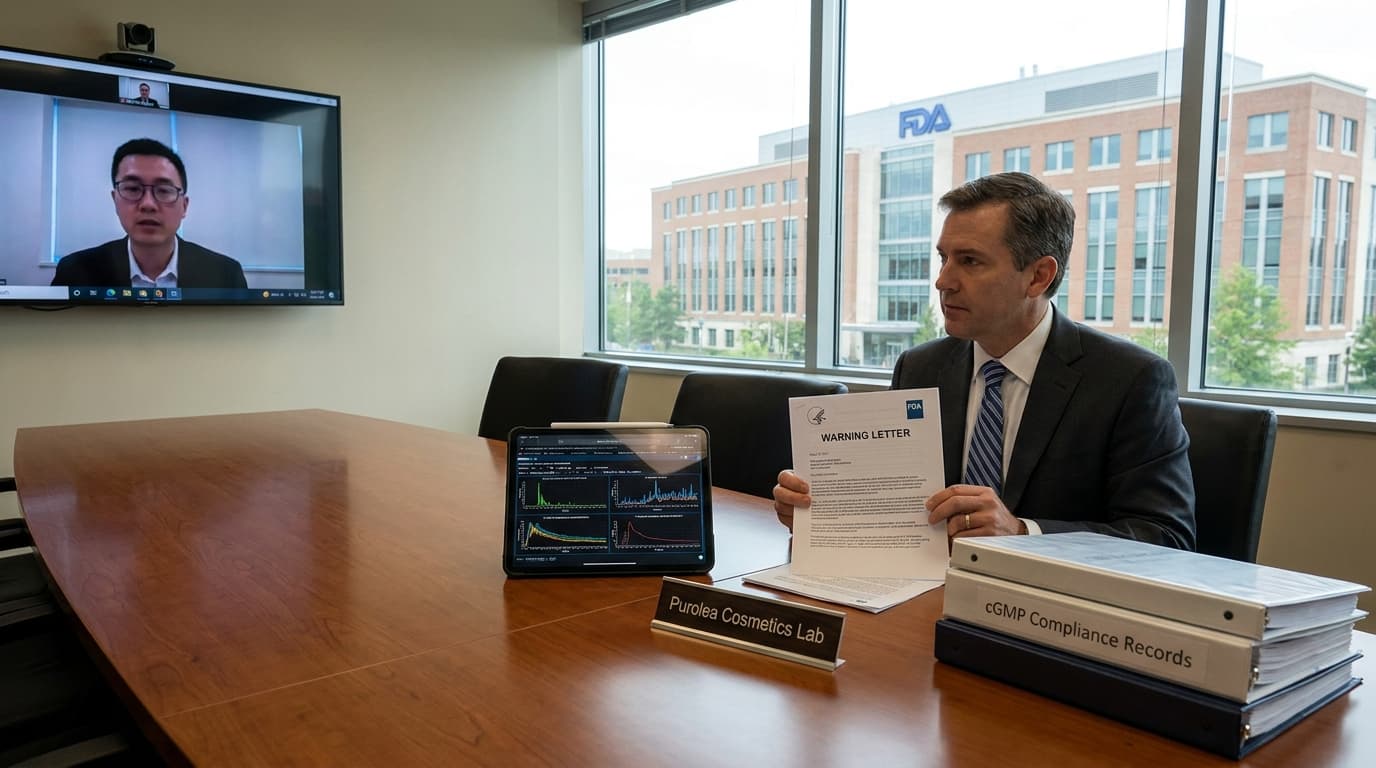
As artificial intelligence extends deeper into manufacturing processes, the U.S. Food and Drug Administration has issued its first cGMP warning letter focused specifically on AI-generated activities. This action sets a precedent for how AI should be integrated and regulated within existing quality systems.
Introduction
A major milestone has been reached in the regulatory landscape of pharmaceutical and life sciences manufacturing: the U.S. Food and Drug Administration (FDA) has formally issued its first current Good Manufacturing Practice (cGMP) warning letter referencing artificial intelligence (AI)-generated activities. The action, directed at Purolea Cosmetics Lab, is not merely an isolated enforcement event, but a watershed moment likely to shape expectations and compliance strategies for the entire industry.
The letter signals the FDA’s evolving approach to new technologies in pharmaceutical manufacturing and quality systems. As companies rapidly integrate AI into processes ranging from documentation to quality analysis and batch release, questions around reliable oversight, human intervention, and quality system resilience are thrust to the forefront. For every manufacturer evaluating or deploying AI, the message is clear: regulatory bodies expect rigorous controls, documentation, and—above all—continued human accountability in a changing technological environment.
The Context: AI Meets Quality Regulation in Life Sciences
What is cGMP?
Current Good Manufacturing Practice (cGMP) is the foundational regulatory framework governing every facet of pharmaceutical and certain life sciences manufacturing. Designed to ensure products are consistently produced and controlled to quality standards, cGMP is enforced through comprehensive FDA oversight including routine inspections, audits, and—in cases of non-compliance—formal warning letters.
Rise of Artificial Intelligence in Manufacturing
AI is quickly becoming integral in manufacturing. From process automation to predictive maintenance, data visualization, and even AI-generated documentation, the technology offers real promise in reducing human error, optimizing resource allocation, and accelerating product release cycles. However, this shift introduces new risks—and, as the FDA warning makes clear, does not absolve manufacturers of their duty to maintain highly reliable quality systems.
Details of the FDA’s Action
In this enforcement action, the FDA alleged that Purolea Cosmetics Lab failed to integrate AI-generated work products within the robust quality frameworks required by cGMP. The agency’s critique was not against AI technology per se, but rather pointed to insufficient human review, incomplete documentation, and a quality system that did not properly track or validate AI-generated records.
Experts consulted in the regulatory and manufacturing fields interpret the letter as an early, but important, statement of intent. It articulates the FDA’s expectation that AI-generated documents, analytical outputs, or manufacturing decisions must be:
- Validated for reliability and accuracy,
- Subject to robust human oversight,
- Fully traceable within the quality management system,
- Supported by a clear audit trail—a critical consideration in the event of investigations or recalls.
What the Warning Letter Means for Manufacturers
Human Oversight Remains Essential
Central to the FDA’s warning is the assertion that AI, no matter how advanced or deeply integrated, must not supplant qualified human review—especially when it comes to decisions impacting product quality, patient safety, or regulatory compliance. Automated systems might accelerate throughput or reduce manual labor, but an effective cGMP environment still hinges on final checks, analysis, and sign-off by accountable personnel.
Documentation and Auditability
The presence of AI-generated work products introduces new dimensions to documentation. Regulators expect:
- Clear records indicating where, when, and how AI is deployed,
- Explicit identification of responsible individuals,
- Detailed logs of input data, processing steps, and outputs,
- Plans for periodic review and revalidation of AI tools to ensure ongoing accuracy as conditions or inputs change.
System Validation and Control
Most traditional validation processes were not designed for self-learning or "black box" AI systems. The FDA’s action underscores the need for robust validation protocols adapted to AI:
- Can the system be shown—through testing—to make correct decisions in a variety of realistic scenarios?
- How will "model drift" or silent changes in AI software be detected and corrected?
Implications for the Broader Industry
The regulatory message, while new in tone, builds upon existing foundational principles:
- Accountability and traceability must be retained, regardless of technological advances.
- Quality systems must evolve to encompass the unique challenges and risks associated with AI.
- Even as algorithms automate decision-making, ultimate responsibility for patient and product safety remains with humans.
For companies considering the transition toward more automated, AI-driven manufacturing processes, close collaboration between quality assurance, regulatory affairs, and technical teams will be crucial. Investing early in documentation, validation, and training will become essential not just for compliance, but for operational resilience as expectations continue to evolve.
Regulatory Outlook: What's Next?
Industry watchers anticipate that this will not be the last AI-related cGMP enforcement letter. As the pace of AI adoption increases—and as regulators get more sophisticated in their understanding of these technologies—standards for best practices are likely to firm up in the following areas:
- Regular revalidation of AI algorithms,
- Proactive risk management assessments specific to AI-related failures,
- Continuous education for personnel managing or interfacing with AI systems,
- Open communication with regulators about planned (and current) uses of AI.
Conclusion: The Responsibility Imperative in an AI Era
The FDA’s warning letter to Purolea Cosmetics Lab offers a preview of the more active, technology-savvy regulatory regime fast approaching. While this action may have focused on a single manufacturer, the principles outlined apply to any company in the life sciences domain that is integrating AI—or planning to do so. The message resonates beyond the laboratories and assembly lines: human oversight, quality controls, and detailed record-keeping are not optional, but essential pillars as the industry pivots toward intelligent automation. Regulatory agencies stand ready not just to react, but to proactively define the standards by which this transition will occur.
For those manufacturers charting a path ahead, a thoughtful, deliberately cautious approach to AI adoption—one grounded in well-established quality principles—will offer the best safeguard against regulatory pitfalls and, more importantly, will ensure ongoing protection for patients and consumers alike.
Source: BioSpace: FDA’s first AI-focused cGMP warning letter signals new scrutiny for manufacturers
Join the BioIntel newsletter
Get curated biotech intelligence across AI, industry, innovation, investment, medtech, and policy delivered to your inbox.