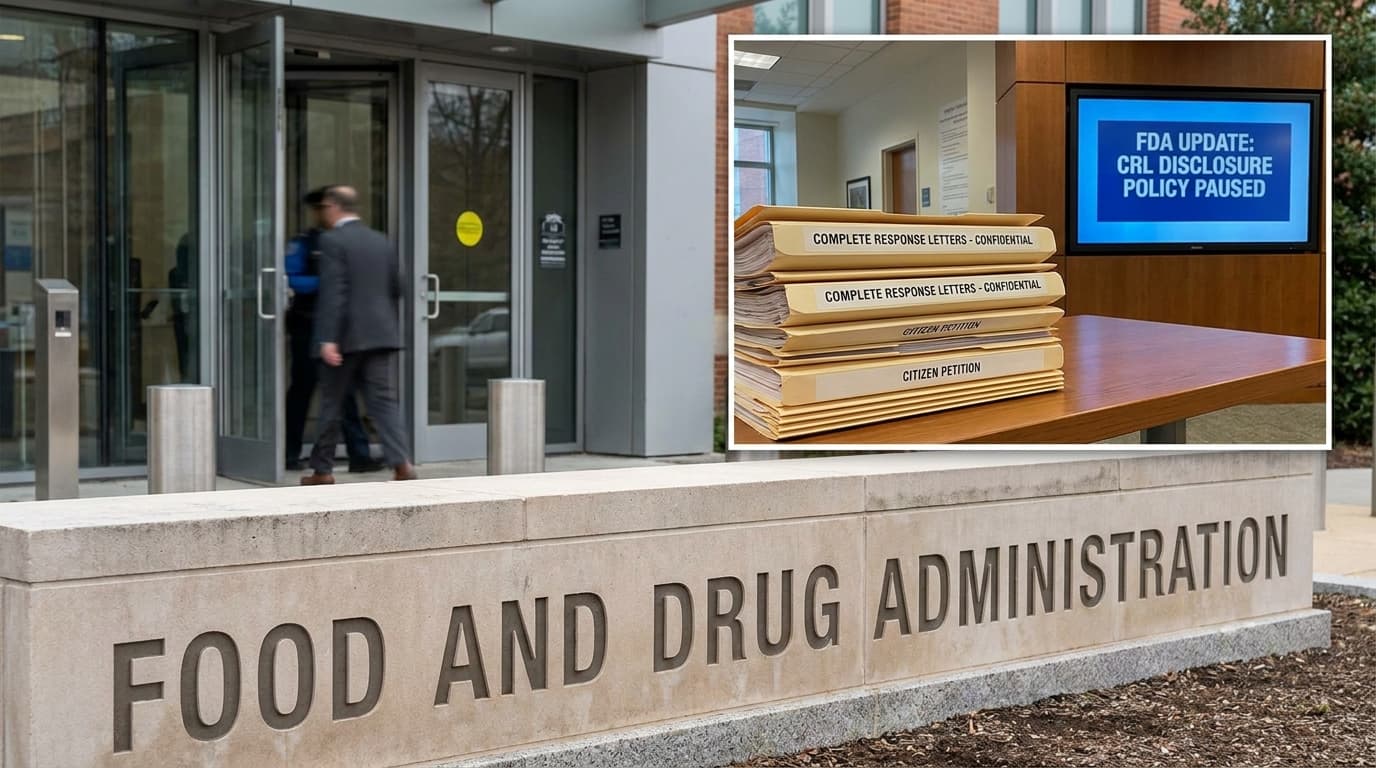
FDA Freezes CRL Trove as Radical Transparency Initiative Hits a Roadblock

The U.S. Food and Drug Administration has temporarily halted its disclosure of Complete Response Letters (CRLs) following a formal citizen petition from an unnamed pharmaceutical company. The petition claims the agency’s transparency policy overrides longstanding regulatory conventions and may raise new questions about the balance between public information and proprietary business interests.
Overview
The pursuit of radical transparency in regulatory affairs has encountered new turbulence as the U.S. Food and Drug Administration (FDA) suspends its disclosure of Complete Response Letters (CRLs) in response to a recent citizen petition. This action underscores the tension between increased transparency, stakeholder expectations, and established agency practices. The decision could have wide-reaching implications for the pharmaceutical industry, regulatory affairs, investor communication, and the public’s understanding of drug approvals and rejections.
Background: Complete Response Letters and FDA Policy
Complete Response Letters are documents issued by the FDA to drug sponsors when a new drug application (NDA) or a biologics license application (BLA) cannot be approved in its current form. These letters typically enumerate the deficiencies identified by the agency, outline concerns or requests for additional data, and inform the sponsor of requirements that must be met for future approval. Historically, the FDA has considered CRLs to be confidential, treating them as business-sensitive communications between the agency and drug makers rather than public information.
In recent years, however, there has been momentum toward greater openness regarding the regulatory process and drug decision-making. Advocates of so-called “radical transparency” argue that the public, including patients, physicians, and investors, deserves timely access to information about why drugs are rejected or delayed. Agency policies have evolved to allow for greater scrutiny, including proactive publication of some regulatory correspondence that was previously considered nonpublic.
The Citizen Petition: Industry Pushback
In April of this year, an unnamed pharmaceutical company submitted a citizen petition to the FDA seeking reforms to its CRL disclosure policy. The petition grounds its objections on the argument that public release of CRLs “contravenes decades of agency practice” and poses risks to proprietary information. The company contends that the FDA’s transparency initiative may inadvertently reveal detailed scientific, clinical, or manufacturing information, which could amount to the unauthorized disclosure of intellectual property or commercially sensitive data.
In response, the FDA has paused its public release of CRLs while it reviews the petition and re-examines its approach to regulatory communication. The freeze has drawn support from segments of the industry, which have long expressed concern about balancing transparency with competitive confidentiality. Others, however, fear that rolling back the new transparency regime would hinder accountability and limit stakeholders’ access to important regulatory insights.
Balancing Transparency and Confidentiality
The suspension of the CRL disclosure policy revives an ongoing debate about the optimal level of transparency in regulatory affairs. On one hand, proponents of radical transparency argue that patients and prescribers need insight into the agency’s rationale for drug decisions to inform clinical choice, support public trust, and increase accountability. On the other, pharmaceutical companies highlight the potential risks to proprietary information, ongoing development strategies, and competitive posture.
This balancing act is not unique to the FDA or the United States. Regulatory authorities globally have struggled with similar questions, particularly as patient advocacy organizations and market analysts demand more information about failures as well as successes. The case for transparency is further complicated by the rapidly evolving landscape of biologics, cell therapies, and orphan drugs, which often involve highly specialized intellectual property and sensitive manufacturing details.
What This Means for Stakeholders
For public investors and analysts, broad access to CRLs offers a valuable window into regulatory trends and the rationale behind major approval or rejection decisions. Transparency around CRLs can also inform market dynamics, company valuations, and expectations for drug pipelines. Advocacy groups and the public, meanwhile, may see disclosure as a mechanism for accountability, promoting rigorous standards and deterring regulatory capture or undue commercial influence.
Conversely, pharmaceutical sponsors have compelling incentives to shield specific scientific or operational details. Competitive position, ongoing research strategies, and even negotiating leverage with payers or partners can be affected by the public release of regulatory correspondence. For small biotech firms in particular, premature disclosure of negative feedback might impact fundraising or strategic collaborations.
Regulatory and Policy Implications
The present freeze introduces uncertainty into the agency’s trajectory on transparency. Some experts suggest that the pause could signal a more measured or nuanced approach going forward—perhaps involving redacted or summary disclosures, or an opt-in process for drug sponsors. Others anticipate further stakeholder engagement, potentially including formal rulemaking or the development of new guidance to codify best practices for balancing transparency against commercial confidentiality.
The outcome of this episode is likely to influence downstream processes such as investor communication, drug development strategies, and even the structure of future regulatory filings. As the FDA weighs its next steps, it will consider feedback not only from industry, but from advocacy groups, healthcare professionals, and the wider public health community.
Looking Forward
Transparency in regulatory decision-making is a topic of enduring controversy—one that stands at the intersection of public interest, commercial competition, and scientific integrity. The recent citizen petition and subsequent FDA freeze on CRL disclosures highlight the competing pressures faced by modern regulatory agencies. Whether the future lies in full publication, selective disclosure, or more opaque channels remains to be seen; however, the debate over the boundaries of transparency is certain to continue playing a central role in shaping U.S. drug policy and public trust in the regulatory process.
Conclusion
The U.S. Food and Drug Administration’s decision to pause its radical transparency initiative regarding Complete Response Letters, following a formal citizen petition, has reopened a vital discussion about the balance between open information and proprietary protection. As the agency reassesses its policies, all eyes will be on Washington to see whether the pendulum will continue to swing toward transparency, revert to tradition, or settle somewhere in between.
Source: BioSpace: FDA freezes CRL trove as radical transparency push hits speedbump
Join the BioIntel newsletter
Get curated biotech intelligence across AI, industry, innovation, investment, medtech, and policy delivered to your inbox.