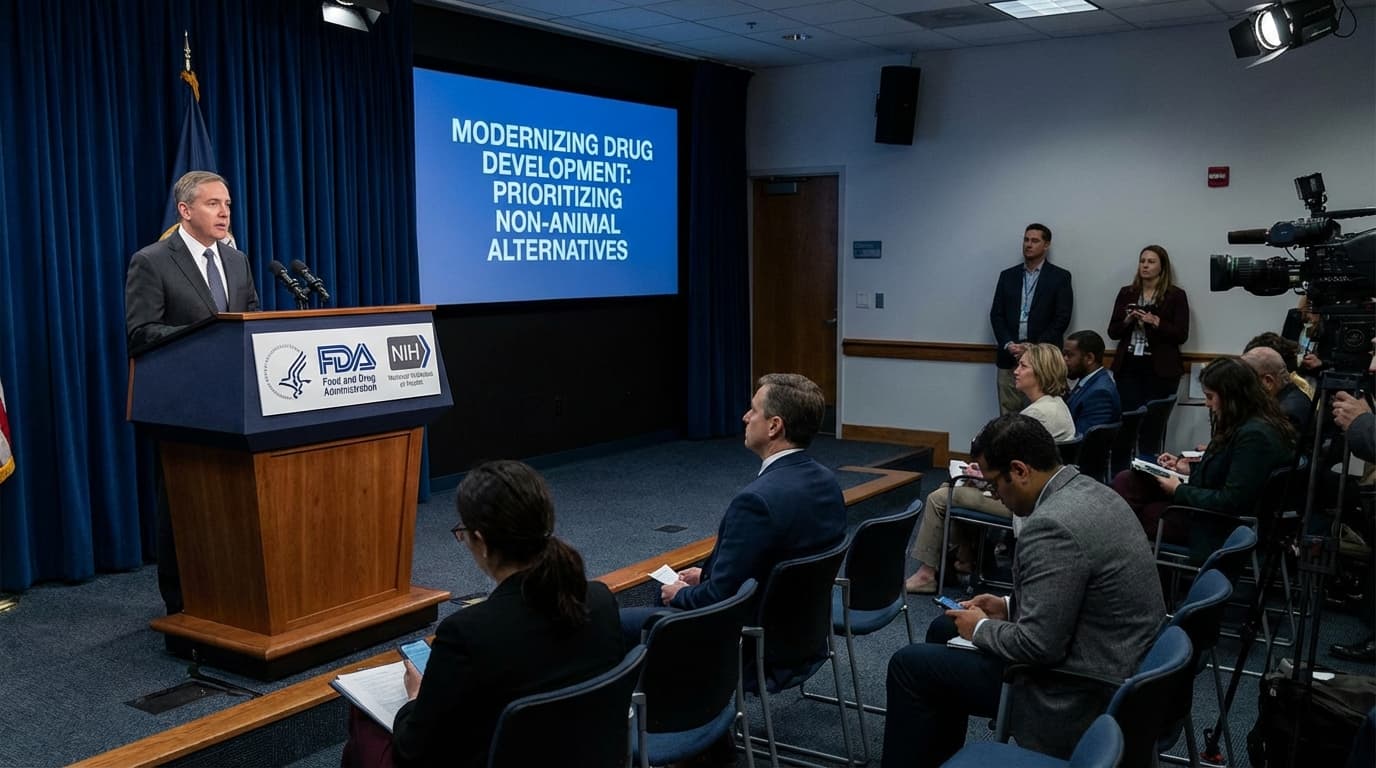
FDA and NIH Unveil New Initiatives to Reduce Animal Testing in Drug Development

The U.S. Department of Health and Human Services (HHS) is placing increasing emphasis on reducing the reliance on animal testing within pharmaceutical research and development. The FDA and NIH are coordinating new strategies and funding mechanisms designed to promote innovative testing methods that could replace traditional animal-based experiments.
In a landmark move reflective of evolving scientific and ethical standards, the FDA and NIH have jointly announced a set of initiatives aimed at substantially reducing the use of animal testing in the development of new drugs. This approach aligns with the broader priority set by the Department of Health and Human Services (HHS) over the past year, reflecting a systemic commitment to advance alternatives that can provide reliable, efficient, and ethical solutions to drug safety and efficacy evaluation.
Traditional animal testing has long been a cornerstone of preclinical evaluation in drug development, serving as a critical step to assess toxicity and preliminary effectiveness before human trials. However, concerns over ethical considerations, scientific validity across species, and the time and resource intensiveness of these experiments have driven regulatory agencies and researchers alike to seek alternative methods.
The new initiatives by the FDA and NIH aim to catalyze the development and adoption of innovative technologies such as in vitro cell culture systems, computational modeling, and high-throughput screening techniques. These approaches are designed to replicate human biology more accurately, potentially enhancing predictive capacity for human responses while simultaneously reducing reliance on animal subjects.
Key components of the announced strategies include increased funding for research programs focusing on alternative testing models, enhanced collaboration between regulatory bodies and biotechnology innovators, and the establishment of clear regulatory pathways to facilitate the validation and acceptance of non-animal test methods. Additionally, these efforts underscore the importance of multidisciplinary engagement, bringing together toxicologists, computational scientists, pharmacologists, and ethicists to ensure comprehensive assessment frameworks.
The implications of these initiatives extend beyond scientific progress, touching on significant policy and ethical dimensions. Regulatory acceptance of alternative testing models represents a paradigm shift that can potentially expedite drug development timelines, reduce costs, and align with public expectations for humane research practices.
Moreover, these efforts present a strategic opportunity for the biotech and pharmaceutical industry to lead in the innovation of predictive safety assessments, fostering a research environment more aligned with precision medicine principles. By adopting alternative testing methodologies, the industry can enhance the translational relevance of preclinical data, potentially improving success rates in clinical trials.
In conclusion, the coordinated initiatives by the FDA and NIH to reduce animal testing signify a transformative step in drug development. As these programs mature and alternative technologies advance, the landscape of preclinical research may be fundamentally reshaped, with benefits spanning scientific fidelity, regulatory efficiency, ethical responsibility, and ultimately, patient safety.
Source: STAT+ FDA and NIH announce more initiatives to reduce animal testing in drug development
Join the BioIntel newsletter
Get curated biotech intelligence across AI, industry, innovation, investment, medtech, and policy delivered to your inbox.