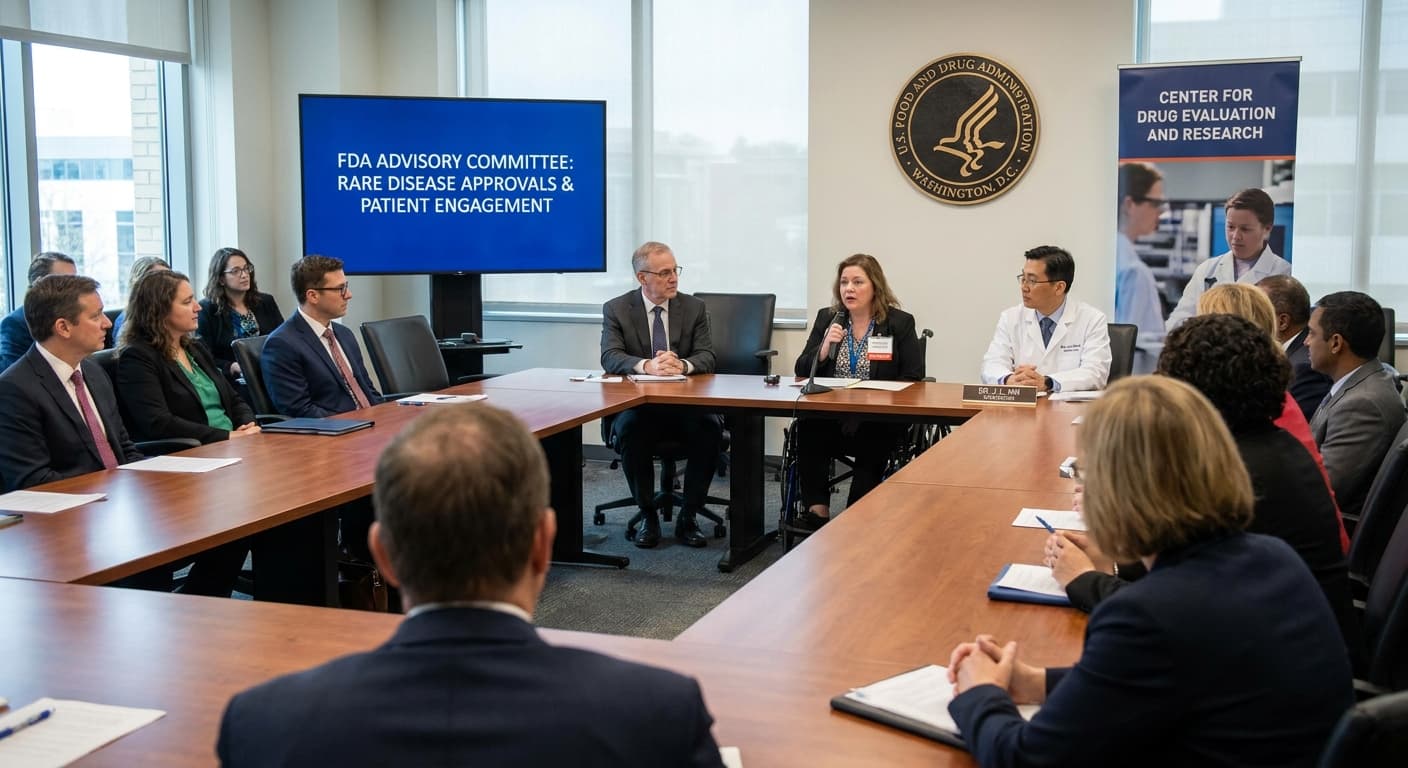
The FDA and the Call for Patient-First Advisory Committees: Rethinking Rare Disease Approvals

The strength of the FDA’s rare disease decisions depends in part on whether patient communities have a meaningful seat at the table during advisory committee meetings. As the drug development landscape evolves, the agency faces renewed calls for a patient-first vision that more formally integrates lived experience into regulatory assessment and approval.
Introduction
The U.S. Food and Drug Administration (FDA) holds a uniquely powerful role as the gatekeeper for new drugs and therapies—particularly for rare diseases where patient populations are small, options can be few, and clinical paths are often complex. In recent years, patients, advocates, and some regulators have called for a shift toward a more “patient-first vision,” where those who are most affected by diseases and their treatments have a direct voice in shaping approvals. This debate has crystallized around the structure and function of the FDA’s scientific advisory committees—known as adcoms—and especially whether patients should hold a formal place at these decision-making tables. This blog explores why such a shift is being proposed, what it could mean in practice, and the potential challenges and benefits of making patient engagement the centerpiece of rare disease regulatory policy.
Background: FDA’s Current Decision-Making Process for Rare Diseases
Rare diseases, often defined as affecting fewer than 200,000 Americans, present persistent challenges for regulatory science. The populations available for study are limited, the data may be sparse, and traditional randomized controlled trials often must be adapted or substituted with smaller, more flexible study designs. The FDA has made strides—from orphan drug statuses to expedited pathways—in acknowledging these realities, but the core question remains: How can the agency ensure the lived experiences and priorities of patients are meaningfully present in scientific and regulatory review?
The primary formal channel for external input is the advisory committee, where panels of experts—typically clinicians, statisticians, and scientists—review evidence and recommend whether the FDA should approve a drug or device. Historically, the "patient representative" seat on these panels has often been consultative, limited in voting power, or sometimes entirely absent, especially in areas where expertise is considered highly technical.
The Case for a Patient-First Vision
Advocates argue that rare disease decisions are strongest when the patient community is not merely observed but is authentically engaged. Their reasoning includes:
- Firsthand Experience Matters: Patients and caregivers are the undeniable experts in the burdens of a rare disease—the symptoms, the day-to-day realities, the risk-benefit trade-offs that most impact their lives.
- Treatment Goals Are Personal: Regulatory endpoints, such as biomarker improvements or slowed disease progression, are important. But for many patients, quality of life and functional improvements may matter just as much or more.
- Trust and Transparency: Giving patients a seat at the table signals transparency and builds trust in the regulatory process, which can mitigate skepticism or resistance to FDA decisions, especially controversial ones.
Current Practices and Their Limitations
While the FDA has patient engagement programs and conducts patient-focused drug development meetings, critics say these efforts
- Often occur early in the pipeline, not in final decision rounds
- May be structured as listening sessions rather than full participation in deliberations
- Sometimes result in patient perspectives being summarized or filtered rather than directly represented
For rare disease approvals, where evidence may be ambiguous or controversial, every additional layer of “removal” from the patient voice magnifies the risk that FDA decisions will diverge from those most affected.
International Comparisons: Are Other Regulators Doing Better?
Globally, regulators have been on similar journeys. The European Medicines Agency (EMA) and bodies in Canada and Australia have made strides in including patient experts in regulatory assessment. However, the extent, method, and impact of participation still vary widely. Some have formal patient advisory panels, while others embed patients directly into scientific review boards. These examples offer models for how the FDA might evolve and pitfalls to avoid.
Practical Challenges and Realities
Moving toward full patient inclusion in advisory committees is not without hurdles:
- Ensuring Patient Representatives Are Well-Supported: Patients must be equipped to navigate technical discussions alongside scientists and clinicians, requiring training and support.
- Managing Diverse Perspectives: The rare disease community is seldom monolithic; patients’ views may differ even within a single disease area. Mechanisms for broad, inclusive representation must be prioritized.
- Potential for Tokenism: There’s an ongoing risk that patient seats are filled for optics rather than substantive engagement. Processes must be designed to ensure patient input genuinely shapes outcomes.
- Balancing Scientific Rigor and Lived Experience: Finding the right balance between objective data review and subjective experience is essential, especially in the context of accelerated or conditional approvals where evidence may have limitations.
The Potential Payoff: Benefits of Patient-First Adcoms
Despite the complexities, proponents of this vision believe the FDA—and ultimately patients—stand to gain:
- Greater Relevance of Endpoints: Decision-making will better reflect priorities such as daily functioning, independence, and community participation—increasing alignment between regulatory and real-world impact.
- Improved Post-Market Surveillance: Patients on adcoms may help highlight safety signals, side effects, or unexpected outcomes that might not be captured in trials.
- Stronger Community Buy-In: Decisions may be easier to accept (even when negative), provided the process is seen as fair, transparent, and inclusive of those most impacted.
FDA’s Next Steps: What Might Change?
As pressure for reform builds, several avenues are under consideration within and outside the agency:
- Formal Patient Voting Rights: Creating permanent, full-voting patient seats on all rare disease advisory committees, not just special sessions.
- Expanded Training and Resources: Equipping patient panelists with scientific literacy tools, so they can participate as equals in discussion and decision-making.
- Systematic Inclusion: Ensuring patient voices are considered at each decision milestone from trial design to post-market review, not just at final committee meetings.
Advocates emphasize that the process of changing policy is slow but say the risks of maintaining the status quo are rising as drug development grows more complex and personalized.
Conclusion: Toward a New Era in Regulatory Science
At stake in the call for a patient-first FDA vision is more than procedural reform. It is a generational question about whose interests and insights count most in therapeutic decisions that often mean the difference between life, death, or living well with disease. As rare disease communities mobilize for formal recognition inside the hallowed adcomm chambers, the FDA faces a pivot point: adapt and lead in participatory, patient-centered science, or risk lagging behind the lived realities driving 21st-century healthcare.
How this transition unfolds could shape not just the fate of countless therapies, but the evolution of trust and innovation at the heart of the medical regulatory system.
Source: BioSpace
Join the BioIntel newsletter
Get curated biotech intelligence across AI, industry, innovation, investment, medtech, and policy delivered to your inbox.