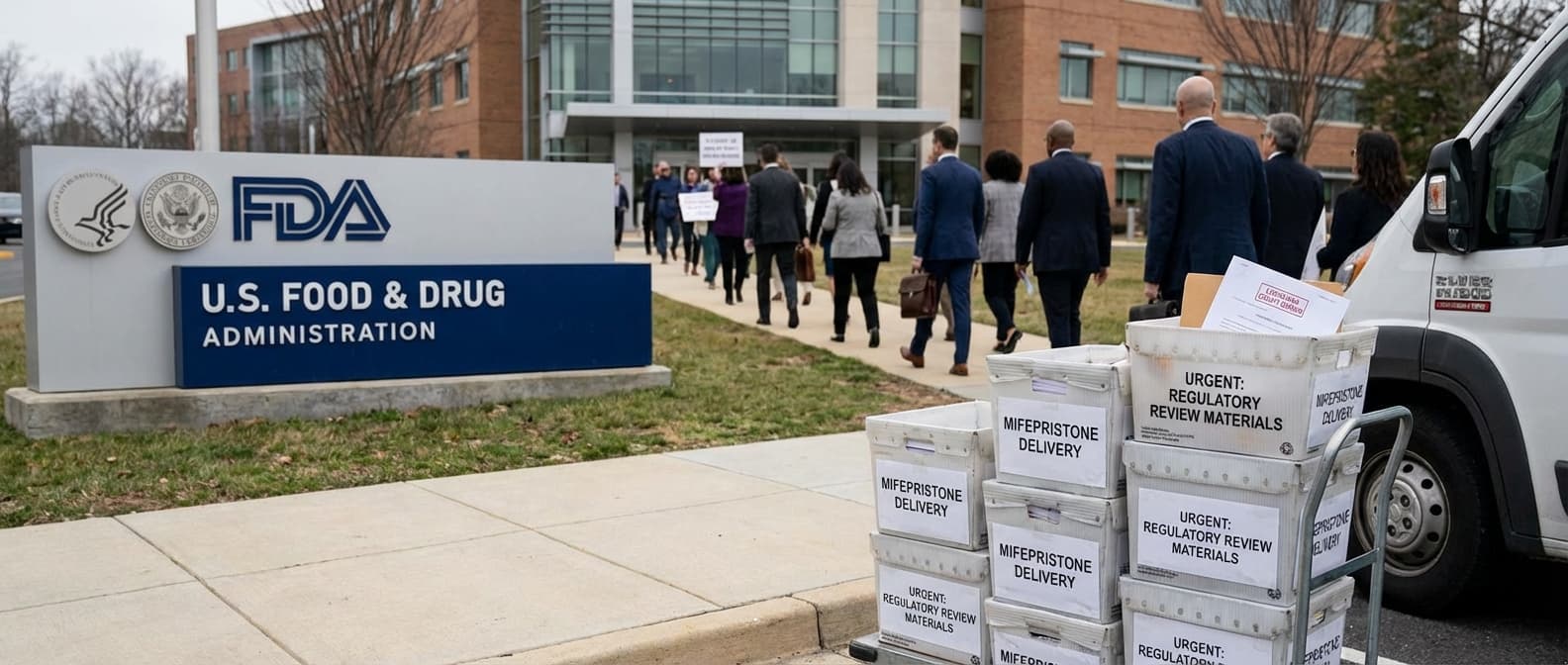
FDA Reopens Safety Review of Mifepristone as Court Upholds Mail Access Amid Ongoing Regulatory Scrutiny

Following a recent court ruling on April 7, 2026, the FDA faces renewed pressure to finalize its internal safety assessment of mifepristone, a medication widely used for abortion services. The court’s decision preserves mail access for the drug, highlighting the complex regulatory and legal landscape influencing medication abortion availability in the U.S.
Overview
In a significant development on April 7, 2026, a Louisiana court ordered the U.S. Food and Drug Administration (FDA) to complete its internal review of the pregnancy termination drug mifepristone’s safety profile. The court also mandated that the agency provide updates on its investigation over the next six months. Concurrently, mail access for mifepristone remains intact, ensuring patients can continue receiving the medication non-invasively while legal and regulatory reviews unfold.
Background on Mifepristone
Mifepristone, often referred to as the “abortion pill,” is a synthetic steroid used primarily to induce medical abortions during early pregnancy stages. Approved by the FDA in 2000, it has become a cornerstone of medication abortion protocols, offering a less invasive alternative to surgical procedures.
Its safety and efficacy have been demonstrated through extensive studies involving hundreds of thousands of patients. However, mifepristone has periodically been the subject of political, legal, and regulatory scrutiny, reflecting ongoing societal and governmental debate surrounding abortion rights and access.
Recent Legal Proceedings
The latest court intervention came as part of wider efforts to reassess mifepristone regulations amid contentious national discourse. The Louisiana court’s directive requires the FDA to accelerate and complete its safety investigation, providing transparency and accountability in its decision-making.
Importantly, the court allowed continuation of mail delivery access, which had been threatened earlier amid litigation aiming to restrict such distribution channels. This decision preserves patient access and maintains functionality of telehealth services that have increasingly adopted medication abortion practices.
FDA’s Internal Review
The FDA’s review presumably involves rigorous evaluation of adverse event reports, scientific literature, and post-marketing surveillance data to ascertain mifepristone’s risk-benefit profile under current usage protocols. The agency must consider emerging safety signals, if any, and balance them against known clinical efficacy and patient access needs.
This inquiry aligns with the FDA’s mandate to ensure drug safety while facilitating innovation and public health responsiveness. The review’s outcome might influence potential updates to labeling, distribution requirements, or REMS (Risk Evaluation and Mitigation Strategies) frameworks.
Impact on Medication Abortion Access
The court’s preservation of mail access is critically consequential. Mail distribution enables patients, especially those in rural or restrictive states, to access abortion care without in-person clinic visits, reducing barriers related to travel, privacy, and cost.
Restrictions on mail access could disproportionately affect vulnerable populations, exacerbating healthcare disparities. Therefore, this ruling supports continuity of care models that incorporate telemedicine, which have been pivotal since the COVID-19 pandemic accelerated adoption of remote healthcare services.
Broader Regulatory and Political Context
Mifepristone remains at the intersection of evolving health policy, reproductive rights debates, and scientific regulation. The FDA must navigate competing pressures from political stakeholders, patient advocacy groups, and healthcare providers.
Recent years have seen fluctuating state-level legislation impacting abortion access, with some states implementing restrictive laws and others seeking to expand availability. The FDA’s stance and responsiveness directly influence the national landscape.
Moreover, the ongoing review sets a precedent for how regulatory agencies address politically sensitive medications while upholding scientific integrity and public health mandates.
Conclusion
The FDA’s renewed probe into mifepristone’s safety at the behest of the Louisiana court underscores the dynamic regulatory environment surrounding reproductive health therapeutics. Maintaining mail access during the inquiry ensures sustained patient access and continuity of care.
Going forward, the balance between rigorous safety evaluation and accessibility will remain pivotal in shaping medication abortion’s future in the U.S. healthcare system. Stakeholders from multiple sectors will continue to monitor this evolving situation closely.
Source: BioSpace
Join the BioIntel newsletter
Get curated biotech intelligence across AI, industry, innovation, investment, medtech, and policy delivered to your inbox.