FDA Voucher Leads to Speedy Approval of Boehringer Drug for First-Line Use in Lung Cancer

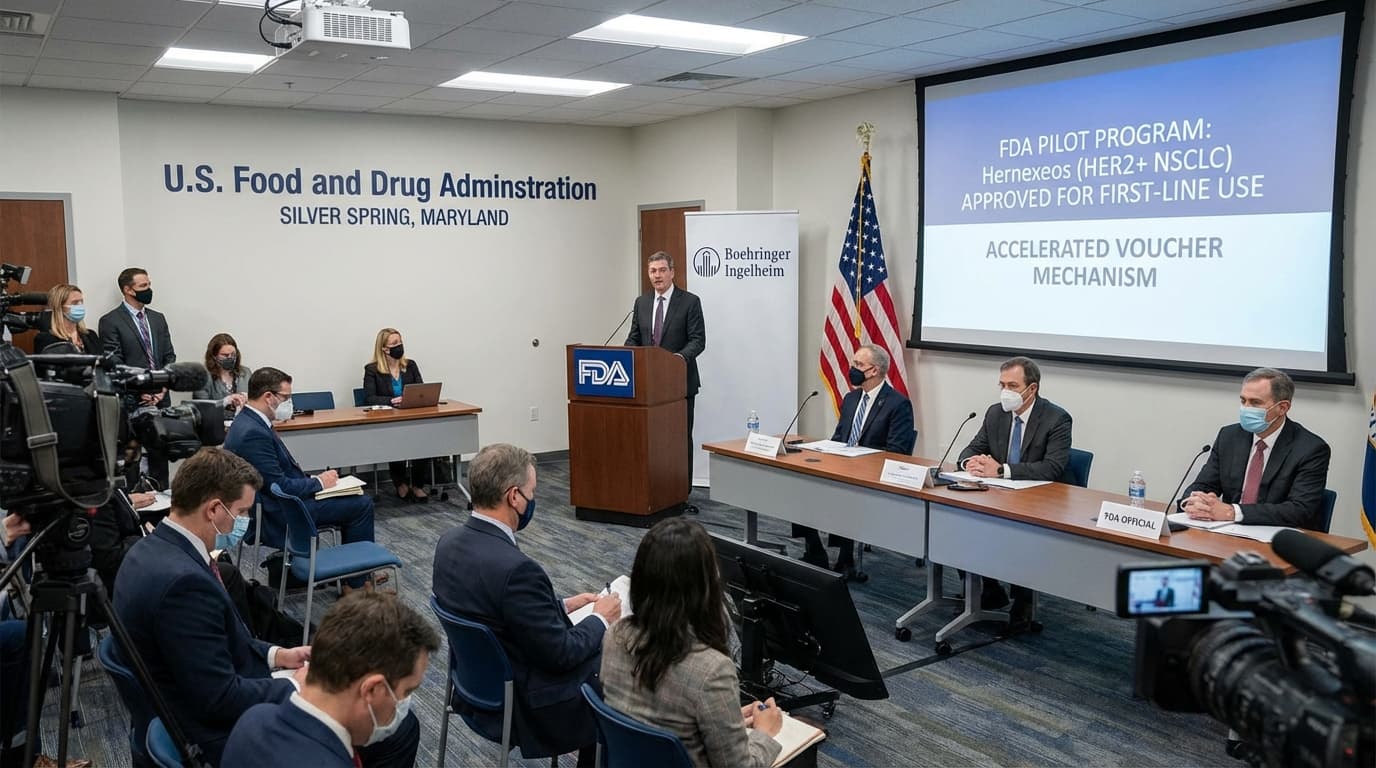
The FDA's pilot program utilizing regulatory vouchers has enabled Boehringer Ingelheim to expand the indication of Hernexeos rapidly. Now approved as a first-line treatment for a challenging subset of lung cancer, this development marks an important advancement in oncology therapeutics and regulatory strategy.
The landscape of cancer treatment is ever-evolving, with regulatory frameworks adapting to accelerate patient access to promising therapies. Recently, Boehringer Ingelheim’s lung cancer drug, Hernexeos, benefited from an innovative FDA pilot program designed to expedite the review process for medicines of national interest. This article delves into the significance of this approval and its broader implications.
Background on Hernexeos and Lung Cancer
Hernexeos is an oral medication targeting HER2-positive non-small cell lung cancer (NSCLC), a subtype with limited therapeutic options and high unmet medical needs. NSCLC constitutes a major portion of lung cancer cases worldwide, and HER2-positive patients often face poor prognosis due to aggressive disease progression.
The FDA Pilot Program and Voucher Mechanism
The FDA's pilot program aims to shorten the regulatory review timeline for drugs deemed critical for national health priorities. Utilizing this pathway, Boehringer Ingelheim received a voucher that facilitated accelerated evaluation and approval processes, enabling faster patient access to Hernexeos for first-line use.
Impacts of First-Line Approval
Securing first-line indication signifies a major milestone since treatments at this stage are pivotal in setting the course for disease management. Patients administered Hernexeos earlier in their treatment can potentially experience improved outcomes and better quality of life. This approval fills a crucial treatment gap in HER2-positive NSCLC.
Broader Regulatory and Industry Implications
This case exemplifies how regulatory innovation coupled with industry agility can bring forward important therapies faster. The voucher program may encourage drug developers to prioritize innovations for critical health areas, knowing that expedited review could be possible.
Challenges and Considerations
While accelerated approvals offer clear benefits, they also bring challenges such as ensuring the robustness of clinical evidence and post-market surveillance to confirm long-term safety and effectiveness. Stakeholders must balance speed with careful oversight.
Future Outlook
The success of Hernexeos within the FDA’s pilot program may pave the way for more drugs to pursue similar pathways. Continued collaboration between regulatory bodies and pharmaceutical companies is essential to optimize these mechanisms for patient benefit.
In conclusion, Boehringer Ingelheim’s Hernexeos approval under a specialized FDA pilot program underscores the evolving landscape of drug development and regulatory science. By providing patients with earlier access to critical cancer therapies, such initiatives represent a meaningful advancement in the fight against lung cancer.
Join the BioIntel newsletter
Get curated biotech intelligence across AI, industry, innovation, investment, medtech, and policy delivered to your inbox.