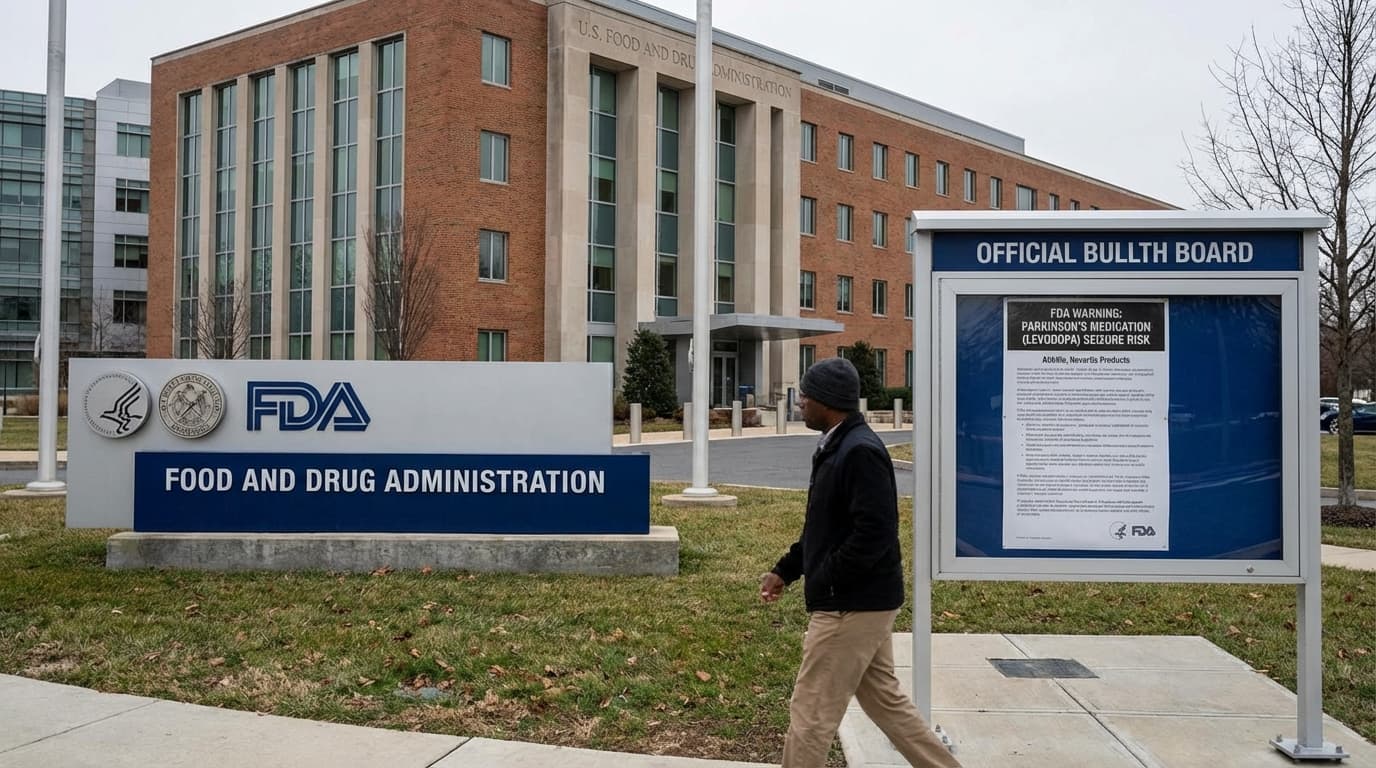
FDA Issues Warning on Seizure Risks from Certain Parkinson’s Disease Medications

Recent FDA findings highlight the emergence of seizure incidents associated with Parkinson’s drugs containing carbidopa/levodopa. The agency has reported cases linked to vitamin B6 deficiency, underscoring the need for heightened awareness among healthcare providers and patients alike.
Overview
In a significant regulatory update on March 23, 2026, the U.S. Food and Drug Administration (FDA) warned healthcare professionals and patients about an elevated risk of seizures associated with some Parkinson’s disease medications. This caution specifically targets drugs containing carbidopa/levodopa, a combination therapy marketed by pharmaceutical giants AbbVie and Novartis. The FDA's alert stems from a detection of 14 cases of seizures linked to vitamin B6 deficiency in patients receiving these treatments, including two fatalities.
Parkinson’s Disease and Levodopa Therapy
Parkinson’s disease is a progressive neurodegenerative disorder primarily characterized by motor symptoms such as tremors, rigidity, and bradykinesia. The standard of care often involves dopamine replacement strategies to alleviate these symptoms, with carbidopa/levodopa being among the most widely prescribed regimens globally. Levodopa acts as a precursor to dopamine and replenishes the diminished dopamine levels in the brain, while carbidopa serves to prevent peripheral metabolism of levodopa, enhancing its efficacy.
The FDA Findings
The FDA’s safety communication highlighted 14 cases where patients on levodopa-based therapies developed seizures attributed to vitamin B6 deficiency. Vitamin B6, or pyridoxine, plays a vital role in neurological function and neurotransmitter synthesis, and its deficiency can exacerbate neurological vulnerabilities. Among these cases, two tragic deaths were reported, emphasizing the gravity of the risk.
This revelation calls attention to a potentially under-recognized adverse effect of Parkinson’s medications. The agency urges clinicians to monitor vitamin B6 levels or consider supplementation strategies when appropriate, especially in patients exhibiting neurological symptoms unexplained by the progression of Parkinson’s itself.
Implications for Drug Safety and Patient Care
The warning serves as a crucial reminder of the multifaceted care needed when managing chronic conditions such as Parkinson’s disease. While levodopa and its formulations remain cornerstone therapies, vigilance for nutritional deficiencies impacting drug safety is essential. This also raises awareness about the need for comprehensive patient monitoring beyond mere symptom management.
Pharmacovigilance efforts must intensify to detect subtle signs of vitamin deficiencies and other biochemical imbalances induced or exacerbated by pharmacotherapy. These efforts will ensure that treatment regimens are optimized to balance efficacy with patient safety.
Industry Response
AbbVie and Novartis, the manufacturers of the implicated levodopa-based products, face increased scrutiny and potential regulatory requirements to update safety labeling and provide clearer guidance for vitamin B6 monitoring. Historical precedence shows that such FDA warnings often catalyze the introduction of risk mitigation strategies including revised prescribing information, patient education initiatives, and possibly the reformulation of pharmaceuticals to circumvent adverse effects.
Broader Context in Parkinson’s Therapeutics
This development intersects with ongoing research and innovation in Parkinson’s disease treatment avenues. While dopaminergic therapies remain foundational, emerging approaches such as cell therapy, gene therapies, and AI-driven drug discovery platforms are simultaneously progressing (as seen with companies like Oryon Cell Therapies and Earendil Labs). These innovations aim to address underlying neurodegeneration and improve patient outcomes beyond symptomatic care.
Conclusion
The FDA’s latest warning underscores the dynamic complexities of Parkinson’s disease management, where well-established treatments could carry unforeseen risks tied to nutritional factors like vitamin B6 status. Healthcare providers must integrate these insights into clinical practice to safeguard patient wellbeing. Concurrently, the pharmaceutical industry, regulators, and researchers must collaborate to evolve therapies that minimize adverse events while enhancing efficacy.
References
- FDA Warning on Parkinson’s Drugs and Seizure Risk: BioSpace
This article is prepared with an analytic, neutral perspective for informed readership, providing a comprehensive evaluation of recent regulatory developments impacting Parkinson’s disease pharmacotherapy.
Join the BioIntel newsletter
Get curated biotech intelligence across AI, industry, innovation, investment, medtech, and policy delivered to your inbox.