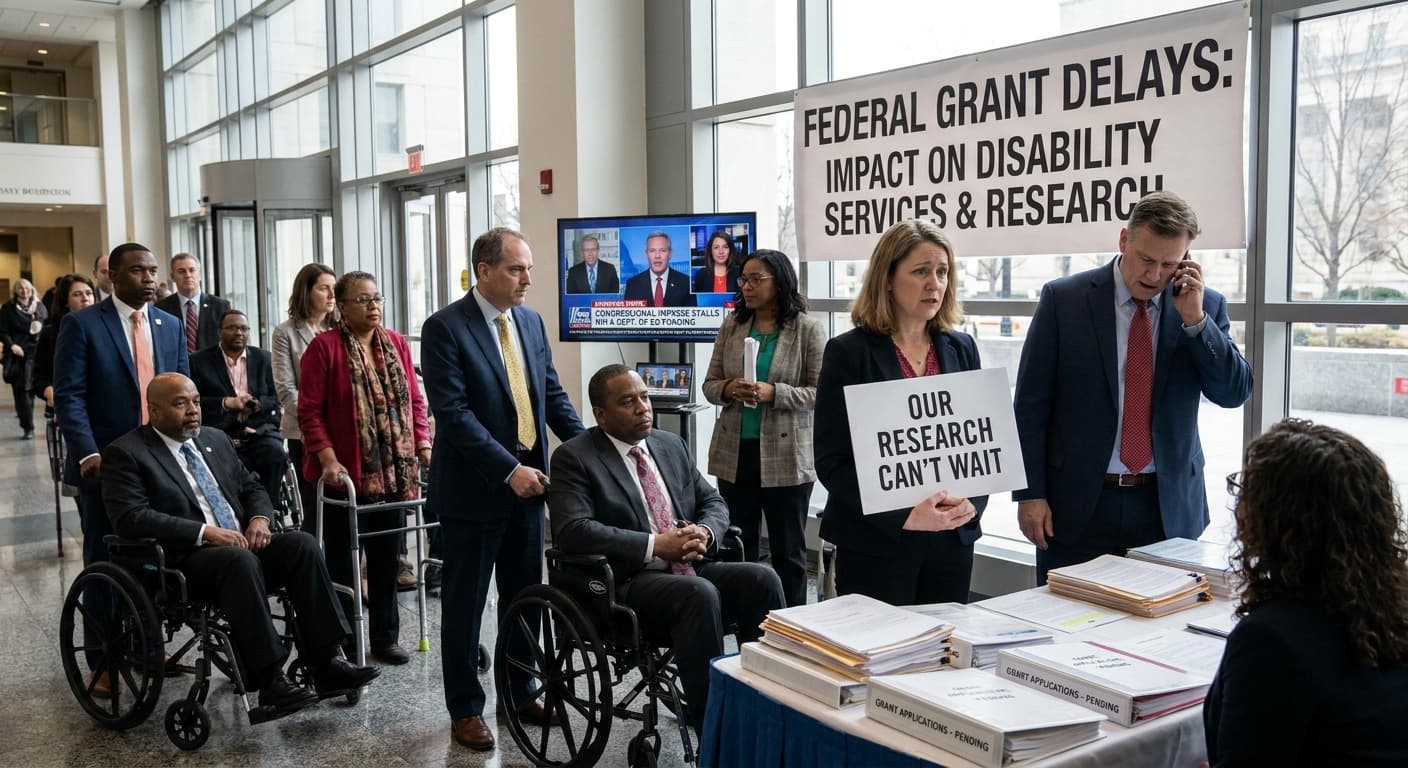
Federal Grant Delays Threaten Disability Services and Research Nationwide

Delays in the distribution of federal research grants have sparked anxiety among disability researchers and the broader scientific community, casting doubts on job security, project continuity, and the future of critical disability-related services. The situation puts an essential segment of public health and social support at risk, with far-reaching implications for individuals with disabilities, their care networks, and the field of disability research as a whole.
The critical issue of federal grant delays has come to the forefront for disability researchers and the broader scientific ecosystem, casting a shadow over the sustainability of essential disability services and the future of numerous research-driven initiatives. As the United States faces ongoing budgetary and administrative challenges, researchers in this niche yet vital domain are expressing growing apprehension regarding employment stability, institutional funding, and the continuity of services essential to people with disabilities.
Introduction
Across the vast landscape of scientific research, federal grants serve as the lifeblood for academic institutions, nonprofit organizations, and healthcare entities engaged in advancing disability services and research. The timeliness and reliability of this funding stream are not merely administrative concerns—they have concrete impact on the daily lives of millions who depend on innovative care models, new assistive technologies, improved healthcare access, and better understanding of disability-related challenges. In recent months, recurring delays in federal funding cycles have raised alarm among researchers, program administrators, and service providers nationwide.
This article provides a comprehensive and analytical exploration of the current state of federal grant delays, their far-reaching consequences for disability services and research, and the broader policy environment shaping these developments.
How Federal Grants Power Disability Research and Services
Federal grants, often managed through agencies such as the National Institutes of Health (NIH), Department of Education, and Health Resources and Services Administration (HRSA), provide core funding for:
- Disease-specific research (e.g., spinal cord injuries, developmental disabilities)
- Policy and public health studies
- Supportive technology development
- Academic and clinical training programs
- Direct service delivery programs for individuals with disabilities, such as community-based services and access to care initiatives
The grant-making process typically involves an annual or multi-year award, with institutions carefully calibrating their operational budgets around expected receipt dates. For many organizations, these funds are not a supplement but the cornerstone of their entire mission.
The Origins and Scope of the Current Delays
Over the past year, disability-focused researchers and service providers have reported an increase in delays in the notification and disbursement of grant awards. These are due in part to:
- Ongoing budget impasses in Congress
- Bureaucratic backlogs within federal agencies
- Delays in approving or reauthorizing funding streams after extended continuing resolutions
- Restructuring or cuts within government departments
For frontline faculty and administrators, this translates to weeks or even months of uncertainty, with some programs struggling to keep staff on payroll, continue participant recruitment, or maintain essential services while waiting for award confirmation or funding transfers.
Statements from the Field
According to disability researchers and institutional administrators, the delays are “a growing threat to the stability of our organizations.” Among the most commonly cited risks are:
- Researchers reporting the loss of skilled staff as contracts expire or cannot be renewed in the absence of funds
- Graduate students and postdocs, whose careers depend on grant-funded positions, facing abrupt gaps in employment
- Interruption of longitudinal studies, which are crucial in disability research for tracking outcomes over long periods
- Community partners and individuals with disabilities experiencing lapses in services, assessments, or access to equipment
Institutional Impact: Beyond the Lab
While much of the public narrative around grants focuses on labs and researchers, the consequences ripple much further:
- Universities: Many rely heavily on federal grants for both direct personnel costs and overhead that support research infrastructure, compliance, and outreach.
- Nonprofits: Organizations providing direct services to individuals with disabilities—such as advocacy groups, support agencies, and independent living centers—may operate on very narrow margins, making even short delays catastrophic.
- Healthcare systems: Hospitals and clinics engaged in disability health services and innovation often link their capacity for care delivery directly to the receipt of federal project funds.
In some high-profile cases, institutions have had to freeze hiring, curtail new project launches, or, in extreme cases, shutter clinics.
Uncertainty Fuels Brain Drain and Program Shrinkage
Perhaps one of the most pronounced effects of these delays is the threat of a “brain drain” in the disability research field. When the future of projects and positions is in question, seasoned researchers and promising trainees may seek more stable environments, either within other fields of science or outside academia altogether. Nonprofit agencies often lose highly experienced program managers and service coordinators to better-resourced sectors. This churn not only undermines continuity but erodes institutional knowledge and weakens long-term relationships with the disability community.
The Human Cost: Services and Innovation at Risk
The practical consequences of delayed or canceled disability services cannot be overstated. Millions of Americans rely on grant-funded programs for:
- Access to rehabilitation and assistive technologies
- Navigation of complex healthcare systems
- Participating in employment or educational opportunities
- Community integration and social supports
A lapse in services is not just an administrative hiccup, but an event that can set back years of progress for individuals and families.
Policy Environment: What’s Driving Delays?
The background to these delays is complex. At the legislative level, protracted negotiations over the federal budget and partisan gridlock have created a recurring pattern of continuing resolutions and delayed appropriations. As a result, agencies hesitate to commit to multi-year project funding.
Administrative changes and efforts to reorganize or streamline major agencies may cause bottlenecks in the review and approval process, with final grant notifications being postponed as new systems or personnel are brought online.
Effects on Research Output
Delays are not only logistical but can impact scientific productivity and innovation. Researchers forced to halt data collection, reduce staffing, or furlough participants may find their entire project jeopardized. For disability research—where building long-term trust with diverse populations is key—this disruption can be particularly damaging. Interrupted projects may lose participant engagement, experience higher attrition, or result in underpowered statistical analyses.
National Implications: Long-Term Threats to Innovation
If unresolved, persistent grant delays could:
- Dampen the pace of discovery in the field of disability research
- Limit the U.S.'s ability to respond to emerging needs in disability policy, care, and technology
- Exacerbate inequalities in resource allocation
- Lead to a cascade of closures among the nation's most vulnerable service providers
Response from the Scientific and Advocacy Community
The ongoing situation has generated calls for urgent policy intervention. Advocacy organizations, academic leaders, and coalitions representing people with disabilities have urged:
- Congressional action to ensure timely budget approval
- Agency-level reforms to streamline grant award processes
- Temporary bridge-funding mechanisms to help organizations weather administration-induced shortfalls
Some groups advocate for new models of public-private partnership to provide greater funding stability in the sector.
What’s Next: Will the Crisis Spur Reform?
As conversations across the scientific community heat up, many wonder whether the current crisis will spur lasting reform or become a recurring feature of the research landscape. Some analysts hope this moment will prompt:
- Enhanced transparency in grant processes
- Early notification systems when delays are expected
- Incentives for diversified funding streams among disability organizations
- Greater involvement of disability stakeholders in federal decision-making
Conclusion
Federal grant delays are more than a bureaucratic inconvenience. They have far-reaching implications for research, healthcare, advocacy, and the everyday lives of people with disabilities. While administrative and legislative reforms may be on the horizon, the current moment underscores the fragility of America’s support structures for some of its most vulnerable citizens. Reinforcing the system will require not only policy innovation but sustained advocacy from researchers, practitioners, and the communities they serve.
Source: STAT News
Join the BioIntel newsletter
Get curated biotech intelligence across AI, industry, innovation, investment, medtech, and policy delivered to your inbox.