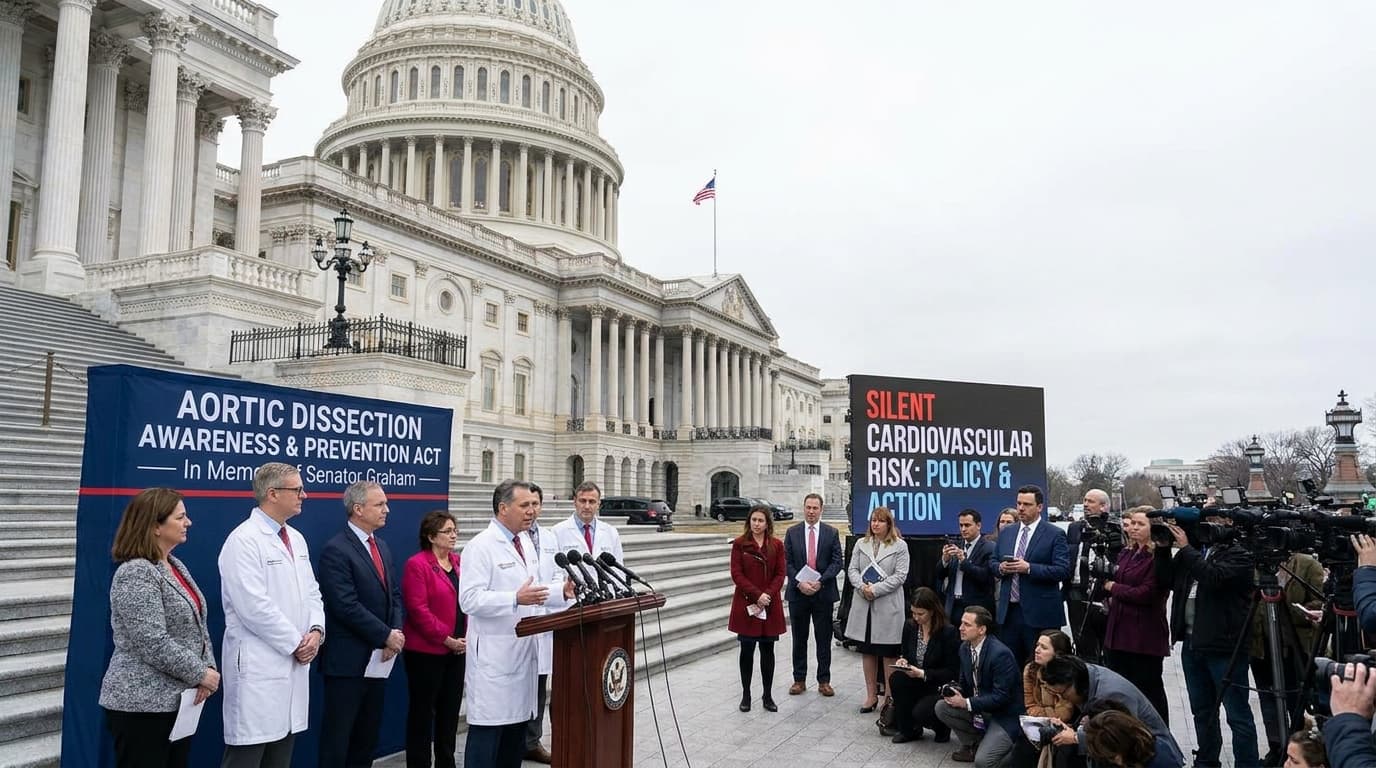
Graham’s Death from Aortic Dissection Sparks Urgent Conversations on Silent Cardiovascular Risk

The sudden passing of a public figure due to an aortic dissection has refocused national attention on this elusive and devastating medical emergency. Often developing over years without symptoms, aortic dissection poses complex challenges for clinicians and policymakers seeking to mitigate risk and prevent mortality. This deep-dive explores what we know, where we fall short, and what solutions may lie ahead.
Introduction
The recent passing of a high-profile political figure, Graham, from an aortic dissection has directed the spotlight toward a rare but life-threatening vascular disorder. While aortic dissection is considered a medical emergency, experts agree that it is frequently years in the making. The condition involves a tear in the body's largest blood vessel, the aorta, with potentially catastrophic consequences. In this investigative feature, we delve into the nature of aortic dissection, what current science says about prevention and risk, and how the healthcare system — from patient education to clinical screening and policy — can evolve to address these persistent challenges.
What Is Aortic Dissection?
Aortic dissection occurs when a tear develops in the inner layer of the aorta's wall. Blood surges through the breach, causing the inner and middle layers to separate (or "dissect"). If the blood-filled channel ruptures through the aorta's outside wall, the outcome is often fatal. The aorta is the main pipeline delivering blood from the heart to the rest of the body; even a small tear can lead to massive internal bleeding, organ failure, stroke, or sudden death. Despite advances in medicine, survival rates for aortic dissection have remained stubbornly low without prompt diagnosis and intervention.
The Clinical and Epidemiological Challenge
Aortic dissection is rare, affecting an estimated 5 to 30 per million people annually. However, its rarity presents one of its greatest dangers: lack of awareness among patients and even healthcare providers. The early symptoms—chest or back pain, shortness of breath, and sometimes loss of consciousness—are nonspecific and can mimic more common conditions like heart attack. Delays in diagnosis and treatment are frequent, which in turn leads to higher mortality.
At-Risk Populations
Research shows that older adults, particularly men and those with a history of hypertension or connective tissue disorders, are at higher risk for aortic dissection. Genetic syndromes such as Marfan syndrome and Ehlers-Danlos also increase susceptibility, as do structural conditions like a bicuspid aortic valve. However, these risk factors are often silent. Many people with underlying predispositions are unaware of their danger, complicating efforts to develop effective prevention strategies.
Prevention: Where We Stand
There is no routine screening program for aortic dissection in the general population. Unlike coronary heart disease, with its well-established risk calculators and widespread cholesterol screening, aortic dissection largely remains "off the radar" for preventive care. Strategies so far focus on aggressive management of blood pressure and surveillance in people with known genetic predispositions. The lack of widely validated predictive tools is a major barrier to broader preventive efforts.
The Role of Imaging and Genetic Counseling
For individuals with family histories of aortic disease, genetic counseling is advised, and imaging tools such as CT scans or echocardiograms can monitor aortic size. Unfortunately, routine imaging for low-risk individuals is not cost-effective or feasible on a mass scale, and there are concerns about over-diagnosis and unnecessary interventions.
Early Warning Signs: The Clinical Frontier
Emergency physicians often cite the phrase, “time is tissue,” to describe the urgency of diagnosing aortic dissection. Yet, symptoms may start subtly and progress rapidly. Improved algorithms are being developed to integrate classic warning signs—such as the sudden onset of tearing chest pain, pulse deficits, and blood pressure discrepancies—into triage protocols. However, these have yet to meaningfully impact the grim statistics for out-of-hospital survival.
The Policy Landscape: Gaps and Proposed Initiatives
Graham’s high-profile case has reignited calls among medical professionals and patient advocacy groups for greater awareness and more robust risk assessment strategies. Policy stakeholders are now asking: Should there be more aggressive blood pressure screening? Can there be more systematic ways to alert patients and providers to underlying connective tissue risks? How can electronic health records assist in risk stratification and decision support?
Empowering Physicians and Patients
Ultimately, increasing physician familiarity with the classic—but often missed—presentation of aortic dissection may be the most immediate solution. There is an ongoing push for improved medical education, better integration of risk factors into electronic decision tools, and targeted campaigns aimed at both the public and healthcare providers to recognize early signs and risk profiles associated with this deadly condition.
Research Directions: Where Innovation Might Help
The biomedical research community is working to identify new markers—biochemical, genetic, imaging, and computational—that can improve prediction and early diagnosis. Biomarker research is still in its infancy, but some teams are investigating proteins that may signal early aortic wall stress or dissection well before catastrophic tearing occurs. Digital health initiatives may someday provide wearable sensors that could pick up abnormal cardiovascular metrics in high-risk populations.
The Broader Cardiovascular Prevention Context
Graham’s case adds a sobering wrinkle to ongoing efforts to reduce cardiovascular deaths in America. While improvements in survival for coronary artery disease have led to overall declines in cardiac mortality, progress for rarer conditions like aortic dissection has lagged behind. Questions persist: Is a heightened focus on hypertension and aortic imaging for targeted groups enough? Or does the system need a more radical redesign to close these silent gaps in risk awareness and medical response?
Conclusion
Aortic dissection remains a formidable enemy, often striking without warning and carrying a high fatality rate. As medical science advances, and as high-profile losses spur fresh attention, there is a unique opportunity for the clinical and policy communities to come together to expand screening, increase awareness, and develop more refined predictive tools. Graham’s passing is a powerful reminder that even in 2026, many forms of cardiovascular risk still lurk in silence, awaiting greater attention from every sector of medicine and society.
To confront aortic dissection head-on will require not only medical innovation but a systemic push to prioritize the rare and devastating alongside the common, so that hidden risks do not result in preventable tragedies.
Source: STAT News
Join the BioIntel newsletter
Get curated biotech intelligence across AI, industry, innovation, investment, medtech, and policy delivered to your inbox.