Hantavirus Is the Warning Signal America Should Not Ignore

The recent attention to hantavirus outbreaks raises urgent questions about whether the United States is building durable preparedness infrastructure or simply improvising from one infectious disease emergency to the next. Examining the lessons from hantavirus, this article explores shortcomings in public health readiness and the perennial dilemma of sustainable epidemic response.
Introduction
As new and known viral threats continually challenge America’s public health system, the hantavirus offers a pointed case study of the recurring dilemmas faced by clinicians, epidemiologists, and policymakers alike. Originally identified in the United States in 1993, this rodent-borne virus has periodically triggered localized outbreaks with severe, sometimes fatal, outcomes. But the current wave of hantavirus cases raises infectious disease alarms not just because of its pathology, but because of what it symbolizes about the nation’s collective preparedness and capacity for effective, sustained response.
Despite years of experience confronting novel and re-emerging diseases — from Ebola and Zika to COVID-19 and mpox — the U.S. remains fundamentally challenged by questions of long-term infrastructure, data collection, and rapid, coordinated public health action. Are federal, state, and local authorities genuinely learning from past outbreaks, or is the country simply improvising its way from one crisis to the next? Does the appearance of diseases like hantavirus reflect a recurring failure to build future-proof systems, or just the enduring difficulty of managing infectious threats in an interconnected society?
In this analysis, we use the context of hantavirus to explore these critical questions, assessing what it means for the future of epidemic preparedness, the allocation of resources, and the trust the public places in the nation’s health infrastructure.
What Is Hantavirus?
Hantavirus is a genus of viruses typically carried by rodents, such as deer mice, and transmitted to humans primarily through the inhalation of aerosolized excreta (urine, saliva, or feces). Human-to-human transmission is extremely rare, making outbreaks generally limited in scope, yet potentially deadly.
The primary clinical manifestation in North America is Hantavirus Pulmonary Syndrome (HPS), a severe respiratory disease with a high mortality rate, sometimes exceeding 36%. Early symptoms resemble influenza or other viral infections, progressing rapidly to respiratory distress and potentially fatal outcomes in acute cases. The unpredictable and severe presentation underscores the need for early identification, effective clinical management, and rapid response capabilities.
The Current State of Hantavirus in the United States
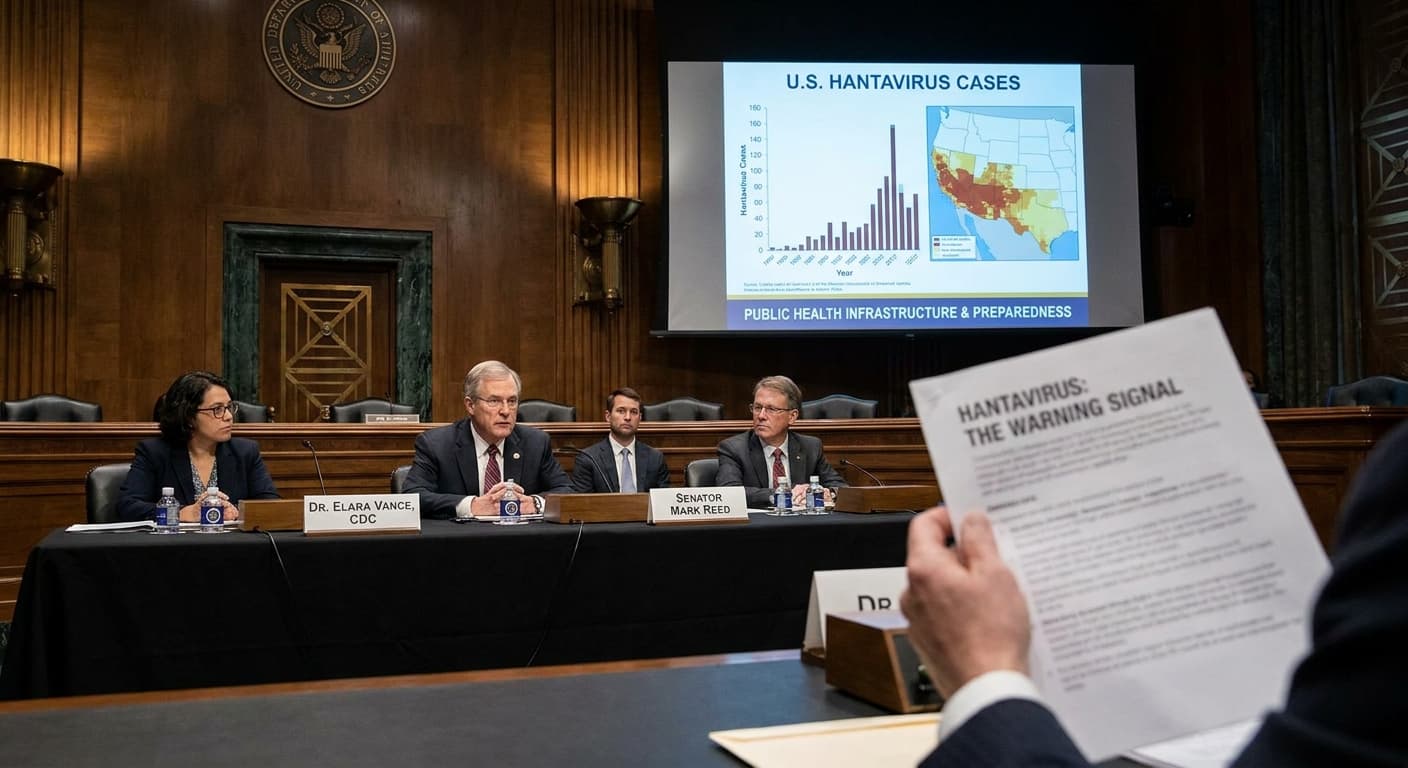
Recent increases in hantavirus cases have put a spotlight on regions with high rodent populations, particularly in the Southwest. Environmental conditions, such as heavy rains influencing food availability and rodent population booms, can drive these localized outbreaks. While the absolute case numbers remain relatively low compared to influenza or COVID-19, the severe nature of HPS and the demonstrated potential for sudden spikes in incidence have led public health officials to raise awareness among healthcare providers and the general public.
Hantavirus as a Symbol of Public Health Readiness Challenges
While hantavirus itself is a limited threat in absolute terms, it highlights systemic issues in the U.S. response to infectious diseases:
- Surveillance Gaps: Outbreaks have often been detected late due to inconsistent or under-resourced surveillance at the state or local level. Case reporting relies on the diagnostic acumen of clinicians, often in rural settings with limited access to advanced laboratory testing.
- Coordination and Communication: Fragmented communication between federal agencies (such as the CDC), state health departments, and local providers can delay information sharing, outbreak recognition, and targeted interventions.
- Preparedness Fatigue: Numerous public health emergencies in recent years have stretched responders thin, increasing the risk of planning fatigue, staff burnout, and inconsistent protocol implementation. The risk management lessons of the COVID-19 pandemic inform hantavirus readiness but have yet to materialize fully in the form of lasting structural improvements.
- Resource Allocation: Emergency preparedness funds are cyclical and often reactive rather than proactive. Initiatives to bolster field epidemiology, laboratory capacity, and emergency stockpiles gain steam in the wake of outbreaks but may lose momentum in quieter periods, leaving gaps when new threats appear.
Are We Building Lasting Preparedness or Just Improvising?
The central question raised by the current attention to hantavirus is whether America’s investment and organizational response to infectious diseases are building a durable, future-proof system — or if the nation is consistently forced to “wing it,” patching holes in preparedness only once an acute crisis emerges.
Historically, U.S. strategy has been marked by a cycle of urgency and neglect: the appearance of a dangerous new pathogen generates a swift and well-funded response, only for infrastructure and attention to fade as headlines subside. Hantavirus offers a microcosm of this cycle:
- Initial Outbreak (1993): The first cases of HPS in the “Four Corners” region led to rapid mobilization of epidemiologists and establishment of reporting protocols — but over time, as immediate threats faded, so did dedicated funding and ongoing training.
- Later Clusters: Subsequent regional outbreaks exposed persistent gaps — variable diagnostic awareness among clinicians, inconsistent application of environmental mitigation strategies, and differences in communication flow between authorities.
The pattern mirrors America’s response to other viral crises, including West Nile virus, Zika, and most prominently, COVID-19. Each time, initial gains in surveillance and infrastructure are challenged by shifting political priorities, resource competition, and the inherent limitations of the public health funding cycle.
Lessons from Hantavirus for the Broader Public Health System
-
Sustained Funding is Non-Negotiable: Without ongoing investment in surveillance, laboratory testing, and public health workforce training, episodic successes quickly erode. Hantavirus highlights the perils of short-term memory and the cost of letting emergency preparedness wane during periods of relative calm.
-
Integrated Data Sharing Matters: Rapid detection, particularly in geographically dispersed and rural areas, depends on seamless communication between front-line clinicians and central public health databases. Gaps in electronic case reporting, testing bottlenecks, and inconsistent communication continue to handicap the nation’s ability to act on early warning signals.
-
Healthcare Provider Readiness: Many doctors and nurses in endemic regions are unfamiliar with HPS, increasing delays in diagnosis and treatment. Enhanced continuing education, decision support tools, and integration of rare disease awareness into mainstream medical training can close this critical gap.
-
Community Engagement and Environmental Mitigation: Public health interventions must extend beyond clinical settings to address the root causes of outbreaks — in this case, rodent population management and education about household decontamination. Funding and operational oversight of such programs remain inconsistent, often tied to the most recent crisis rather than sustained needs assessment.
-
National Coordination is Key: Decentralized response leaves the U.S. at a disadvantage compared to countries with more centralized epidemic management. While federalism enables tailored responses, it can also promote fragmentation when consistent standards and escalation protocols are lacking.
Barriers to Building a Truly Prepared System
Despite wide recognition of the risks posed by diseases like hantavirus, several fundamental barriers impede systemic progress:
- Political Cycles: Preparedness funding is often a victim of election-year politics and shifting administrations’ attention spans.
- Workforce Limitations: Chronic underinvestment in public health staffing leaves the system less resilient to surges in demand.
- Siloed Data Infrastructure: Disconnects between hospital, laboratory, and public health data systems impede rapid synthesis and outbreak identification.
- Variability in State and Local Capacity: Not every public health entity has the resources or institutional support necessary for effective early response.
What Would Real Preparedness Look Like?
Real, sustainable epidemic preparedness in the United States would reflect:
- Persistent funding for epidemiology, laboratory capacity, and workforce training, regardless of outbreak cycle
- Universal, real-time case reporting across all relevant providers, leveraging standardized electronic data infrastructure
- Enhanced interagency coordination, enabling seamless scaling of response from local to federal level
- Regular, scenario-based preparedness exercises that include not only pandemic-scale events but more localized outbreaks like hantavirus
- An ongoing, nationwide educational campaign for both the public and healthcare providers in endemic areas
Opportunities for Progress in the Hantavirus Era
Hantavirus may never reach the scale or notoriety of a global pandemic, but it serves as a bellwether for broader readiness. Every outbreak gives public health leaders an opportunity to examine what worked, what didn’t, and what protocols, systems, and investments need to be set on permanent “standby” mode.
- CDC and State Health Roles: Both must continue to invest in real-time case tracking and laboratory expansion, with federal leadership ensuring that lessons are not lost between outbreaks.
- Integration with One Health Initiatives: Recognizing the links between animal, environmental, and human health is especially apt with hantavirus, given its rodent reservoirs. Cross-disciplinary collaboration can alert authorities to early warning signs, potentially preventing spillover events.
- Public Engagement: Building trust and compliance with mitigation advice requires consistent messaging and community partnership, especially in rural regions where outbreaks are most likely.
- Research Investment: Ongoing support for vaccine and therapeutic development, as well as environmental management research, can yield long-term dividends well beyond hantavirus.
Conclusion: Hantavirus as an Enduring Warning Sign
The emergence and persistence of hantavirus in America’s public health landscape is more than just the story of a zoonotic pathogen — it is a cautionary tale about the dangers of improvisational public health. Each cluster is a test of whether lessons from past crises have truly sunk in, and whether infrastructure, data, and workforce readiness are ready to meet the next, potentially larger challenge.
For policy makers, clinicians, and public health leaders, the question remains: are we finally moving toward a paradigm of rational, proactive, and fully integrated preparedness — or are we still stuck in a cycle of crisis-driven improvisation, leaving the nation perpetually vulnerable to the “next big one”?
The stakes could not be higher. Hantavirus may be the latest, but certainly will not be the last, warning signal America should heed.
Sources: MedCity News
Join the BioIntel newsletter
Get curated biotech intelligence across AI, industry, innovation, investment, medtech, and policy delivered to your inbox.