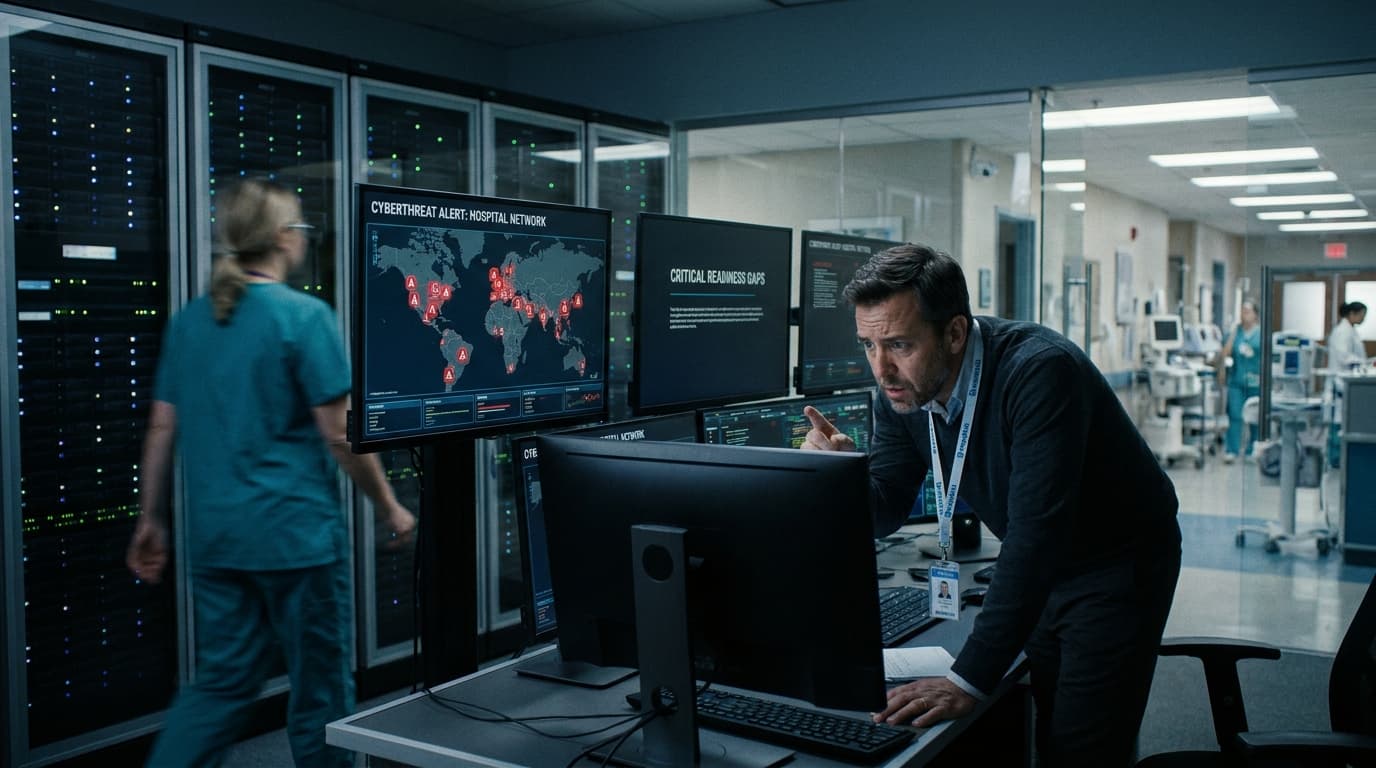
Hospital Networks Face New Era of Cyberwarfare Threats—and Critical Readiness Gaps

As cyberwarfare tactics escalate globally, U.S. hospital networks are now recognized targets—often with limited capacity to withstand or recover from attacks. Experts warn that ideological, political, and financial motivations drive a complex threat landscape, with vulnerabilities spanning legacy systems, critical infrastructure, and institutional readiness.
Introduction
The threat landscape for cybersecurity in healthcare has shifted dramatically in recent years. No longer are criminal enterprises seeking quick financial gains the only adversaries that healthcare organizations must consider. Instead, hospital networks now find themselves ensnared in broader geopolitical and ideological conflicts—where cyberwarfare tactics are a tool for nation-states, hacktivists, and terrorist groups alongside traditional criminal actors. The recent commentary from MedCity News crystallizes the magnitude of this challenge: healthcare has become a strategic target, and most hospital systems are unequipped to face a new breed of technologically sophisticated, persistent threats.
This analytical deep-dive explores the evolving nature of cyber threats facing hospitals, the readiness gaps that leave the sector exposed, and the implications for patient care, institutional trust, and national security.
From Crime to Cyberwar: The Shifting Threat Matrix
Historically, healthcare cybersecurity focused on breaches involving ransomware and data theft. Criminal groups sought sensitive patient data or locked up electronic health records—demanding ransoms for restoration or selling information on black markets. While these risks remain acute, a new dimension has emerged: the possibility that healthcare infrastructure could be targeted to serve ideological, political, or even military objectives.
Why Target Hospitals?
- Disruption of Essential Services: Attacks on hospitals can instantly disrupt access to critical care. Outages, system lockdowns, or device tampering can threaten lives directly.
- Amplified National Panic: Healthcare is a deeply emotive and essential sector. Widespread disruption can sap public confidence, erode trust in institutions, and generate national-level anxiety.
- Complex Interdependencies: Hospitals depend on vast, interconnected networks of suppliers, devices, and logistics. A well-placed breach can spiral across the healthcare ecosystem, amplifying its impact.
- Low Readiness, High Impact: Many hospitals run on out-of-date systems and under-resourced IT departments, making them comparatively easy targets with the potential for catastrophic consequences.
Anatomy of Modern Healthcare Cyberattacks
Motives: Beyond Money
While ransom remains a motive, the rise of nation-state adversaries means that ideological and political considerations now dominate certain classes of attacks. Some tactics aim to:
- Create chaos during times of national crisis (e.g., pandemics, elections)
- Undermine government authority
- Extract sensitive medical research data as part of broader intelligence operations
- Seed distrust or misinformation about health interventions
Tactics: Increasingly Sophisticated
Cyber aggressors now deploy tactics such as:
- Phishing and spear-phishing campaigns that mimic trusted medical or government sources
- Exploitation of unpatched medical devices (e.g., infusion pumps, imaging machines)
- Supply-chain attacks that compromise hospital networks through third-party vendors
- Deployment of “wiper” malware designed not to extort, but simply to destroy
- Attacks launched as diversions or tests in advance of larger strategic operations elsewhere
Current State: Unequipped and Underprepared
Legacy Technology and Interoperability Challenges
Many U.S. hospitals still rely on aging infrastructure, unpatched operating systems, and medical devices with weak or outdated security configurations. The integration of electronic health records, telehealth platforms, and IoT devices has created a sprawling attack surface—difficult to monitor and protect. In most institutions, cybersecurity investments have failed to keep pace with the rapid digitization of care delivery.
Workforce and Training Gaps
Despite the importance of cybersecurity, most hospitals do not have dedicated, adequately staffed security teams. Some health systems lack even a single board-certified cybersecurity professional, relying on generalist IT staff who also handle routine technical troubleshooting. Moreover, user training—essential to combat phishing and social-engineering attacks—remains inconsistent, and in some networks, virtually nonexistent.
Incident Response and Recovery
Few hospitals have fully developed response protocols for large-scale cyberattacks. Disaster recovery plans often focus on physical threats (fires, floods, earthquakes) rather than cyber incidents. As a result, even well-known ransomware attacks can take days to weeks to resolve—resulting in canceled surgeries, diverted ambulances, and patient safety risks.
Regulatory and Liability Complexities
Although regulations such as HIPAA mandate the protection of patient data, enforcement gaps exist in practical day-to-day cybersecurity preparedness. Liability for breaches—especially those linked to nation-state adversaries—remains a legal gray area in many contexts, making risk management and insurance procurement challenging for hospital administrators.
Impact on Patient Care and Public Health
The consequences of cyber incidents extend well beyond financial losses. In recent years, multiple ransomware attacks resulted in:
- Emergency departments going offline
- Delayed or canceled surgical procedures
- Inaccessible medical records at critical moments
- Compromised medical devices putting patient safety at risk
- Significant psychological distress for staff and patients
Experts warn that as adversaries shift from fast-payday attacks to prolonged, ideologically driven disruptions, the impact will move from temporary incidents to systemic compromise—with potential for catastrophic consequences.
Broader Implications: Healthcare as a National Security Concern
The U.S. Department of Health and Human Services, along with federal cybersecurity agencies, has repeatedly warned that healthcare should now be considered a core component of national infrastructure—akin to energy, transportation, and water systems. The entry of healthcare into nation-state cyberwar strategy highlights several strategic imperatives:
- Resilience: Essential health services must be able to withstand and recover from attacks without catastrophic failure.
- Intersector Coordination: Hospitals, public health bodies, and law enforcement must establish rapid-response protocols for coordinated defense.
- Institutional Trust: Sustained attacks erode public confidence not only in affected hospitals but in government and public health at large.
Path Forward: Strategies for Readiness
1. Prioritize Cybersecurity as a Core Strategic Risk
Hospital governance must elevate cybersecurity from an ancillary IT function to a board-level priority. This involves appointing dedicated cybersecurity officers, increasing investment, and subjecting preparedness to the same scrutiny as infection control or financial audit.
2. Modernize Infrastructure and Patch Vulnerabilities
Accelerated replacement of legacy systems and rigorous vulnerability scanning are essential. Hospitals must inventory all networked medical devices and ensure up-to-date security controls on every system with access to sensitive data or control functions.
3. Train and Equip the Workforce
Continuous staff training on recognizing and reporting phishing attempts, plus regular “red team” (simulated adversary) exercises, will raise institutional readiness. This must extend from front-line clinicians to executive leadership.
4. Develop Comprehensive Incident Response Protocols
Hospitals should draw upon models used in other critical infrastructure sectors—implementing detailed disaster recovery plans for cyber events, with clear chains of communication and defined steps for operational continuity.
5. Collaborate with Public and Private Sector Partners
Information-sharing with federal and state agencies, medical device manufacturers, health IT vendors, and peer institutions can help identify threats early and enable rapid, coordinated response.
Challenges and Unanswered Questions
While the path forward is clear in principle, significant barriers remain:
- Cost Constraints: Cybersecurity investments compete with clinical and operational priorities in tight hospital budgets.
- Workforce Shortages: The national shortage of cybersecurity professionals is especially acute in healthcare, a sector long lagging technology investment and salary competitiveness.
- Fragmentation: The U.S. hospital system is highly fragmented, making coordinated defense efforts complex.
- Supply-Chain Exposure: Many attacks begin not at hospitals themselves, but via poorly secured vendors or business associates. Regulatory frameworks for supply-chain risk are developing, but not yet mature.
Conclusion: Reckoning with a New Normal
The cyberwarfare threat to healthcare is unlikely to abate. Instead, experts predict the intensity and sophistication of attacks will continue to increase as adversaries target hospitals for both symbolic and practical reasons. The sector’s preparedness remains uneven and, in many cases, dangerously inadequate.
Moving forward, healthcare leadership must accept that the question is not if, but when, their institutions will be targeted. Defending against ideological, political, and military actors requires a paradigm shift—from reactive, ad hoc security practices to proactive, holistic risk management that considers cyber threats as central to the mission of patient care.
Institutional resilience, intersectoral partnerships, and continuous vigilance will be required if hospitals are to fulfill their core social contract in the face of evolving, often unseen, digital adversaries.
Source: MedCity News
Join the BioIntel newsletter
Get curated biotech intelligence across AI, industry, innovation, investment, medtech, and policy delivered to your inbox.