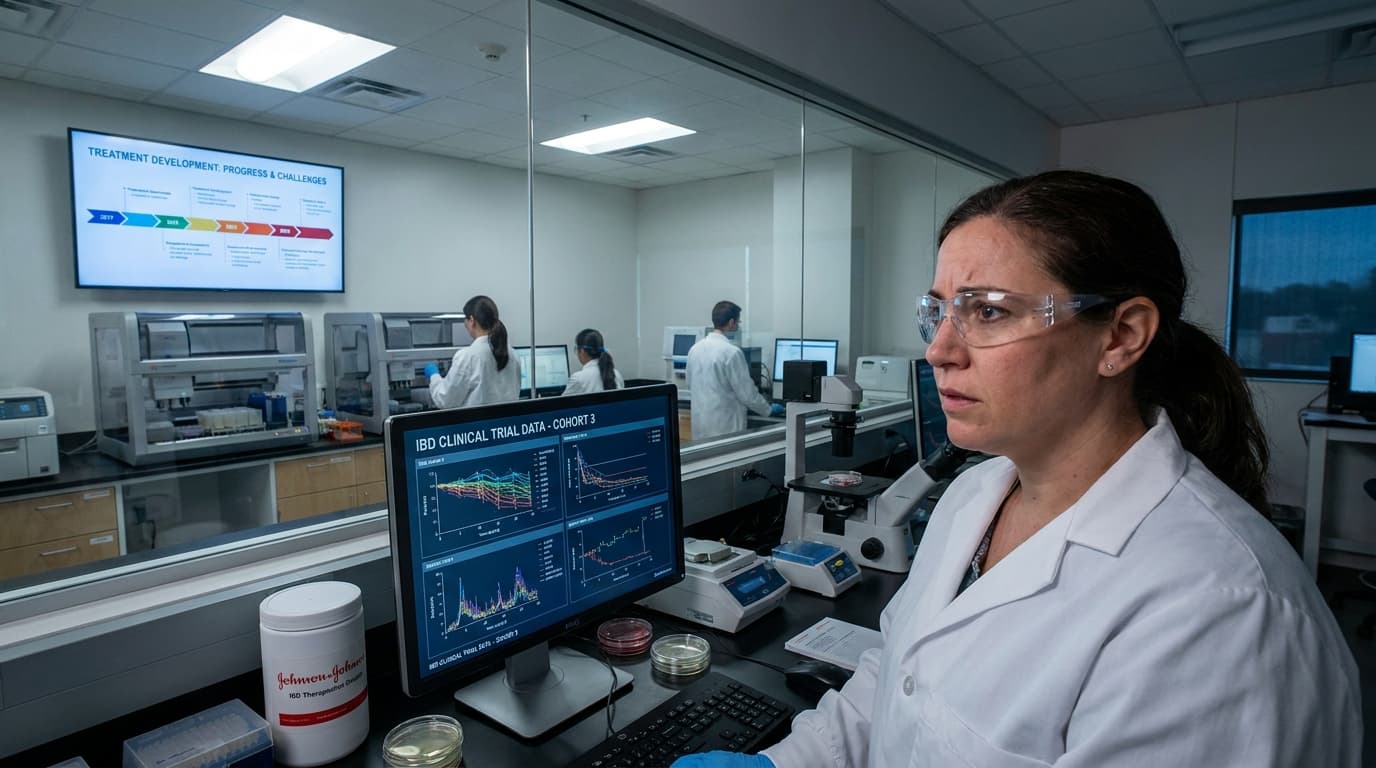
Johnson & Johnson's IBD Therapy: Progress Despite Trial Setbacks

Johnson & Johnson’s latest therapy for IBD patients did not meet all statistical benchmarks in recent trials but continues to represent a potential advancement in the treatment landscape. This blog explores the implications of these trial results and what they mean for the future of IBD therapies.
Inflammatory bowel disease (IBD) is a chronic condition that significantly impacts patients' quality of life worldwide. The development of new therapies is critical to improve outcomes for those suffering from this complex disorder. Recently, Johnson & Johnson reported trial results for a closely watched IBD therapy that did not meet the criteria for statistically meaningful improvement, causing a mix of disappointment and cautious optimism within the medical community.
Despite this setback, the therapy represents an important step forward. Johnson & Johnson's efforts in advancing this therapy underline the ongoing challenges of effectively treating IBD, which comprises conditions such as Crohn's disease and ulcerative colitis. The trial's failure to reach significant improvement benchmarks highlights the difficulties in demonstrating clear benefits amidst the disease's heterogeneity and the variability in patient responses.
This development poses questions about the best pathways forward for IBD drug research and development. It also encourages a closer look at clinical trial design and endpoints in IBD studies, where meaningful patient-centered outcomes may not always align perfectly with traditional statistical measures.
Johnson & Johnson’s continued commitment to exploring innovative approaches signals a dedication to overcoming these hurdles. Developing effective IBD therapies not only requires targeting the disease mechanisms but also addressing diverse patient needs and improving long-term management strategies.
As the biopharmaceutical sector watches closely, this trial's outcome contributes valuable data for refining therapeutic strategies. Further research and development efforts will be crucial to realize the full potential of emerging treatments that might offer substantial benefits beyond current options.
In summary, while Johnson & Johnson's recent data fell short of expectations, the progress made is a testament to the complex but vital journey toward better therapies for IBD. Ongoing innovation, patient engagement, and adaptive trial designs will likely shape the future landscape of care for IBD patients.
Join the BioIntel newsletter
Get curated biotech intelligence across AI, industry, innovation, investment, medtech, and policy delivered to your inbox.