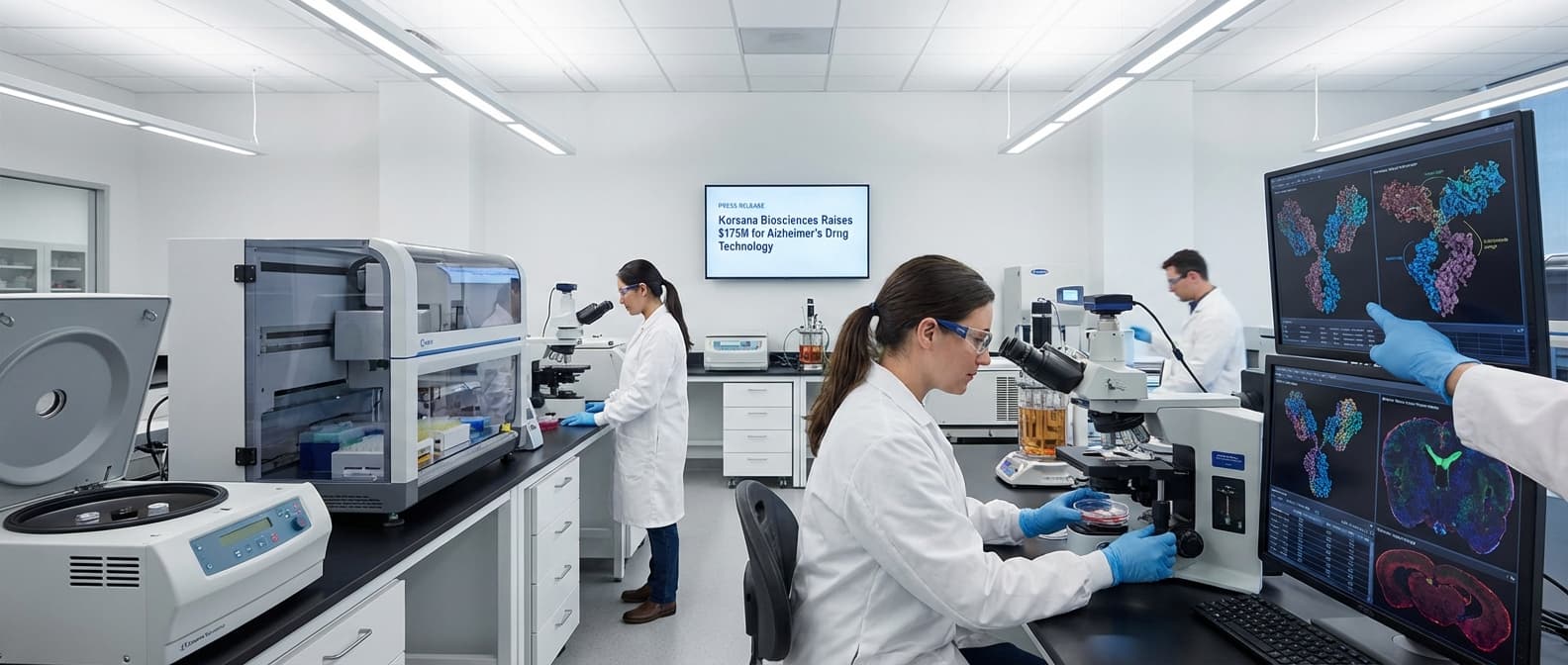
Korsana Biosciences Raises $175M to Advance Brain-Penetrating Alzheimer’s Drug Technology

The preclinical Alzheimer’s drug relies on Korsana’s proprietary platform technology that enables antibodies to traverse the blood-brain barrier. This advancement parallels approaches by Roche and AbbVie, reflecting a significant leap in the therapeutic landscape against Alzheimer's disease.
Introduction
Alzheimer’s disease remains a formidable challenge in medicine due to the complexity of the brain’s protective mechanisms, which hinder effective drug delivery. Korsana Biosciences has recently announced a significant funding milestone, raising $175 million to develop a next-generation Alzheimer’s drug leveraging its innovative brain shuttle technology designed to cross the blood-brain barrier with greater efficacy.
Korsana’s Innovative Platform Technology
The hallmark difficulty in treating neurodegenerative diseases like Alzheimer’s is the blood-brain barrier, a selective boundary that protects the central nervous system but also restricts therapeutic molecules from reaching their targets. Korsana’s platform enables antibodies—large, traditionally non-permeable molecules—to penetrate this barrier. This is achieved through specialized molecular shuttles or transport mechanisms, potentially revolutionizing how medicines treat brain-related diseases.
Comparisons to Roche and AbbVie’s Approaches
Pharmaceutical giants Roche and AbbVie have embarked on clinical-stage development programs using somewhat similar strategies to enhance CNS drug delivery. Korsana’s approach, distinguished by its platform technology and preclinical progress, contributes to an emerging paradigm shift in Alzheimer's drug development.
Importance of the $175 Million Funding
The fresh capital injection of $175 million bolsters Korsana’s capacity to accelerate preclinical studies, expand research initiatives, and presumably initiate early clinical trials. This not only signals strong investor confidence but also reflects an optimistic outlook surrounding the potential viability of brain-penetrating antibodies in Alzheimer's therapies.
Implications for Alzheimer’s Drug Development
If successful, Korsana’s therapy could represent a breakthrough by surmounting a critical biological barrier that has long limited effective treatments. Bringing antibodies directly to the brain tissue in therapeutic concentrations may improve outcomes and slow disease progression.
Broader Impact on the Biotech Sector
The funding round and technological emphasis underscore a growing trend of specialization in tackling complex diseases through innovative delivery systems. As Korsana advances, it could inspire similar ventures and collaborations, fostering an ecosystem geared towards high-precision neurotherapeutics.
Challenges Ahead
Despite promising technology, Korsana faces the standard challenges in drug development, including safety, efficacy demonstration in clinical trials, manufacturing complexities, and regulatory approvals. Moreover, the transition from preclinical to clinical phases will be critical in validating the platform’s potential.
Conclusion
Korsana Biosciences’ recent funding milestone and its novel brain-penetrating antibody platform illustrate a hopeful direction for Alzheimer’s drug research. By addressing the long-standing hurdle of the blood-brain barrier, this development could pave the way for more effective neurodegenerative therapies, contributing significantly to biomedical innovation.
This article provides a detailed overview of Korsana Biosciences’ recent funding success and its scientific approach to tackling Alzheimer’s disease.
Source: MedCity News
Join the BioIntel newsletter
Get curated biotech intelligence across AI, industry, innovation, investment, medtech, and policy delivered to your inbox.