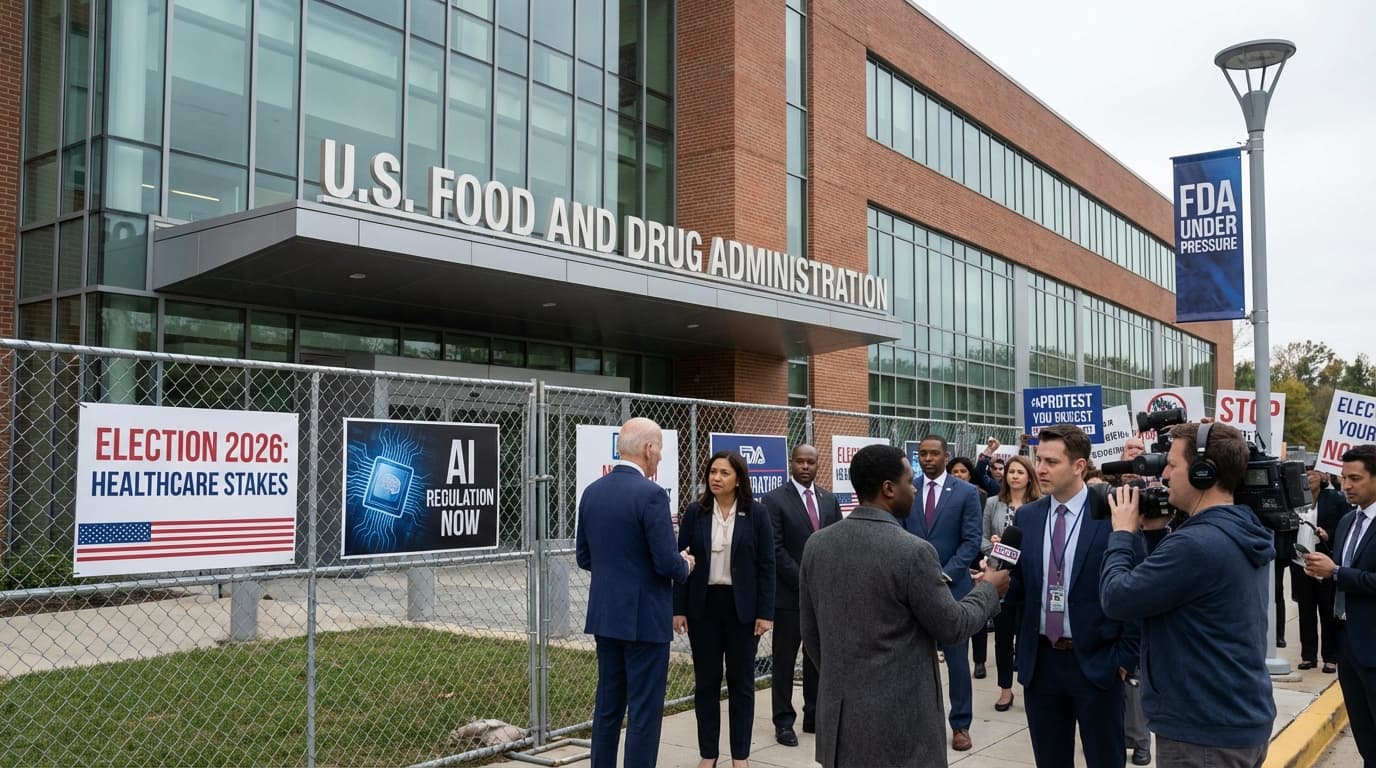
Navigating FDA Turmoil Amid Election Intrigue and AI Advances in Healthcare

The regulatory landscape of healthcare is currently under intense scrutiny with significant challenges facing the FDA, alongside complex political dynamics and rapid technological advancements in AI. Understanding these factors is crucial for stakeholders across the biotech and healthcare sectors.
The healthcare and biotech industries are navigating a tumultuous period characterized by significant regulatory challenges, election-driven political intrigue, and transformative advancements in artificial intelligence (AI). This overview delves deeply into these interconnected themes, presenting a comprehensive analysis of the current environment shaping healthcare innovation and policy enforcement.
FDA Turmoil and Regulatory Uncertainty
The Food and Drug Administration (FDA) remains a pivotal authority in regulatory oversight within the United States, influencing drug approvals, safety protocols, and market entry viability. Recent weeks have seen substantial turmoil within the agency, reflecting growing pains as it balances rapid innovation demands with stringent safety and efficacy standards. This turbulence is not merely administrative but affects industry confidence, investment decisions, and ultimately patient access to novel therapies.
Changing leadership dynamics, shifts in regulatory philosophies, and internal debates on evidentiary standards have led to delays and, at times, inconsistent adjudications that ripple through the biotech ecosystem. These developments have engendered widespread discussion among stakeholders, including pharmaceutical companies, investors, patient advocacy groups, and policymakers.
Election Intrigue and Its Impact on Healthcare Policy
Adding complexity, the approaching election cycle introduces considerable uncertainty to the healthcare policy framework. Election outcomes can lead to shifts in leadership at agencies like the FDA, potential revisions of healthcare laws, and changes in federal funding priorities. Political dynamics also influence public health strategies, coverage policies, and research funding allocations.
The intersection of election intrigue with regulatory affairs means that industry participants must strategize under uncertain future conditions. Legislators and regulators may pursue different agendas that reflect electoral mandates, ideological priorities, or geopolitical considerations. This environment challenges consistent policy application and complicates long-term planning for healthcare innovation.
Artificial Intelligence: Revolutionizing Drug Discovery and Beyond
In the midst of regulatory and political challenges, artificial intelligence emerges as a transformative force in healthcare. AI technologies are increasingly applied to accelerate drug discovery, optimize clinical trial design, enhance diagnostic accuracy, and personalize patient care.
Machine learning algorithms can mine vast datasets ranging from genetic information to clinical outcomes, identifying novel drug targets and predicting therapeutic efficacy. AI-driven automation expedites laboratory workflows and reduces costs, which are critical advantages amid rising R&D expenditures.
Despite its promise, AI integration into healthcare systems confronts regulatory scrutiny over data privacy, algorithmic transparency, and validation standards. Regulatory bodies like the FDA face the task of crafting guidelines that foster innovation while safeguarding public health, further contributing to agency turmoil.
Implications for Industry and Stakeholders
The convergence of FDA challenges, election-related policy flux, and AI-driven innovation creates a dynamic and uncertain landscape. Biotech companies and pharmaceutical developers must adapt to shifting regulatory expectations while leveraging technological advances to stay competitive.
Investment strategies require careful calibration to manage risk associated with regulatory delays and policy changes. Patient advocacy remains vital to ensuring that innovation translates to accessible treatments without undue safety compromises.
Conclusion
The current period marks a critical juncture for healthcare regulation and innovation. The FDA’s internal challenges intersect with political shifts and technological evolution, demanding nuanced understanding and strategic agility from all participants in the healthcare ecosystem.
Continued monitoring of regulatory developments, election outcomes, and AI integration progress will be essential in navigating this complex landscape. Stakeholders must balance innovation with caution, ensuring that advancements improve patient outcomes sustainably and equitably.
For a detailed conversation on these topics, listen to this week's Readout LOUD podcast covering FDA turmoil, election intrigue, AI, and more: source.
Join the BioIntel newsletter
Get curated biotech intelligence across AI, industry, innovation, investment, medtech, and policy delivered to your inbox.