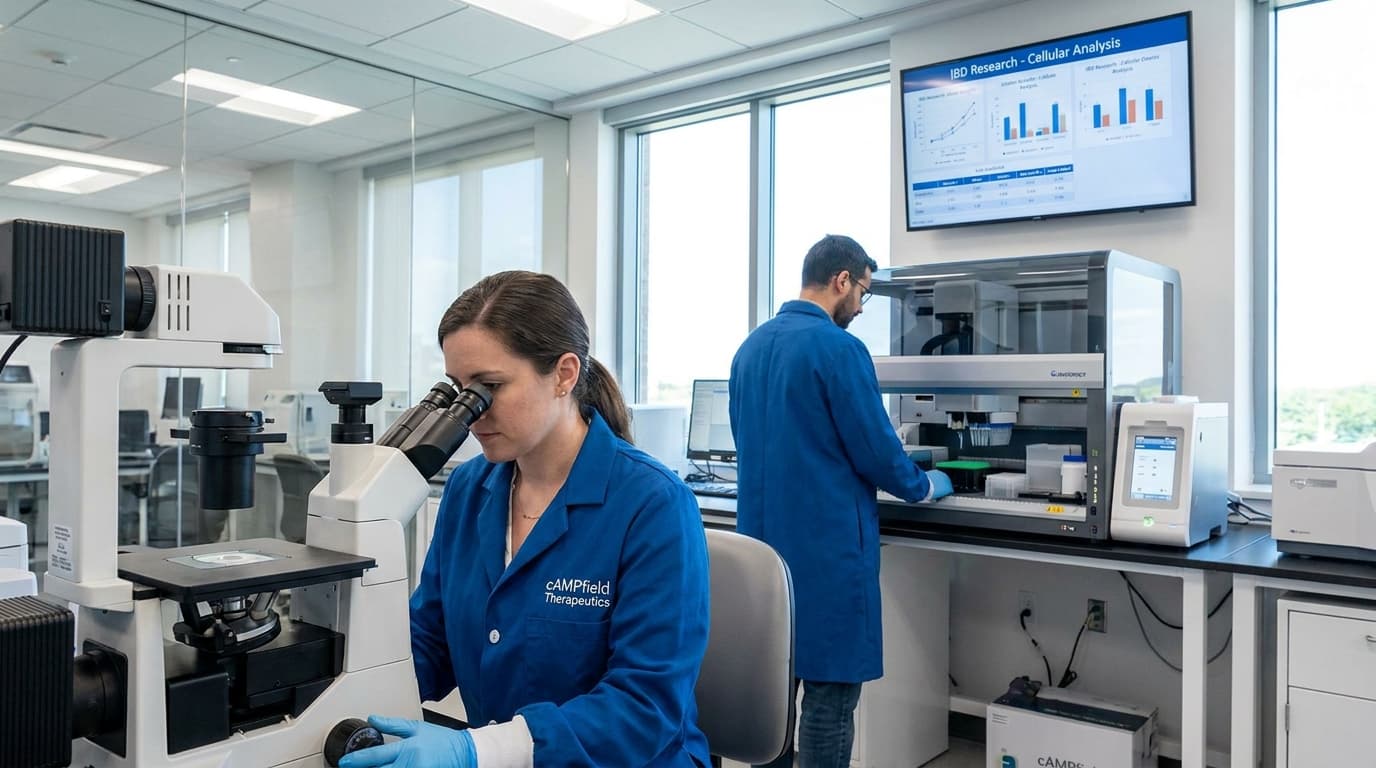
New Biotech cAMPfield Emerges with $180M to Reshape IBD Treatment

Backed by top-tier investors and led by seasoned industry professionals, cAMPfield Therapeutics aims to radically rethink approaches to inflammatory bowel disease. With strong financial traction in its first round, the biotech start-up is advancing new clinical programs with the potential to address profound unmet needs in IBD.
The life sciences ecosystem is witnessing the rise of a new player: cAMPfield Therapeutics, which has recently emerged from stealth with a staggering $180 million in funding, dedicated to reshaping the diagnosis and management of inflammatory bowel disease (IBD). This article explores the context, rationale, and implications of this substantial launch, along with the wider significance for the biopharmaceutical sector, patients, and scientific innovation.
A Major Financing for a Field Ripe for Disruption
Inflammatory bowel disease, including Crohn’s disease and ulcerative colitis, affects millions globally, with many experiencing recurrent flares, incomplete responses to existing therapies, and significant impacts on quality of life. Despite decades of research and a burgeoning therapy market, IBD remains an area with vast unmet needs, especially for patients who are refractory to biologic agents or who experience side effects from existing treatments.
Enter cAMPfield Therapeutics. Backed by an impressive $180 million from institutional investors and guided by experienced life sciences leadership, the new company is advancing one or more clinical candidates aimed at fundamentally transforming IBD care. The magnitude of this investment in a single-series launch represents strong sector confidence in both the technology and the team.
Institutional Investor Confidence in Biotech Startups
Securing $180 million in an era when venture capital is more discriminating than ever signals not just the appeal of cAMPfield’s technology but the credibility of its founders and scientific advisors. Institutional investors, including life sciences venture firms, are increasingly focused on companies with innovative targets, scalable R&D strategies, and a meaningful path to impact in diseases where incremental improvement is no longer sufficient.
The involvement of seasoned leadership—often drawn from large pharma, academia, and serial entrepreneurship—appears to have played a key role in the firm’s ability to raise such a sizable amount. For cAMPfield, this means ample funding not only to propel lead assets through clinical proof-of-concept but also to recruit top-tier talent and invest in enabling platforms for future pipeline expansion.
How cAMPfield Therapeutics Plans to Reshape IBD Therapies
While the company has not yet publicly disclosed the details of its lead asset or platform, its ambition is to advance a clinical program that could change the current paradigm for IBD treatment. Most established therapies for IBD—including anti-TNF, anti-integrin, and JAK inhibitor biologics—work by blunting elements of the immune response. Unfortunately, many patients do not respond to first-line agents or develop resistance over time, and long-term immunosuppression carries considerable risks.
cAMPfield’s investors and founders believe that their scientific approach—potentially leveraging novel intracellular signaling mechanisms or proprietary molecular targets—could enable disease modification or remission induction through unprecedented pathways. Institutional capital backing at this level further suggests high confidence in early-stage data or a compelling preclinical rationale, as well as a readiness to move rapidly into human studies.
Implications for the IBD Market and Pipeline Competition
The significant funding for cAMPfield underscores several major trends:
- Increased Focus on Mechanistic Innovation: Industry leaders and investors alike have signaled the end of "me-too" incrementalism in chronic inflammatory disease, demanding genuinely novel approaches that offer better safety, efficacy, or convenience for patients.
- Investor Willingness to Bet Big: Despite general belt-tightening in biotech venture funding, large single-round investments in high-change-potential startups are more common, parallel to trends in oncology and neurodegenerative disorders.
- Rising Bar for Clinical Proof: With more companies vying to serve the same patient populations, investors and partner pharma companies are focusing on clinical candidates that can deliver clear, meaningful improvements in real-world settings. Funding at this scale provides cAMPfield a runway to reach proof-of-concept and build the robust dataset required to stand out to payers, regulators, and physicians.
Challenges and Future Outlook
Despite the optimism, the path ahead is fraught with challenges. Clinical development in IBD is complex, requiring robust endpoints, careful patient selection, and an ability to demonstrate superiority or meaningful differentiation from a crowded field of therapies. The company will need to balance the imperative of moving quickly to the clinic with the risk management required to avoid costly late-stage setbacks.
In addition, the reimbursement landscape for biologics and novel therapeutics in IBD is in flux. Payers are increasingly scrutinizing the value of each new entrant, requiring clear real-world benefit and, in some cases, head-to-head data against established therapies. cAMPfield’s ability to address this headwind will be crucial for commercial success.
Broader Significance for Biotech and Patients
The funding and launch of cAMPfield reflect the ongoing vitality and ambition of the biotech sector, even amidst macroeconomic volatility and evolving regulatory guidance. For patients with IBD and their caregivers, the hope is that such scientific and financial commitment will yield better, faster, and safer treatments in the coming years.
Finally, emerging companies with substantial financial backing like cAMPfield challenge incumbents, stimulating innovation and competitive urgency across the therapeutic landscape. This rising tide of discovery and investment bodes well not only for IBD but for chronic inflammatory diseases at large.
Conclusion
As cAMPfield Therapeutics embarks on its journey with the benefit of major institutional backing, the entire ecosystem will be watching to see whether this latest biotech contender can fulfill its promise of reshaping treatment for a patient community in need. The path from launch to truly transformative medicine is never straightforward, but the latest wave of investment in IBD innovation signals that change is on the horizon for patients, providers, and the broader life sciences industry.
For more details and updates, see BioSpace.
Join the BioIntel newsletter
Get curated biotech intelligence across AI, industry, innovation, investment, medtech, and policy delivered to your inbox.