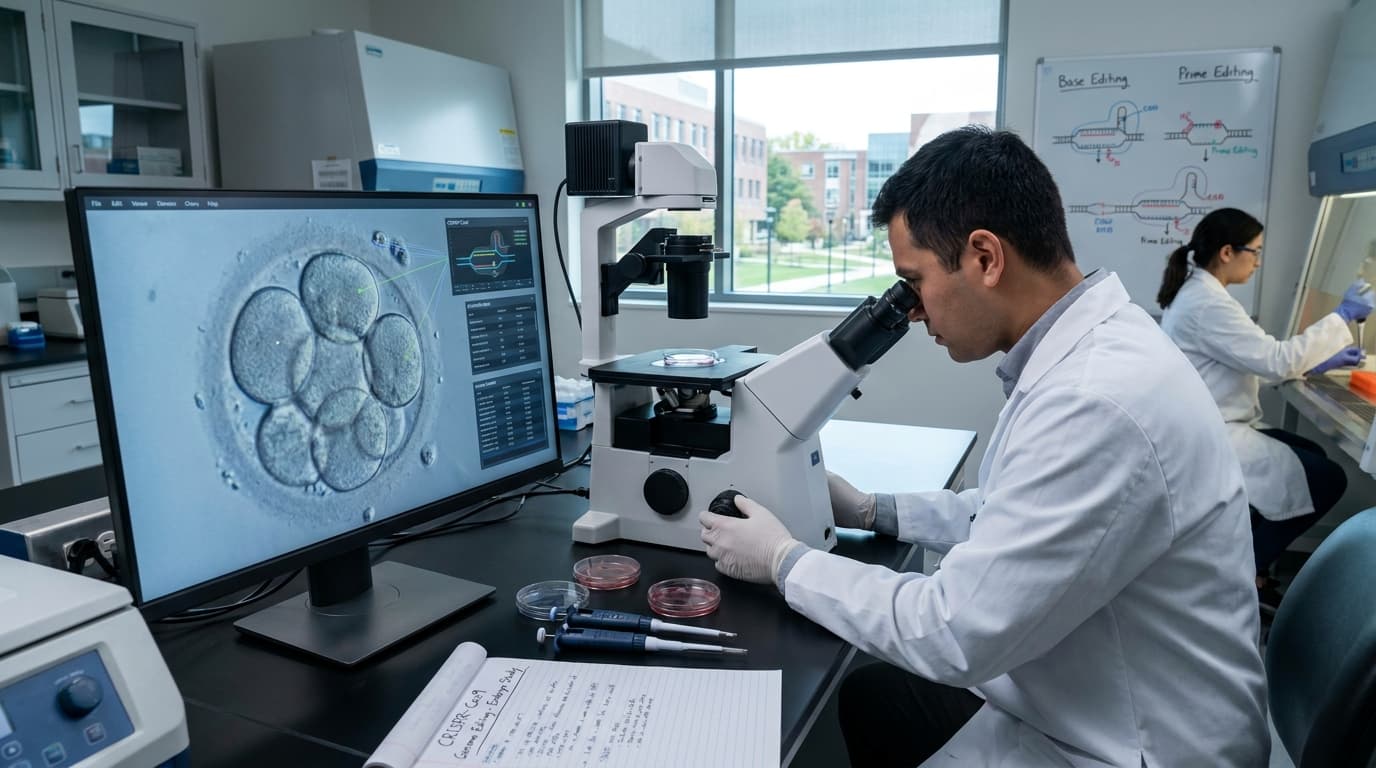
STAT+: Next-gen CRISPR Tools Improve Editing Accuracy in Embryos but Also Stoke Ethical Concerns

A recent human embryo study highlights breakthroughs in the accuracy of next-generation CRISPR tools, providing insight into early-stage developmental processes. At the same time, these innovations raise profound questions about the responsible application of gene editing and the potential societal consequences of altering the human germline.
Introduction
The revolutionary CRISPR gene-editing technology has continuously transformed the field of biotechnology since its emergence, demonstrating an ever-evolving capacity to alter the genetic blueprint of living organisms. The latest leap forward comes in the form of next-generation CRISPR tools with enhanced editing precision—most notably in the context of early human embryos. A newly published study reveals the capacity of these refined genome-editing systems to improve accuracy while targeting specific genes instrumental to the first stages of human development. Yet, as with all paradigm-shifting technologies, this advance is not purely technical; it is deeply enmeshed with longstanding bioethical considerations.
The Rise of Next-Generation CRISPR Editing
Since the original CRISPR-Cas9 system was first harnessed for genome editing, scientists have worked to address its limitations—chief among them off-target effects and unintended genetic changes. Base editing and prime editing—two prominent next-generation methods—offer promising solutions. By enabling single-nucleotide changes and highly specific DNA modifications, these advanced techniques can alter embryonic genomes with remarkable accuracy, minimizing disruption to surrounding sequences and lowering the risk of mosaicism or harmful mutations.
The human embryo study at the heart of the current discussion utilized these refined editors to probe one of the pivotal genes orchestrating human development. By deploying these precision tools, researchers pulled back the curtain on key biological processes and potential gene functions that have historically been difficult to study in humans. The broader implications for both developmental biology and future therapeutic interventions are substantial.
Unveiling the Intricacies of Embryonic Development
Through their work, scientists revealed new information about how specific genetic elements contribute to the earliest phases of embryonic growth—a knowledge gap that has long constrained efforts to understand congenital disorders, infertility, and normal development. Insight into these pathways humanizes CRISPR in the medical context; it becomes not just an instrument for disease prevention or therapy, but a window into the complex choreography of life’s genesis. These findings may eventually inform interventions for certain hereditary disorders at the embryonic stage, though practical and regulatory hurdles remain significant.
Precision Versus Unintended Consequences
Greater accuracy in gene editing does not wholly eliminate risk. Even with sophisticated base editors and prime editors, it is possible to introduce unintended changes or to fail to achieve uniformity across all cells of the developing embryo. Such risks—mosaicism and unknown downstream effects—remain technical challenges, as do concerns about the long-term health impacts of edited individuals. In addition, the possibility of unknown gene interactions continues to haunt even the most robust preclinical data.
Ethical Quandaries Intensified
The introduction of ever-precise CRISPR tools has reignited the ethical debates that have long followed human embryo editing. Central to these concerns is the prospect of germline modification—the alteration of DNA in eggs, sperm, or embryos, which can be inherited by subsequent generations. While therapeutic interventions for severe monogenic disorders remain a focal point for researchers, the specter of so-called 'designer babies' persists.
Bioethicists, regulatory bodies, and civic groups are grappling with how to construct ethical and legal frameworks that strike a balance between scientific progress and societal responsibility. Questions of consent, long-term safety monitoring, equitable access, potential misuse, and inadvertent eugenics demand careful, transparent deliberation. Many advocates now call for clear international standards and robust oversight as editing capabilities become more accessible and precise.
Societal Implications and Regulatory Landscape
Societal attitudes toward embryo editing remain deeply divided. Some countries have enacted strict prohibitions or moratoria on germline modification, while others permit tightly controlled research in the hopes of advancing treatments for intractable genetic diseases. The pace of scientific advancement often far outstrips policy evolution, increasing pressure on governments, oversight agencies, and global health institutions to update guidelines and ensure responsible stewardship.
The latest improvements in CRISPR accuracy will likely accelerate scientific interest as well as regulatory debate. For researchers, the chance to dissect the earliest stages of human development is tantalizing; for the public and policymakers, the possibility of unintended consequences and slippery slopes—including non-therapeutic enhancements—commands vigilance.
Expanding the Debate: Benefit, Risk, and Equity
As technical barriers to safe and reliable embryo editing fall, the distribution of benefits and risks gains greater prominence in the conversation. Will access to such technology be limited to privileged groups, exacerbating health and social inequalities? How will future generations evaluate decisions made on their behalf? Scholars argue for careful, interdisciplinary assessment, informed public dialogues, and iterative regulatory review as essential components of progress.
Conclusions: At the Intersection of Science and Ethics
Next-generation CRISPR tools mark a significant step forward in our capacity to modify human biology at its earliest frontier. The possibility of dramatically improving editing precision opens up new avenues in developmental research and rare genetic disease intervention. Yet, these gains exist alongside an intensification of ethical scrutiny, as clarity about what can be achieved does not diminish uncertainty over what should be pursued.
Developments in gene editing continually ask society to redefine the contours of possibility. As the science advances, so too must our frameworks for risk management, justice, and moral discernment. Inevitably, new findings will shape not only the trajectory of biomedical research but also public trust and the regulatory environment that governs its application.
Content for this article is based on reporting from STAT News. For a more detailed exploration, readers are invited to access the original story at STAT News.
Join the BioIntel newsletter
Get curated biotech intelligence across AI, industry, innovation, investment, medtech, and policy delivered to your inbox.