Novartis Reports Pelacarsen Phase 3 Miss In 8,323 Patients, Leaving Lp(a) Field Open

Pelacarsen was being watched as the first phase 3 attempt to prove that lowering lipoprotein(a) changes cardiovascular outcomes, not just a biomarker. Novartis now says that link was not shown in the overall study population, shifting attention to whether deeper suppression or different trial designs from Amgen and Eli Lilly can produce a different result.
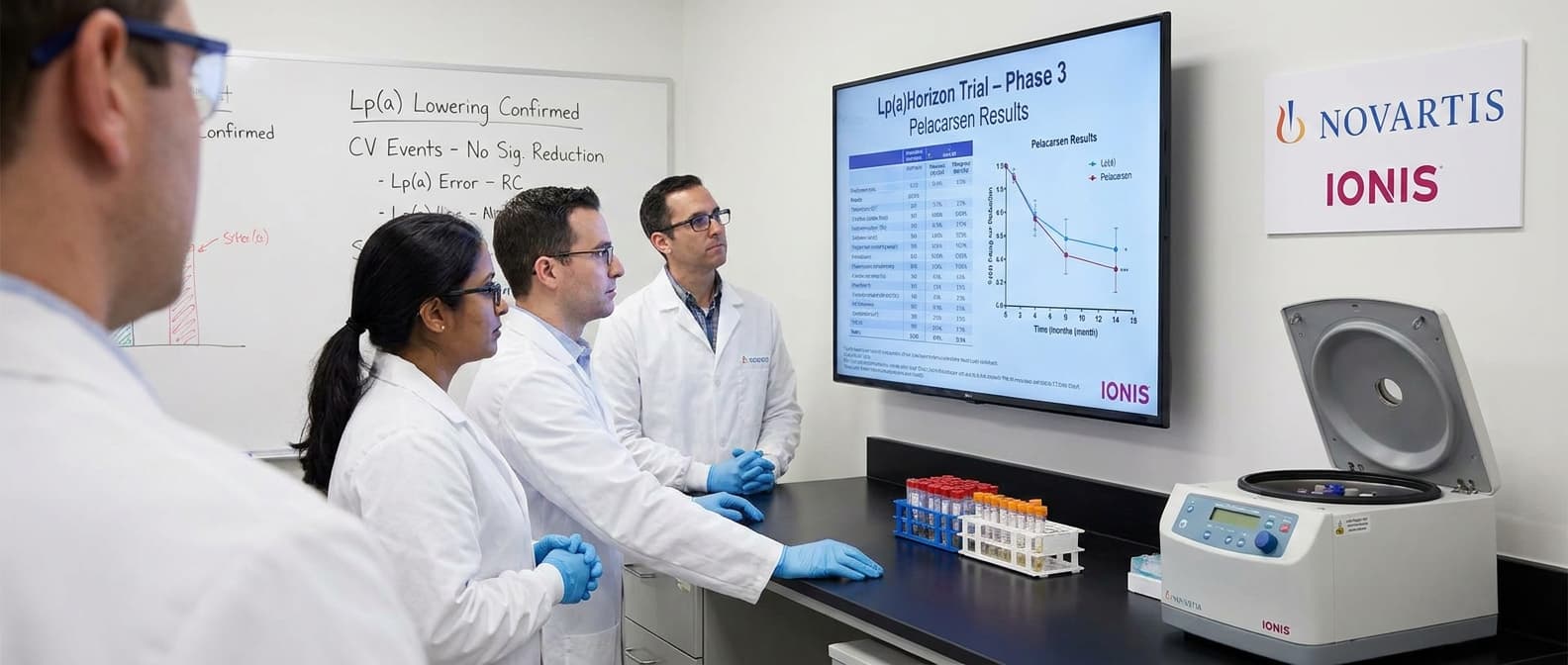
Novartis said its Ionis-partnered antisense oligonucleotide pelacarsen failed to reduce the risk of heart attack, stroke or other major cardiovascular events in the phase 3 Lp(a)Horizon trial, despite lowering Lp(a) levels. The topline outcome is a setback for a field built on the idea that lipoprotein(a) is not just associated with cardiovascular risk, but can be therapeutically targeted to change it.
The result matters beyond a single asset because pelacarsen was the first late-stage test designed to answer that question directly. Novartis chief medical officer and president of development Shreeram Aradhye said lower Lp(a) levels were observed, but that did not translate into reduced cardiovascular risk in the overall study population.
The Data
Lp(a)Horizon enrolled 8,323 patients with elevated Lp(a) who had previously experienced a cardiovascular event or have established cardiovascular disease. The trial was designed to test whether lowering Lp(a) with pelacarsen could cut the chance that these high-risk patients would experience a second event.
Novartis has not yet released full data and said it plans to share the results at an upcoming medical meeting. That leaves several open questions that matter for how investors and developers read the miss, including whether the study was essentially neutral or showed a directional benefit that did not reach statistical significance.
What The Miss Means For The Field
The source coverage points to dose depth as one possible explanation rather than a clean verdict on the target itself. William Blair analysts wrote that pelacarsen may not have reduced Lp(a) enough to show an effect; in past studies, the drug lowered levels by an average of 72%, and the analysts said Ionis reported similar levels in this trial.
That comparison is important because RNA interference candidates from Amgen and Eli Lilly are reported to reduce Lp(a) levels by more than 90%. William Blair said there may be an opportunity to consider deeper Lp(a) inhibition, particularly in a subpopulation of patients with higher baseline Lp(a) levels, while also acknowledging meaningful risk to the broader future of Lp(a)-driven cardiovascular disease trials after Horizon.
Citi analysts took a similar position, saying they would not declare the mechanism dead and arguing that greater target suppression could matter if cardiovascular benefit requires crossing a biological threshold. They also noted that Amgen and Lilly are using different trial designs for their RNA interference therapies, which means Horizon may not be a definitive readthrough to every program in development.
The Strategic Read
Pelacarsen had attracted attention because an estimated 20% of the global population has Lp(a) levels that put them at risk, creating a potentially very large commercial market if outcomes benefit could be proved. This miss does not erase that opportunity, but it raises the evidentiary bar for every company still pursuing it.
For Novartis and Ionis, the near-term shift is from commercial anticipation to scientific interpretation. For the rest of the field, the signal is narrower: biomarker lowering alone is not enough to carry the investment case when the causal biology remains incompletely understood. The next value inflection now sits with whether higher-suppression approaches from Amgen and Lilly can separate target validity from asset-specific limitations.
Join the BioIntel newsletter
Get curated biotech intelligence across AI, industry, innovation, investment, medtech, and policy delivered to your inbox.