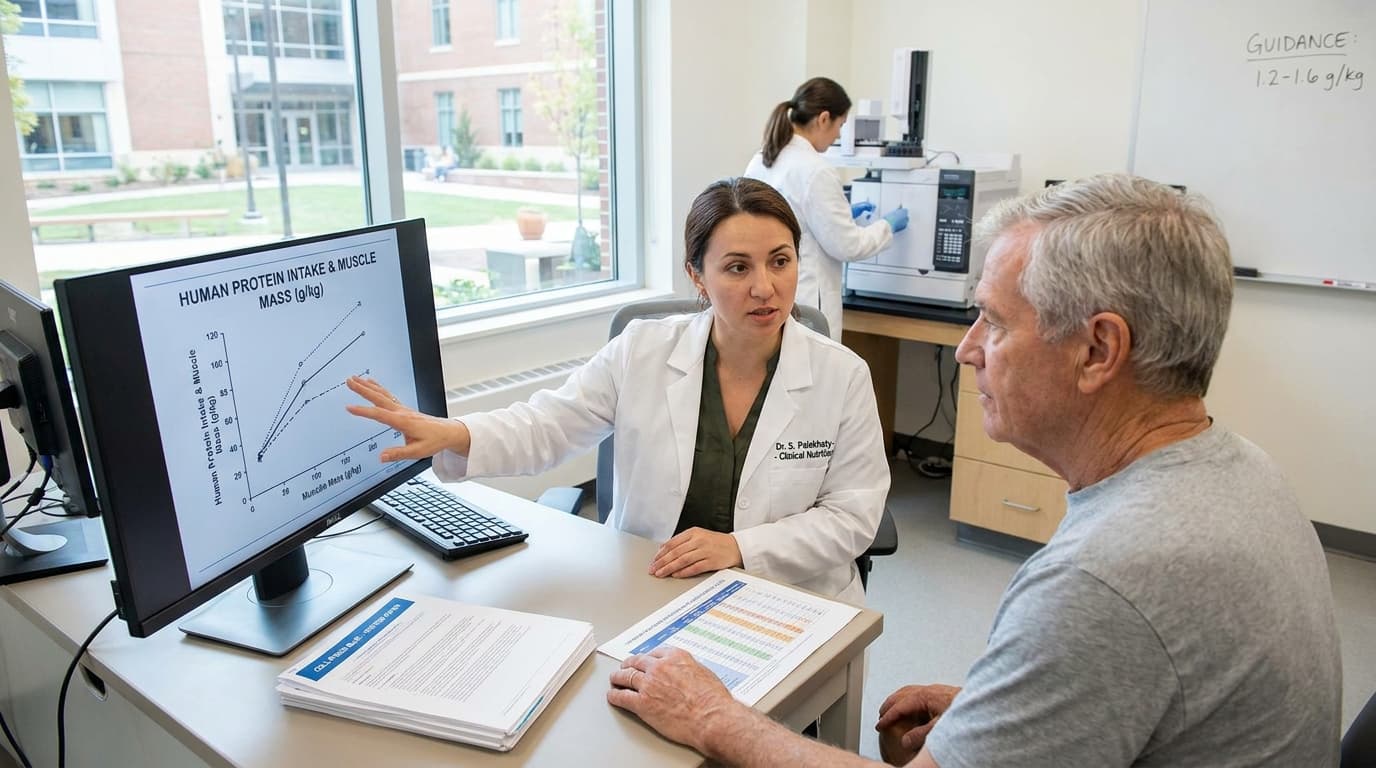
Nutrition Experts Reject Protein Restriction Longevity Claims, Citing 1.2 To 1.6 Grams Guidance

A Cell Press Blue review assembled findings from 350 previously published papers to argue that protein restriction and amino acid restriction may support healthy aging. Experts interviewed by STAT said the paper does not establish a human longevity benefit and could create risk if older adults, sedentary people, or people taking GLP-1 weight loss medicines respond by cutting protein too far.
A review paper arguing that dietary protein restriction promotes metabolic health, healthspan, and lifespan is meeting sharp resistance from nutrition experts, who say the case is much stronger in mice than in humans. The concern is not only scientific interpretation but also how quickly a mechanistic longevity argument can turn into broad consumer advice.
The paper, published in Cell Press Blue by authors from the University of Wisconsin-Madison’s department of medicine, drew on 350 previously published research papers to present what it called a comprehensive overview of the benefits of protein restriction and amino acid restriction for healthy aging. But several outside experts told STAT that the central unanswered question remains the human one: whether lowering protein intake actually improves lifespan in people.
The evidence gap
Stuart Phillips, a professor of kinesiology and skeletal muscle health expert at McMaster University, summarized the problem in a social media post as “a beautiful mouse story, sold as human advice.” He later told STAT that the authors themselves acknowledge that the effect of protein restriction on human lifespan is unknown, which he described as the central limitation.
That distinction matters because the review describes protein restriction as a geroprotective regimen that lowers total dietary protein intake while still meeting nutritional needs. Experts said that framing is difficult to apply cleanly to humans because nutritional needs vary widely across age, health status, and activity level.
The paper’s press release also said sedentary individuals in the U.S. probably overeat protein and may benefit from a protein-restricted diet. Several experts objected that the authors did not quantify the amount of protein they were recommending for that population, leaving a practical gap between a biological hypothesis and usable guidance.
Why clinicians are worried
The strongest objections focused on older adults. Phillips said that in people over 65, and especially in the very old, low protein is linked to worse outcomes, including more frailty, more falls, and higher mortality.
William Evans, a protein and aging researcher and adjunct professor of human nutrition at the University of California, Berkeley, said he is “very skeptical” of the proposed benefits of a protein restricted diet for older adults. He argued that longevity should not be confused with healthy lifespan, framing the more relevant question for geriatric care as how to help older adults stay functional and independent and avoid nursing homes.
Stacy Pelekhaty, a registered dietitian and senior clinical nutrition specialist at the University of Maryland Medical Center, said many patients begin focusing on longevity in middle age, when they are already dealing with chronic injuries or illness. In that setting, she said, higher protein needs are likely to be common rather than exceptional.
Evans added that aging reduces the body’s ability to synthesize protein as metabolism slows, increasing the need for dietary protein to maintain lean muscle. Katie Dodd, whose clinical practice focuses on older adults, pointed to the PROT-AGE study from the European Geriatric Medicine Society, which recommends 1-1.2 grams of protein per kilogram of body weight for older adults, with higher intake for those who exercise regularly. Dodd said reducing protein intake could accelerate muscle loss and threaten independence.
What the guidance says
The latest Dietary Guidelines for Americans, jointly released by the federal health and agriculture departments in early 2026, recommend 1.2 to 1.6 grams of protein per kilogram of body weight. Donald Layman, a professor emeritus of nutritional sciences at the University of Illinois Urbana-Champaign who helped set the dietary guidelines, said the majority of Americans are meeting this higher range.
The Recommended Dietary Allowance from the Food and Nutrition Board of the National Academies of Sciences, Engineering, and Medicine is lower, at 0.8 grams of protein per kilogram of body weight. STAT reported that the RDA is set at two standard deviations above the physiological need, meaning the true minimum requirement is below that level. Even so, Phillips said older adults may need more protein than the RDA recommends.
For sedentary people, Evans said 0.8 grams per kilogram of body weight is adequate to maintain lean tissue, but he also warned that exercise helps preserve that tissue, so reducing protein intake in sedentary individuals could speed muscle loss over time. Pelekhaty added another practical concern: if protein falls without a reduction in total calories, those calories must be replaced by other macronutrients. She said higher carbohydrate intake, for instance, could raise the risk of chronic metabolic conditions that would affect both longevity and quality of life.
The broader signal is that longevity nutrition claims built on mechanistic biology may travel faster than the human evidence needed to individualize them. In this case, the resistance from clinicians is less about defending high-protein diets in general than about rejecting a one-size-fits-all restriction message for populations already vulnerable to frailty and lean-mass loss.
Join the BioIntel newsletter
Get curated biotech intelligence across AI, industry, innovation, investment, medtech, and policy delivered to your inbox.