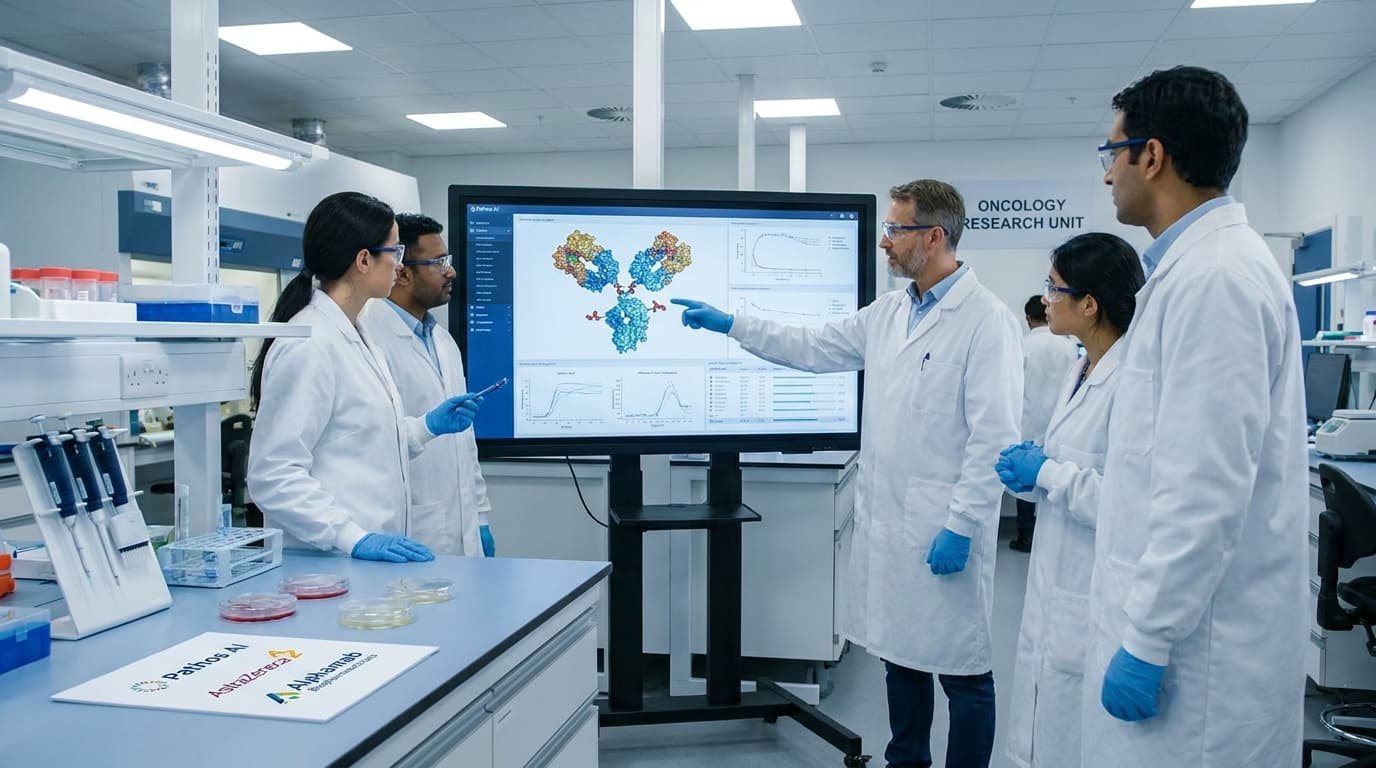
Pathos AI Expands Oncology Ambitions with Major Cancer Agreements

By signing substantial cancer agreements with global players AstraZeneca and Alphamab Biopharmaceuticals, Pathos AI is moving aggressively into the oncology market. These deals highlight shifting priorities in biotech innovation and the evolving landscape of advanced drug development.
Introduction
In a string of rapidly executed deals, Pathos AI has positioned itself as a fast-rising contender in oncology innovation by establishing two high-impact partnerships with pharmaceutical heavyweights AstraZeneca and China's Alphamab Biopharmaceuticals. These deals lay the foundation for a significant expansion of Pathos’ influence in cancer research, therapy, and commercialization.
The Agreements at a Glance
One of the headline agreements is with Jiangsu Alphamab Biopharmaceuticals, through which Pathos AI will potentially invest more than $2 billion. The centerpiece is a late-stage bispecific antibody-drug conjugate designed specifically for breast cancer, highlighting the growing value ascribed to next-generation antibody therapies in the fight against solid tumors. Bispecific antibodies are an innovative class of therapeutics that simultaneously bind two separate antigens or epitopes, thereby improving target specificity and increasing the therapeutic effect.
Alongside this, Pathos has inked a separate, but no less strategic, agreement with AstraZeneca. Although the precise financial details for this collaboration have not been publicly disclosed, sources indicate the alliance is meant to accelerate clinical development and broaden the portfolio of advanced oncology solutions. This could cover a spectrum of modalities, from antibody-drug conjugates and immunotherapies to advanced diagnostics and precision medicine strategies.
Strategic Impact
The significance of these back-to-back deals cannot be understated. For Pathos AI, the agreements underscore a deliberate pivot toward major participation in global oncology markets. Leveraging state-of-the-art artificial intelligence to identify and develop novel cancer therapies, Pathos aims to exploit synergies with its new partners, whether via big data analytics, drug target discovery, or streamlined clinical trial designs.
Working with AstraZeneca—one of the world’s foremost biopharmaceutical firms—offers a stamp of credibility and access to vast research infrastructure. At the same time, the financial magnitude associated with the Alphamab deal signals both confidence in the potential of bispecific antibody-drug conjugates and an appetite for sharing risk and benefit in late-stage oncology development.
The Rise of Bispecific Antibody-Drug Conjugates
Bispecific antibody-drug conjugates (ADCs) are transforming the oncology field by combining the precision of targeted biologics with the potency of cytotoxic agents. Traditional monoclonal antibodies have revolutionized cancer care, but bispecific platforms offer a new level of versatility and therapeutic targeting, especially against resistant or heterogeneous tumors often found in breast cancer.
By fusing Alphamab’s advanced ADC with its AI-driven drug discovery platform, Pathos stands to reap significant rewards if clinical trials prove successful. The company’s willingness to bet over $2 billion underscores the high risk, but potentially high reward, inherent in late-stage biopharmaceutical innovation.
Unpacking the AstraZeneca Deal
Although AstraZeneca’s involvement is less well-defined in public disclosures, the partnership could encompass research and development activities ranging from early discovery to clinical validation. Given AstraZeneca’s leadership in oncology, particularly immunotherapies and antibody development, Pathos may benefit from both technological expertise and global commercialization channels that only a multinational can provide.
Industry Context
The oncology sector is crowded with large pharmaceutical and biotech firms, each vying for differentiation through cutting-edge modalities and strategic acquisitions or alliances. Pathos’ entry into this arena with two transformative deals in quick succession sets the stage for a new round of competition and potential collaboration across the sector. With billions of dollars on the table and the cancer drug market continuing to outpace other therapeutic areas in terms of investment and scientific advances, the pressure to deliver superior outcomes for patients has never been higher.
Implications for Patients and Providers
If successful, these collaborations could speed up the arrival of novel treatments for patients struggling with breast cancer and potentially other tumor types. Advanced therapies may not only extend survival but also improve the quality of life, fostering hope for those facing limited options with traditional treatments. Furthermore, AI-driven approaches to clinical trial management may eventually reduce development times, improve patient selection, and increase access to breakthrough drugs.
Conclusion
Pathos AI’s high-profile deals with AstraZeneca and Alphamab illuminate a clear trajectory toward leadership in cancer innovation. As these partnerships unfold, industry observers will watch closely to see how Pathos leverages its technological prowess and strategic alliances to make meaningful advances in oncology. The willingness to engage in late-stage, high-value deals and collaborate with established leaders sets a new benchmark for ambition in the intersection of artificial intelligence and cancer therapeutics.
Source: BioSpace: Pathos inks back-to-back cancer contracts with AstraZeneca, China’s Alphamab
Join the BioIntel newsletter
Get curated biotech intelligence across AI, industry, innovation, investment, medtech, and policy delivered to your inbox.