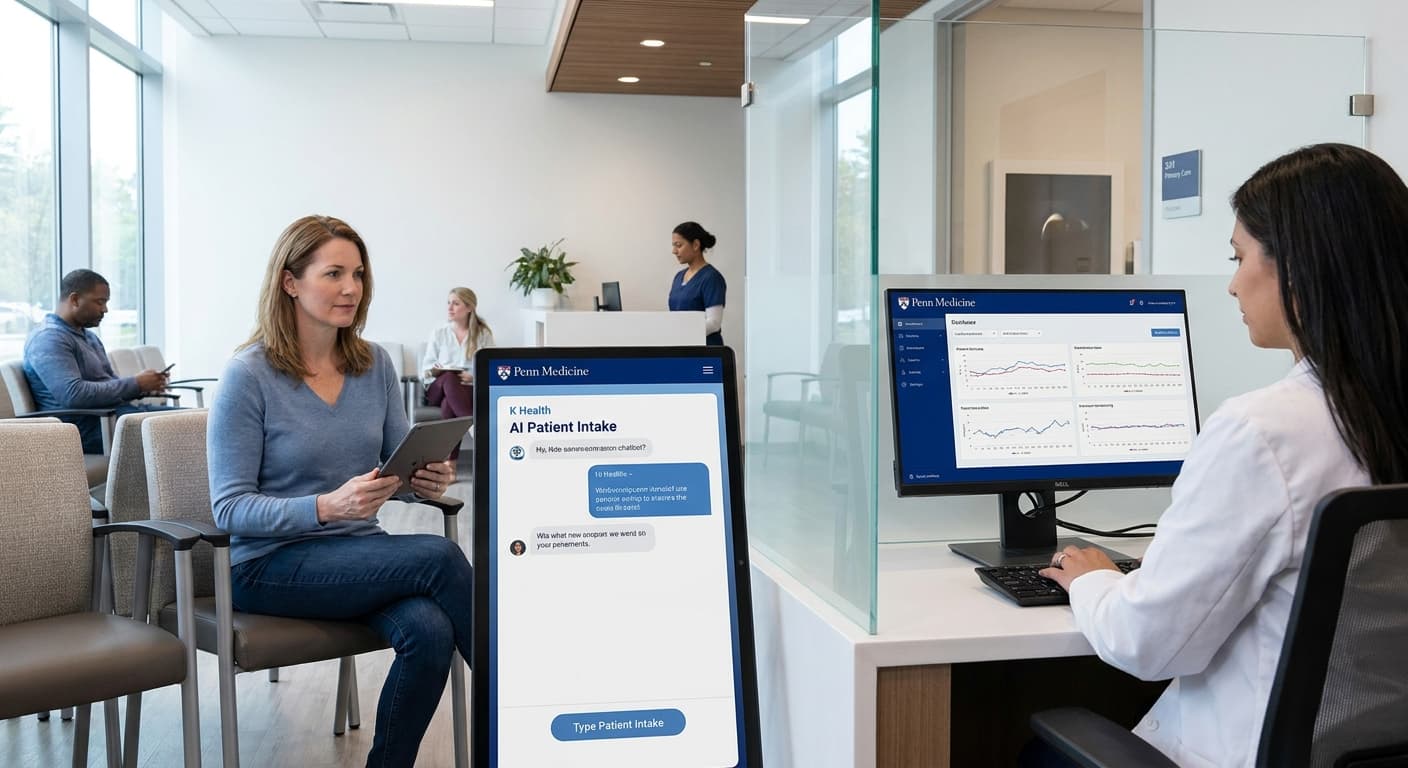
Penn Medicine Introduces AI-Powered Patient Intake to Enhance Primary Care

Penn Medicine has announced the rollout of K Health’s AI-driven intake solution for its virtual primary care program, representing a growing trend in healthcare’s digital transformation. This move is designed to free clinicians from time-intensive data collection tasks, potentially improving efficiency, patient experience, and allowing providers to spend more time on direct patient care. Yet, this transition prompts scrutiny around safety, accuracy, and the redefinition of patient-clinician interactions.
The quest to streamline clinical workflows, reduce administrative bottlenecks, and optimize the patient experience has placed artificial intelligence (AI) at the forefront of healthcare innovation. Penn Medicine’s latest initiative—integrating K Health’s AI-powered patient intake agents into its virtual primary care service—offers a compelling case study for how AI is reshaping the front door to modern healthcare.
In this in-depth analysis, we unpack the rationale behind Penn Medicine’s digital pivot, explore the mechanics of AI-assisted patient intake, and dissect potential implications for clinicians, patients, and the broader health ecosystem. We also consider challenges around safety, transparency, and the enduring need for human oversight in any AI-augmented clinical setting.
The Evolution of Patient Intake: From Clipboards to Chatbots
Patient intake has long been an administrative time sink for healthcare providers. Traditional methods typically require staff or clinicians to painstakingly collect information about symptoms, medical history, medications, insurance, and more—sometimes while toggling between electronic health records, forms, and face-to-face interactions. This process, though necessary, can siphon away valuable clinical time and introduce opportunities for error or omission.
The progression from paper forms to online portals and, now, to AI-driven digital assistants embodies healthcare’s ongoing journey toward digital optimization. AI-powered intake tools introduce a new layer: the ability to interact conversationally with patients, intelligently triage responses, and integrate data directly into the clinical workflow—ideally reducing latency, friction, and staff workload.
Penn Medicine’s recent decision to implement K Health’s virtual agents is a significant step in actualizing this vision.
Why Penn Medicine Is Investing in AI-Powered Intake Agents
The rationale for AI-driven intake extends far beyond operational convenience. According to Penn Medicine, the initiative’s chief aim is to "free up time for patient care rather than information-gathering." In a healthcare environment increasingly defined by clinician burnout and mounting patient volumes—especially in the virtual care domain—such solutions promise direct relief for providers, while also proffering potential enhancements in data quality and patient satisfaction.
Key factors driving this move include:
- Scalability: As virtual primary care scales post-pandemic, automated solutions offer a means to manage large patient cohorts efficiently.
- Consistency: AI tools can ask every patient the same baseline questions, promoting more standardized and comprehensive data collection.
- Quality improvement: By automating mundane data entry, clinicians may spend more of their time on clinical reasoning, diagnostics, and care planning.
How AI Intake Agents Work
While Penn Medicine has not disclosed every granular detail, K Health’s virtual agents typically use natural language processing (NLP) to guide patients through a series of adaptive questions. These interfaces, often chatbots or conversational forms, adapt in real time based on patient input—mimicking a human intake specialist while enabling around-the-clock service and direct integration with health record platforms.
Crucially, the technology aims to collect not only symptoms and complaints, but to elicit broader context—prior medical history, medication adherence, allergies, social determinants of health, and more. The aggregated data is then presented to the clinician, ideally in a form that can be rapidly absorbed and actioned during the virtual visit.
Implications for Clinicians
Penn Medicine’s embrace of AI for intake raises important questions about the evolving role of clinicians in an increasingly digitized setting.
Advantages:
- Reduced Administrative Burden: Clinicians may reclaim time previously spent on rote questioning and data entry, focusing more on complex clinical judgment and patient engagement.
- Improved Workflow: Automated intake promises smoother transitions from pre-visit to encounter, minimizing appointment delays and redundant questioning.
- Data Quality: Standardized intake can limit variability and potentially expose clinically relevant trends that might otherwise slip through the cracks.
Concerns:
- Over-Reliance: Will clinicians trust the AI-generated histories, or feel compelled to repeat questions for safety? Achieving seamless trust in automation remains a challenge.
- Loss of Rapport: Some clinicians fear that reducing human-led questioning may diminish the opportunity to build trust and empathy in the early moments of a patient visit.
- Potential Errors: As with any complex technology, algorithms can misinterpret input, potentially introducing new hazards if not rigorously validated and overseen.
Patient Experience: Empowerment or Alienation?
On the patient side, reactions to AI-powered intake are mixed. For many, digital interfaces offer convenience—patients can complete intake forms at their own pace, possibly from home or on the go. Adaptive questioning can also cut down on unnecessary queries and focus more efficiently on relevant issues.
On the flip side, not every patient is digitally literate, and some with limited English proficiency, cognitive challenges, or disabilities may find AI interfaces less accessible. There is also a risk that the process feels impersonal—though proponents argue that a smoother system ultimately creates more time for meaningful interaction with clinicians.
Ensuring Safety, Accuracy, and Transparency
The introduction of AI in core patient workflows requires robust validation, ongoing monitoring, and clear communication with all parties involved. Safety measures must include:
- Regular audits of data accuracy and AI recommendations
- Clear escalation pathways for ambiguous or red-flagged responses
- Continuous patient feedback collection to refine interface usability and trust
Penn Medicine’s leadership in integrating these solutions suggests a commitment to these safeguards, though the details—and real-world outcomes—will be closely watched across the healthcare industry.
Digital Transformation: A Broader Trend
Penn Medicine’s adoption of AI-powered intake is emblematic of a much broader movement toward digital transformation throughout healthcare. Industry analysts observe a surge of interest in solutions addressing prior authorization, scheduling, billing, triage, and even clinical documentation—all domains previously mired in manual work.
The virtual primary care space, in particular, is seen as a testing ground for innovation. Lessons learned here may inform future implementations in physical clinics, specialty care, and even acute inpatient settings.
Conclusion: Balancing Innovation and Humanity in Healthcare
As AI continues to automate and streamline administrative, financial, and clinical tasks, the challenge for health systems like Penn Medicine is to balance efficiency gains with the enduring human aspects of medicine. By freeing clinicians from some information-gathering, AI can enhance care—but only if systems are implemented thoughtfully, inclusively, and with a continued focus on safety and quality.
This moment represents both opportunity and responsibility: Penn Medicine and others embracing AI in patient intake must maintain rigorous oversight, iterative improvement, and a commitment to equity. The lessons from this rollout will shape not only the virtual front lines, but the future of care delivery everywhere.
For a closer look at this development, visit the original news source.
Join the BioIntel newsletter
Get curated biotech intelligence across AI, industry, innovation, investment, medtech, and policy delivered to your inbox.