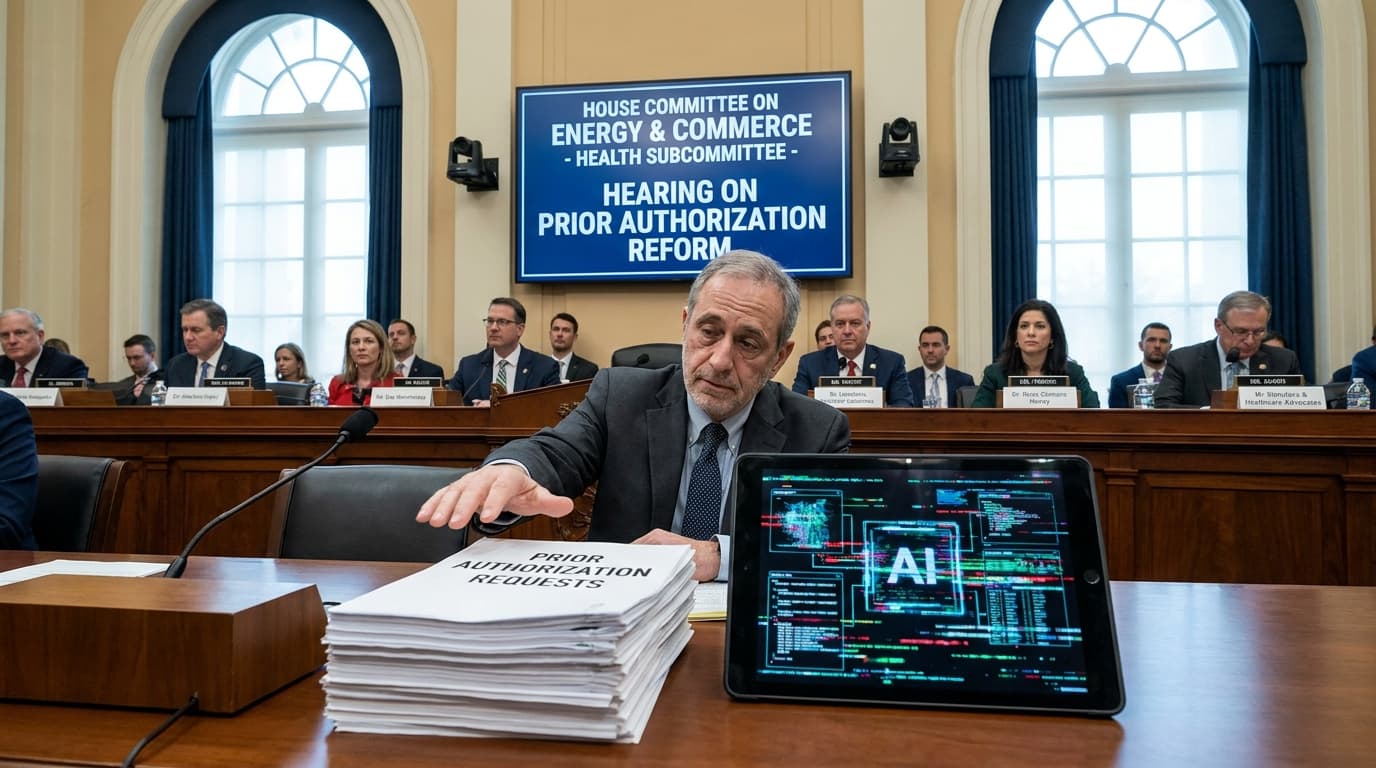
Prior Authorization Is a Fight and AI Won’t End It: The Realities of Changing a Structurally Imbalanced System

For more than thirty years, U.S. healthcare has wrestled with the contentious process of prior authorization. Despite fervent hopes that artificial intelligence will resolve its inefficiencies and inequities, the core battle remains deeply rooted in structural issues. This analysis examines why AI, despite its promise, cannot end the entrenched struggles surrounding prior authorization and what its implementation may actually bring to the table.
In the labyrinthine world of U.S. healthcare, few administrative processes are as controversial and universally bemoaned as prior authorization. This process, designed to ensure clinical necessity and appropriateness before insurers approve certain treatments or medications, has been a sustained battleground between healthcare providers and payers for decades. The narrative surrounding technological innovation—especially the surge in artificial intelligence (AI) applications—promises an end to these woes. However, the hope that AI will be a magical balm risks overlooking the entrenched structural imbalances that have defined prior authorization for more than thirty years.
The Structural Imbalances at the Heart of Prior Authorization
To understand the magnitude of the prior authorization problem, we must first confront the foundational imbalance built into it. For thirty years, payers have wielded prior authorization as both a cost-control tool and a method to influence the clinical choices of providers. The overt rationale is cost containment and prevention of unnecessary or duplicative care, but peel away the surface, and it’s clear that the process also functions as a lever for insurers to maintain utilization control and exert negotiating power with hospitals, providers, and ultimately, with patients.
Providers, meanwhile, often find themselves caught in a byzantine web of requirements. The sheer volume of paperwork, the inconsistency of rules from payer to payer, and the frequently adversarial nature of insurer-provider communications all combine to produce not just administrative burden but a palpable sense of frustration and professional dissatisfaction.
AI in Healthcare: Promise, Hype, and Limits
Artificial intelligence has, in recent years, emerged as the putative savior of nearly every inefficiency in healthcare. In the context of prior authorization, technology consultants and healthcare IT vendors tout solutions able to automate document collection, standardize payer requirements, and accelerate approvals that might otherwise take days or even weeks.
But the honest question is not whether AI will end the fight. It will not. Technology may optimize aspects of the process—making form completion more efficient, data extraction smoother, and tracking of authorization status more transparent. Yet, what is often missing from these discussions is a sense of humility about what automation can—and cannot—fix. The friction in prior authorization is not only about paperwork or slow communication; it is fundamentally about the distribution of power, clinical judgment, and the allocation of resources.
Providers are right to question whether AI simply wraps the same old approval hurdles in digital clothing. Indeed, if the rules themselves remain opaque, capricious, or oriented to denial over approval, the friction persists, regardless of how seamless the experience at the user interface level becomes.
The Human Cost: Burnout, Inefficiency, and Delays in Care
The battle over prior authorization extends far beyond professional annoyance. For providers, particularly in high-volume practices or specialties reliant on costly drugs and procedures, prior authorization represents a significant drain on personnel resources. Dedicated teams are often tasked solely with managing these requests, diverting effort away from direct patient care.
On the patient side, meanwhile, delays in obtaining authorizations can mean longer waits for needed treatments, and, in some cases, deteriorations in condition or lost opportunities for optimal outcomes. These are not theoretical concerns. Numerous studies have documented increased rates of treatment abandonment and adverse health outcomes linked to prior authorization delays.
AI’s True Role: Augmentation, Not Absolution
The honest question, then, is not whether AI will eliminate these fights—it is, rather, how much it can rebalance them. Automation could, in theory, remove some arbitrary delays by quickly matching patient data to clinical criteria, surfacing documentation, and identifying clear-cut approvals. For more ambiguous cases, AI may standardize the appeal or escalation pathway, making outcomes at least more predictable if not more just.
But AI cannot, by itself, resolve the underlying asymmetry of incentives between payers and providers. Insurers may leverage the efficiency gains of automation not to approve more services but to require even more documentation or set the approval bar higher, knowing that the administrative burden can now be off-loaded onto machines rather than people. For providers, the risk is that efficiency wins may be offset by a shifting goalpost, ending up in yet another arms race—one fought with algorithms instead of human clerks.
Transparent Policy, Reform, and Ethical Oversight
If lasting progress is to be made, stakeholders must advocate for policy changes that set clear, fair, and evidence-based criteria for prior authorization. Technology should serve these reforms, not dictate them. Policymakers are beginning to acknowledge this reality, with recent federal and state proposals aimed at standardizing authorization rules, limiting turnaround times, and creating greater transparency in payer decision-making.
Ethical oversight will also be essential. Algorithms embedded within electronic health record systems or utilized by insurance companies must be regularly audited to ensure that automation does not amplify existing inequities or introduce new forms of denial bias. Transparency in the logic behind automated determinations is likewise critical—providers and patients have a right to understand how decisions affecting care are made.
Conclusion: A Call for Realism
In a healthcare system as complex and perennially contested as the United States', prior authorization will likely remain a battleground for years to come. AI, despite its potential, will not end the struggle unless accompanied by deeper structural reform.
True progress will require acknowledging the limits of technology and confronting the foundational imbalances at the core of the system. Only through a combination of smart automation, policy reform, and vigilant ethical oversight can stakeholders achieve a process that is efficient, fair, and genuinely patient-centered. Until then, the fight continues.
Join the BioIntel newsletter
Get curated biotech intelligence across AI, industry, innovation, investment, medtech, and policy delivered to your inbox.