Rocket Pharmaceuticals Achieves FDA Approval for Kresladi, First Gene Therapy Targeting Ultra-Rare Leukocyte-Adhesion Deficiency Type 1

The approval of Kresladi represents a significant milestone in the treatment landscape for LAD-1, offering a pioneering therapeutic option for a condition with limited existing interventions. This development not only broadens treatment possibilities but also underscores the advancing role of gene therapy in addressing ultra-rare diseases.
Leukocyte-adhesion deficiency type 1 (LAD-1) is an inherited immunodeficiency characterized by a defect in the leukocyte adhesion process, essential for the immune system's proper function. This condition severely compromises the body's ability to fight infections, often leading to fatal outcomes in infancy or early childhood. Until recently, treatment options for LAD-1 have been limited and largely supportive, with no gene therapies approved to directly address the underlying genetic cause of the disease.
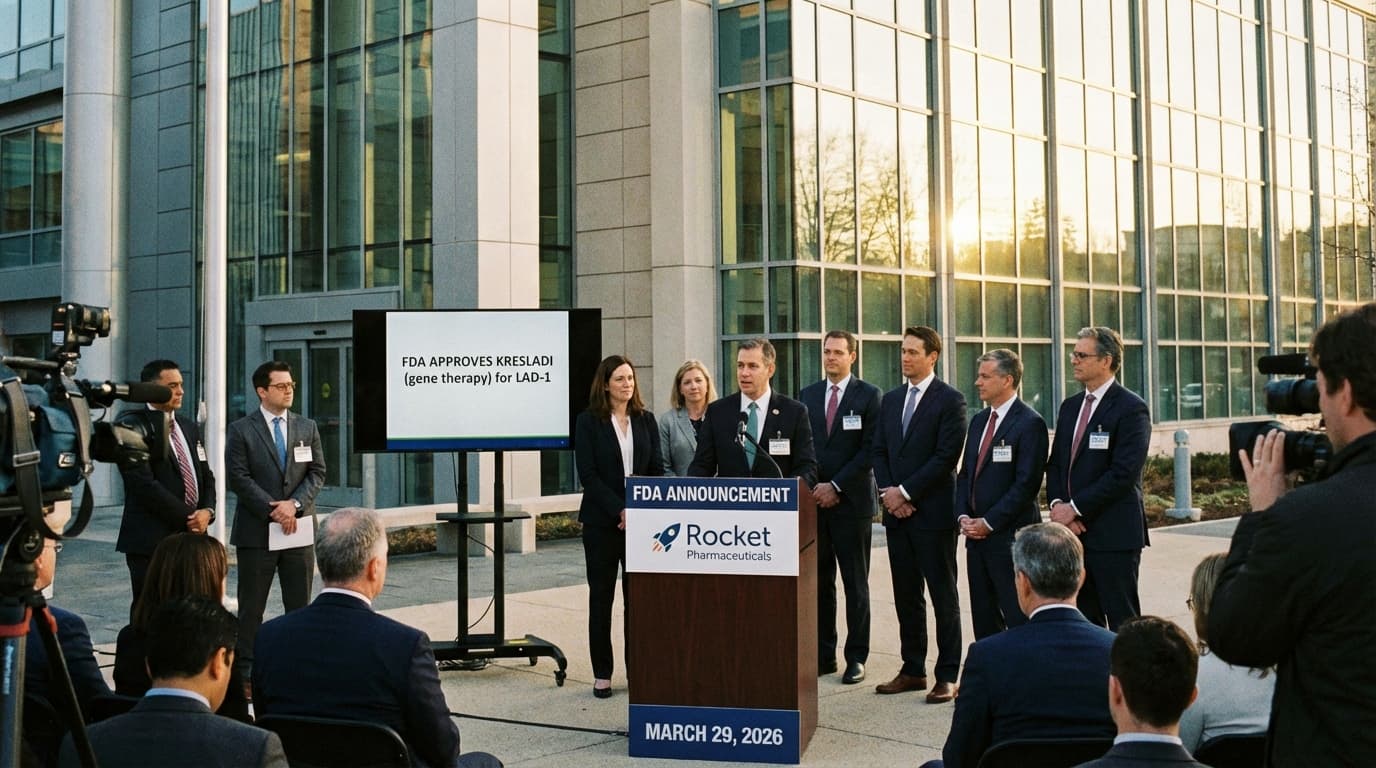
On March 29, 2026, Rocket Pharmaceuticals announced the U.S. Food and Drug Administration (FDA) approval of Kresladi, the first gene therapy developed specifically to treat LAD-1. This milestone is notable not only because Kresladi is pioneering for this ultra-rare disorder but also because it represents Rocket Pharmaceuticals' first commercial product launch, heralding their entry into the gene therapy arena.
Kresladi utilizes advanced gene-editing technology to correct the defective gene responsible for LAD-1, aiming to restore normal immune function by enabling patient-derived blood cells to properly express required adhesion molecules. The therapeutic approach is designed to provide a potentially curative option, contrasting with prior treatments that managed symptoms without addressing the genetic root of the disorder.
The FDA's approval signals recognition of the therapy's safety and efficacy, based on clinical trials demonstrating meaningful improvements in immune function and reductions in severe infections among treated infants and children. This breakthrough offers hope for families affected by LAD-1, a condition historically marked by a poor prognosis due to the lack of curative therapies.
Beyond its immediate clinical impact, Kresladi's approval sets an important precedent for the development and regulatory acceptance of gene therapies targeting ultra-rare diseases. As the first gene therapy approved for LAD-1 globally, it may catalyze further investment and innovation in this space, encouraging research into other rare genetic immunodeficiencies.
Experts anticipate that the availability of Kresladi will also prompt healthcare providers and insurers to adapt their approaches, incorporating gene therapies into treatment algorithms and care management for patients with inherited immune disorders. This evolution will likely necessitate new frameworks for patient selection, long-term monitoring, and outcome measurement to fully realize the promise of gene therapy in clinical practice.
Rocket Pharmaceuticals has expressed commitment to supporting patients and providers through education and access initiatives as Kresladi enters the commercial phase. The company's future pipeline includes plans to extend gene therapy applications into related rare diseases, leveraging insights and infrastructure developed in the LAD-1 program.
In summary, the FDA approval of Kresladi represents a watershed moment for treating leukocyte-adhesion deficiency type 1, providing an innovative genetic treatment where few existed before. This advancement exemplifies the expanding frontier of gene therapy in ultra-rare disease management and signals broader shifts in the biotech industry toward personalized, curative treatment modalities for complex disorders affecting vulnerable pediatric populations.
Join the BioIntel newsletter
Get curated biotech intelligence across AI, industry, innovation, investment, medtech, and policy delivered to your inbox.