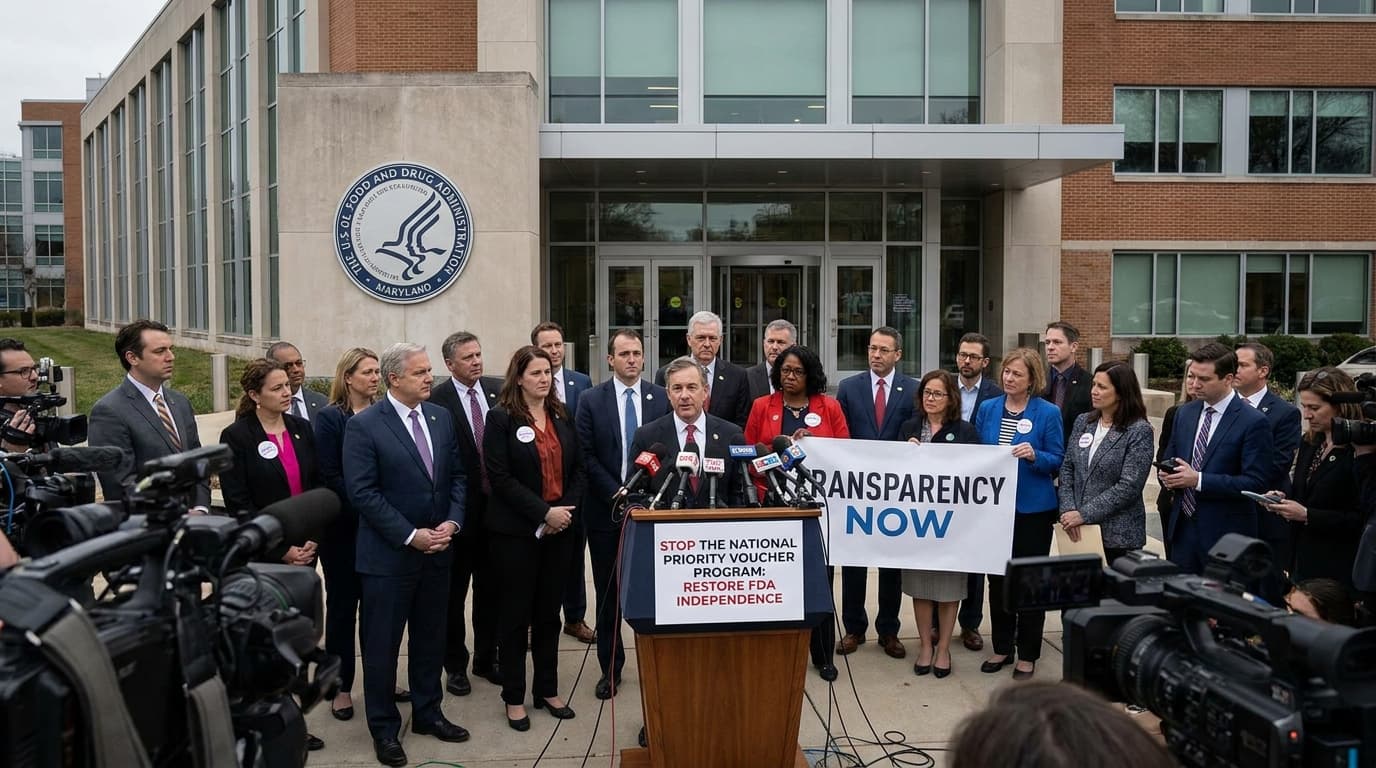
Stakeholders Demand Pause on Makary’s Voucher Program, Highlighting Calls for Greater FDA Independence

On June 4, 2026, critical voices from various stakeholders emerged regarding the FDA's Commissioner’s National Priority Voucher program, initiated under Marty Makary. Concerns center on transparency, perceived political influence, and the need to preserve the FDA’s autonomy to ensure unbiased regulatory decision-making. This article delves deeply into the program's background, the criticisms it has provoked, the implications for regulatory policy, and a look ahead at potential reforms.
The U.S. Food and Drug Administration (FDA) plays a pivotal role in regulating biopharmaceutical products, safeguarding public health by ensuring the efficacy and safety of new therapies. In recent times, the agency implemented the Commissioner’s National Priority Voucher program, a mechanism intended to incentivize development in areas aligned with national priorities. However, as reported on June 5, 2026, diverse stakeholders including patients, industry representatives, and trade groups have expressed significant dissatisfaction with the program's execution. The primary critique revolves around the FDA's perceived lack of transparency and openness.
Background of the National Priority Voucher Program
The program was conceived under the direction of then-FDA Commissioner Marty Makary as a strategic effort to prioritize drug approvals for treatments deemed critical from a public health or political standpoint. Traditionally, voucher programs such as those for rare pediatric diseases or tropical diseases have been employed to stimulate development in neglected markets. However, the National Priority Voucher differs in that it explicitly aligns rewards with national or political goals, raising concerns about regulatory impartiality.
Stakeholders' Concerns
Patient advocacy groups have voiced apprehensions that the program may prioritize political objectives over clinical need, potentially disadvantaging certain patient populations or neglecting broader public health concerns. Industry groups have highlighted the lack of clarity regarding voucher eligibility criteria and questioned the procedural fairness of the program's administration.
Trade organizations have added to the chorus by emphasizing the necessity for the FDA to maintain independence from political pressures to uphold its credibility and scientific rigor. The concerns aggregate around the idea that incentivizing drug approvals based on political priorities rather than strictly scientific and medical considerations could compromise the regulatory landscape.
Transparency and Implementation
Critics argue that the FDA has not provided sufficient data or rationale to justify the program's operational decisions, including which products qualify for the voucher, the process by which such decisions are made, and the impact assessments on stakeholders. This opacity undermines trust and limits informed stakeholder engagement.
The controversy has also drawn attention to broader questions about the FDA's governance and the independence of its leadership. Maintaining a clear separation between regulatory judgments and political influences is foundational to the agency's mandate, yet recent developments suggest this principle is under strain.
Regulatory and Policy Implications
The call to pause the voucher program reflects growing unease with regulatory innovation that lacks robust stakeholder consultation and transparent governance frameworks. Pausing the program would allow time for comprehensive review and potential recalibration to ensure alignment with the FDA's core responsibilities.
Moreover, this episode may spur legislative and administrative reforms aimed at strengthening FDA autonomy, improving transparency mechanisms, and clarifying frameworks for incentive programs.
Future Outlook
The FDA's leadership and policymakers face the challenge of addressing these multifaceted concerns while balancing the need to stimulate innovation in critical therapeutic areas. Ensuring that regulatory incentives do not become vehicles for political expediency will be central to maintaining public trust.
As this story unfolds, ongoing dialogue among the FDA, industry, patient communities, and legislators will be critical. Enhanced transparency, rigorous stakeholder engagement, and safeguards against politicization will likely be priorities in reform discussions.
Conclusion
Stakeholder demands to pause the Commissioner’s National Priority Voucher program highlight significant tensions at the intersection of regulatory policy, innovation incentives, and institutional independence. How the FDA responds will shape regulatory precedent and public confidence for years to come.
For further information, visit the original report: Stakeholders want Makary’s voucher program paused, call for FDA independence.
Join the BioIntel newsletter
Get curated biotech intelligence across AI, industry, innovation, investment, medtech, and policy delivered to your inbox.