Stanford-Led Tau Study Points Alzheimer’s Drug Efforts Toward Mitochondria

Researchers reported that tau can trigger reverse electron transport in mitochondria, sending electrons in the opposite direction of their usual relay. Blocking that process reversed many harmful effects and improved learning and memory in flies and mice, though whether the same will hold true in people remains unclear.
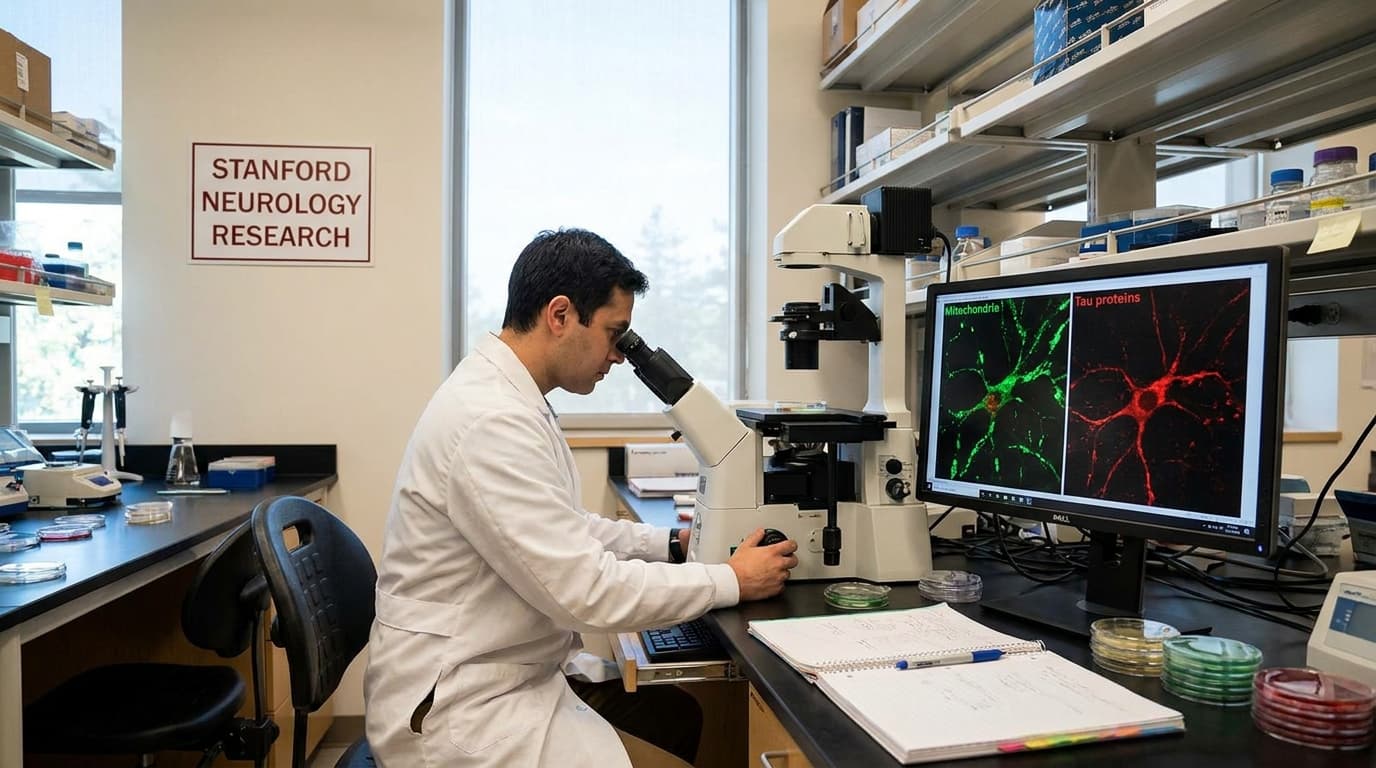
A Stanford-led research team has identified a previously unknown way tau may contribute to neurodegeneration, adding a new mechanistic angle to one of Alzheimer’s drug development’s most crowded targets. According to STAT, the study found that tau can interfere with mitochondria by sending electrons in the opposite direction of their usual relay, a process called reverse electron transport.
That reversal generates reactive oxygen species, cellular stress and inflammation. In preclinical work, scientists found that blocking reverse electron transport reversed many of the harmful effects and improved learning and memory in flies and mice.
The mechanism
Tau has long been a major target in Alzheimer’s and other neurologic diseases, but this study shifts attention from the protein’s presence to one specific downstream effect. Rather than framing tau only as a structural or aggregation problem, the findings connect it to mitochondrial dysfunction and inflammatory stress through altered electron flow.
STAT reported that analyses of human cells grown in the lab and patient brain tissue suggest blocking that retrograde flow of electrons could make neurons healthier. The source also makes clear that whether the same effect will hold true in people is still unknown.
Why it matters for drug development
The immediate significance is not a clinical result but a sharper hypothesis for where intervention might work. Tau programs have often struggled with the gap between biological rationale and clear therapeutic effect. A mechanism tied to mitochondria and reverse electron transport could offer developers a more specific way to test whether modulating tau-related damage changes disease biology.
Two of the study’s authors have started a biotech startup to test that idea. The signal for the field is that tau drug development may broaden from direct protein-targeting strategies toward approaches aimed at the cellular consequences tau appears to trigger.
Join the BioIntel newsletter
Get curated biotech intelligence across AI, industry, innovation, investment, medtech, and policy delivered to your inbox.