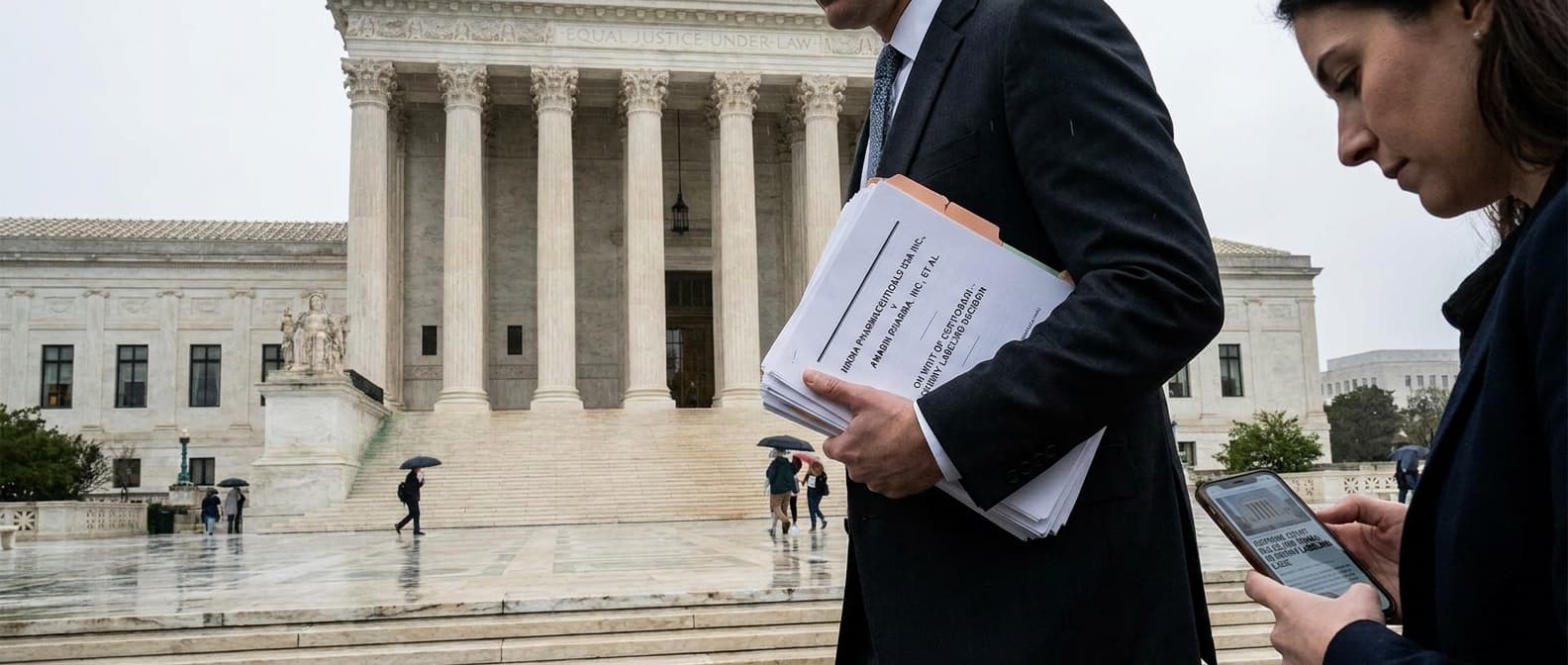
Supreme Court Decision on Skinny Labeling: Implications for Generic Drugmakers and Patent Litigation

In a pivotal ruling for the pharmaceutical industry, the Supreme Court determined that Hikma Pharmaceutical did not violate Amarin's patents through its use of skinny labeling—a practice that involves omitting certain patented uses on generic drug labels. This verdict may reshape how patent litigation unfolds in the generic drug sector.
The recent unanimous decision by the Supreme Court in favor of Hikma Pharmaceutical marks a significant moment in the intersection of pharmaceutical patent law and generic drug market competition. At stake was the practice of so-called "skinny labeling," where generic drugmakers exclude certain patented uses from their drug labels to avoid infringement claims.
In this case, Hikma Pharmaceutical was challenged by Amarin, who held patents on particular uses of a drug licensed by Hikma. The court's ruling affirmed that Hikma’s use of skinny labeling did not infringe Amarin’s patents, setting a precedent that could influence how patent holders and generic manufacturers approach labeling and litigation.
Skinny labeling, originally introduced as a strategic maneuver to foster generic competition while respecting patent rights, has long been a contentious subject. Patent holders, like Amarin, argue that generic manufacturers exploiting skinny labels can effectively undercut their exclusive rights. Conversely, generic companies assert that skinny labeling enables timely market entry without violating patent protections.
This ruling is poised to affect the legal landscape significantly, especially concerning how courts interpret patent infringement in situations involving partial label use. It may encourage more generic companies to adopt skinny labeling strategies, potentially accelerating generic drug availability and impacting drug prices.
Further, the decision reflects a broader judicial perspective on balancing innovation incentives with public access to affordable medicines. The unanimous nature of the ruling indicates a clear stance from the highest court, which will likely serve as a guiding principle for lower courts and industry stakeholders.
Alongside the legal implications, the ruling may also influence pharmaceutical companies’ strategic planning in drug development, marketing, and patent enforcement. For brand-name drug companies, this represents a call to reassess patent claims and protection strategies in an evolving legal environment.
In conclusion, the Supreme Court’s backing of Hikma Pharmaceutical in this skinny labeling dispute underlines an important shift in the regulatory and policy framework governing generic drug entry and patent rights enforcement. Industry players, legal experts, and policymakers will need to navigate these changes carefully to align innovation with accessibility.
Source: STAT News
Join the BioIntel newsletter
Get curated biotech intelligence across AI, industry, innovation, investment, medtech, and policy delivered to your inbox.