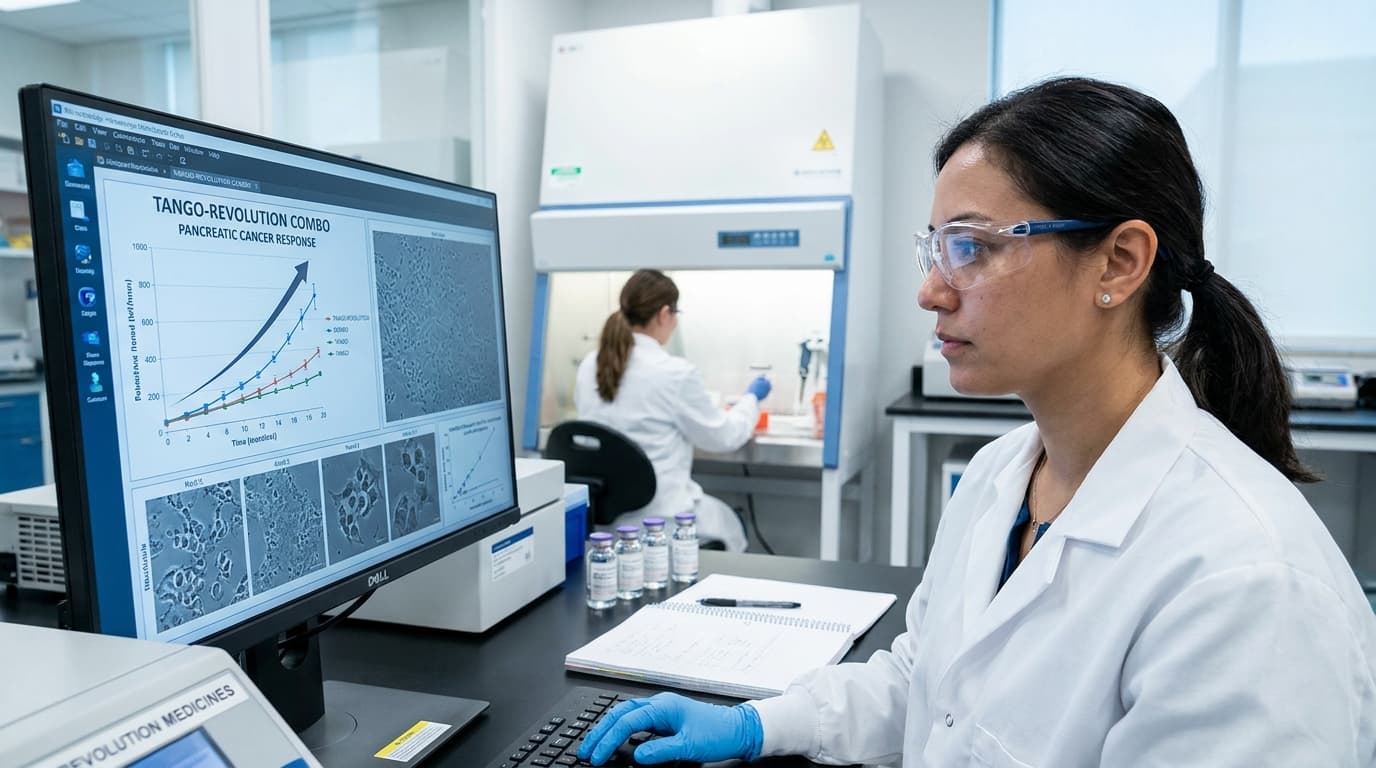
Combination of Pancreatic Cancer Drugs from Tango and Revolution Yields High Response in Early Clinical Trial

A combination approach involving investigational drugs from Tango Therapeutics and Revolution Medicines has shown a high response rate in treating pancreatic cancer in an early-stage clinical study. The findings may signal promising new options for patients in need of better therapies.
Introduction
Pancreatic cancer remains one of the most formidable challenges in oncology. Despite advances in surgical methods, chemotherapy, and supportive care, outcomes for most patients diagnosed with pancreatic cancer have only marginally improved over the past decades. Therefore, every sign of progress—whether emerging from basic research or early clinical studies—draws significant attention from clinicians, patients, and investors alike. Recently, a breakthrough was reported: a combination of drugs from Tango Therapeutics and Revolution Medicines has led to a high response rate in an early-stage clinical trial. While this is only a preliminary step, such positive results renew hope and may open new therapeutic pathways for affected individuals.
Understanding the Clinical Trial Landscape in Pancreatic Cancer
The vast majority of pancreatic cancers are diagnosed at a late stage, when surgical removal—the only potential cure—is rarely an option. The five-year survival rate remains dismally low, among the worst for any common cancer. Innovations in targeted therapy, immuno-oncology, and personalized medicine have begun to change the calculus for some other solid tumors, but pancreatic cancer has remained stubbornly resistant to most new therapies, making every positive signal a beacon of hope.
Clinical trials in this area are often met with both great anticipation and a measure of skepticism, due to the myriad setbacks that have previously been encountered. This makes the announcement of a high response rate with a novel combination all the more significant. Early-stage, or Phase 1/2, studies focus predominantly on the safety and tolerability of new drugs, but promising efficacy signals—such as tumor shrinkage or progression-free survival—can accelerate momentum towards larger trials and eventual regulatory conversations.
The Drug Combination: Tango and Revolution Medicines’ Approach
At the heart of this latest development is an investigational combination therapy spearheaded by two biotechnology companies: Tango Therapeutics and Revolution Medicines. While specific details regarding the molecular targets and mechanisms are not provided in the latest announcement, both companies are known for their focus on precision oncology, designing therapies based on specific genetic or molecular features of tumors. Revolution Medicines, in particular, has been at the forefront of exploiting vulnerabilities in cancer driven by RAS pathway mutations—a hallmark of many pancreatic cancers.
The combination approach taken here leverages the concept that dual or multi-target inhibition may be more effective and durable than single-agent therapy. By simultaneously blocking multiple points in the cancer’s biology, such strategies may overcome resistance mechanisms that have confounded efforts to treat pancreatic cancer more effectively. Early indicators of strong response rates in this context suggest that this hypothesis is holding up—at least in the early going.
What Does a “High Response Rate” Mean?
A ‘high response rate’ in clinical trials typically refers to the proportion of patients whose tumors shrink by a predefined amount, or who experience meaningful disease stabilization, following treatment. In a disease setting like pancreatic cancer, where response rates are historically very low—often in the single digits—any significant increase is considered noteworthy. For patients and their doctors, a high response rate means not just a glimmer of hope but, potentially, a real chance at extended survival and improved quality of life.
That being said, early-stage trials are not designed to confirm clinical benefit in terms of overall survival or long-term remission. Rather, they serve as crucial proof-of-principle studies, enabling researchers to make informed decisions about which combinations should move forward to larger and more definitive trials.
Broader Implications for Oncology
The potential significance of this combination goes beyond pancreatic cancer. In oncology, successful demonstration of efficacy for a new class of drugs—or a new combination—can quickly lead to trials in related cancer types, or in earlier lines of therapy. Furthermore, the partnership between two innovative biotech firms in this case hints at an evolving model in drug development, where collaborative strategies are harnessed to address complex diseases in a more concerted way, sharing risk and reward.
If, over time, the Tango-Revolution combo demonstrates lasting benefit and manageable side effects, it could become a cornerstone of future pancreatic cancer care. Furthermore, such advances might stimulate more investment, accelerate the pace of similar studies, and lead to a paradigm shift in how the industry tackles hard-to-treat malignancies.
Patient and Caregiver Perspectives
For patients newly diagnosed with pancreatic cancer or those whose disease has returned after initial therapy, therapeutic options are limited. Side effects, treatment fatigue, and emotional toll make the journey particularly grueling. The promise of new, more effective treatments resonates deeply—not only for the prospect of longer survival but also for preserving time and quality of life with loved ones.
However, it is important to note that investigational therapies are typically available only within the confines of clinical studies, and not all patients will qualify. This reality often motivates advocacy organizations to push for broader access, expanded compassionate use programs, and continued funding for innovative research in pancreatic cancer and other high-need areas.
Next Steps: From Early Signals to Clinical Adoption
With the early-stage results looking encouraging, the clock now starts for a series of key questions: Will these findings be replicated and improved upon in subsequent, larger-scale trials? Can the combination’s benefits be sustained across a wider population of pancreatic cancer patients, with acceptable safety? What biomarkers might help identify who is most likely to respond? What will the cost of such a regimen be, should it ever reach approval?
Drug development is inherently incremental and uncertain—especially in oncology. Promising early data must withstand the rigor of larger, more heterogeneous patient populations, and any signal of benefit is always weighed against side-effect profiles, patient-reported outcomes, and ultimate survival advantage.
The Innovation Pipeline
Biotechnology is at its best when it fosters creative solutions for the world’s hardest problems. Pancreatic cancer, with its layered resistance mechanisms and aggressive biology, forces researchers to think multi-dimensionally. The Tango-Revolution collaboration is a clear example, combining assets and ideas to lower the odds of failure and increase the likelihood of measurable patient impact.
Innovative trial designs, such as basket trials (which include patients across a range of biomarker-defined cancers) or adaptive studies (in which protocols change in response to emerging data), may help further accelerate the path from promising results to practice-changing therapies.
Concluding Thoughts
The news that a combination of drugs from Tango Therapeutics and Revolution Medicines has achieved a strong response rate in early-stage testing for pancreatic cancer is an important development in an area of intense unmet need. Though much work remains to be done, and caution is warranted, even small steps forward can have substantial impact for patients and their families.
Moreover, the cooperative nature of this effort and the willingness to test new paradigms bodes well for the next generation of oncology research. Stakeholders—ranging from clinicians and patients to investors and fellow researchers—will be watching closely as these and other novel combinations move through the pipeline. The journey from early promise to proven patient benefit is long and fraught with challenge, but it is milestones like these that keep hope and scientific ambition alive.
Sourced from STAT News
Join the BioIntel newsletter
Get curated biotech intelligence across AI, industry, innovation, investment, medtech, and policy delivered to your inbox.