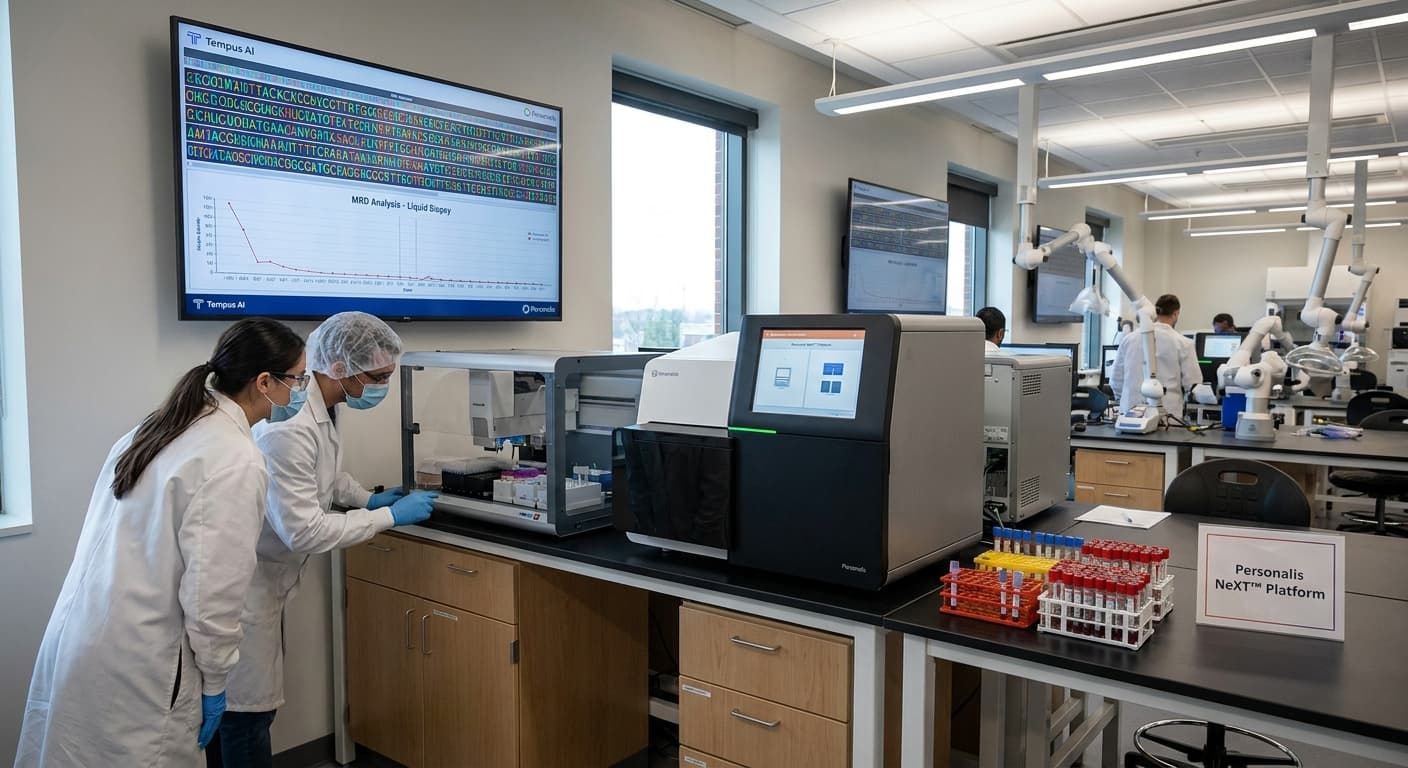
Tempus AI’s $1.5B Acquisition of Personalis: The Future of Cancer Diagnostics and the MRD Revolution

Tempus AI is making headlines with its $1.5 billion agreement to acquire Personalis, fusing two longstanding partners in the high-stakes arena of minimal residual disease (MRD) diagnostics. This move highlights the intensifying demand for non-invasive cancer detection tools and underscores broader shifts in how cancer patients will be diagnosed and monitored.
Introduction
The field of oncology is no stranger to disruptive partnerships and billion-dollar bets. With the announcement of Tempus AI’s $1.5 billion deal to acquire Personalis, the industry has seen a powerful new alignment focused on the burgeoning minimal residual disease (MRD) testing market. While on its face this is an example of ongoing consolidation in the precision medicine space, the deeper story is about how MRD testing is reshaping the way clinicians detect, monitor, and treat cancer in the years following initial therapy.
This blog explores the motivations, impacts, and broader implications behind this landmark transaction, examining:
- What minimal residual disease (MRD) testing is and why it matters
- How Personalis’s liquid biopsy platform fits into evolving standards of care
- The commercial and technological rationale for Tempus AI’s acquisition
- How the deal is poised to influence patient care and competitive dynamics industry-wide
What is Minimal Residual Disease (MRD) Testing?
Minimal residual disease (MRD) refers to the population of cancer cells that survive after primary treatment such as surgery, chemotherapy, or radiation. These cells are often undetectable using standard imaging or routine blood tests, yet their presence can be a harbinger of recurrence. Detecting and quantifying MRD is pivotal for understanding whether a patient is truly “in remission” and can guide the need for additional, potentially life-saving therapies.
MRD assays have become among the fastest-growing segments in cancer diagnostics, particularly within hematologic malignancies like leukemia and lymphoma, but also increasingly in solid tumor cancers due to advances in technology. The rise of non-invasive, highly sensitive liquid biopsies—tests that analyze DNA fragments in blood—has made MRD testing more accessible, accurate, and attractive to clinicians and patients alike.
Why Does MRD Matter? Changing Paradigms in Oncology
Traditional oncology surveillance is often based on imaging or gross clinical assessment, which can miss microscopic or molecular evidence of disease. MRD assays can:
- Identify impending relapse months earlier than conventional tools
- Monitor patient response to therapies in real time
- Personalize intensity and duration of follow-up treatment
- Reduce unnecessary interventions for patients truly in remission
The clinical shift enabled by MRD is profound: it turns cancer surveillance from a “wait and worry” system into one driven by molecular confidence, fundamentally altering the patient journey.
Personalis: Liquid Biopsy as the Cornerstone
Founded to advance genomics and precision oncology, Personalis developed a liquid biopsy platform that sits at the forefront of MRD innovation. Unlike tissue biopsies, which can be painful, risky, and logistically challenging, liquid biopsies require only a blood draw. Through advanced genomic analysis, Personalis’s tests can detect tiny traces of tumor DNA, enabling clinicians to catch relapse at its earliest molecular stages.
Since 2023, Tempus AI has been Personalis’s commercial partner for these liquid biopsy MRD assays, building a foundation of operational integration and data exchange. The path from partnership to acquisition was, in some respects, a natural evolution given the synergies in data, technology, and vision.
Tempus AI: Harnessing Data for Precision Medicine
Tempus AI has rapidly ascended as a leader in AI-driven healthcare data analytics. Its mission is to build the world’s largest library of clinical and molecular data and deploy artificial intelligence to derive actionable insights for clinicians. By acquiring Personalis, Tempus strategically:
- Brings in-house a validated and scalable MRD testing platform
- Bolsters its arsenal with cutting-edge liquid biopsy technologies
- Deepens its bench of genomic data scientists and clinical experts
- Accelerates timelines for product innovation and market expansion
This integration is designed not only to increase operational efficiencies but also to drive a competitive edge as the battle for oncology diagnostics leadership heats up.
Commercial and Market Implications
The $1.5 billion acquisition makes a clear statement: the MRD market is big, growing, and hotly contested. Multiple diagnostics companies, large and small, are in a race to standardize MRD testing as part of front-line oncology care. The global demand for non-invasive, accurate, and actionable cancer recurrence monitoring tools is being fueled by:
- Increasing cancer survival rates, leading to larger monitored populations
- Higher patient and physician expectations for personalized after-care
- Payer willingness to reimburse molecular testing when it demonstrates value
- Ongoing innovation in genomics, machine learning, and bioinformatics
By joining forces, Tempus and Personalis are positioning themselves to directly capitalize on these tailwinds, with expectations of massive test volume growth not just in cancer but in other chronic conditions poised to benefit from the same technological infrastructure.
Industry Context: The Platform Wars
Over the past decade, the diagnostics space has seen an explosive proliferation of “multi-omics” approaches—integrating genomic, transcriptomic, proteomic, and imaging data, often aided by AI. The marriage of Tempus’s machine learning and Personalis’s molecular strengths is emblematic of a broader transformation:
- The industry is moving toward platform-based solutions rather than point products
- Data liquidity—the ability to seamlessly collect, analyze, and act upon diverse data—is emerging as a dominant competitive lever
- M&A activity is accelerating as firms pursue scale, speed, and differentiated capabilities
Tempus’s deep commercial ties, extensive data platform, and AI expertise may allow it to deliver faster innovation cycles and could create new standards for how MRD testing is delivered and utilized across both academic and community oncology settings.
Financials, Risks, and Challenges
A $1.5 billion deal in diagnostics is a bold bet, and not without risk:
- Regulatory demands for clinical utility and data privacy remain stringent
- The bar for payer reimbursement is high—real-world evidence must demonstrate savings and improved outcomes
- Integration of two tech-heavy cultures demands both technical and leadership alignment
- Ongoing competition from other diagnostics startups and entrenched giants is fierce
Nonetheless, the clear trend is toward consolidation of data, platforms, and intellectual property. Those companies able to unite the best of laboratory science, clinical informatics, and digital scalability—especially with first-mover advantages in MRD—are expected to capture outsized market share.
What Does This Mean for Patients and Providers?
Ultimately, the intended beneficiaries are cancer patients and their clinicians. If Tempus succeeds, the hope is for:
- Faster, less invasive post-treatment surveillance
- Earlier intervention in cases of molecular relapse
- Broader access to advanced diagnostics, including in community settings
- Lower overall costs to the health system by averting costly late-stage relapses
For providers, it means integration with digital health records, streamlined workflows, and potentially clearer answers to critical questions about patient prognosis and next steps.
The Road Ahead: MRD as the Next Oncology Standard
Personalis’s liquid biopsy MRD is just one of several emerging platforms. The market may see a wave of further consolidation, innovation, and convergence with digital health analytics. Industry watchers will be tracking:
- How Tempus leverages AI to further improve sensitivity, specificity, and interpretability of MRD results
- The role MRD testing will play in clinical trial recruitment, disease monitoring, and real-world evidence generation
- Shifts in payer policy and patient access as evidence mounts for clinical utility
Tempus AI’s acquisition of Personalis doesn’t just grow its technology stack; it changes the competitive playbook and elevates molecular surveillance to a main event in post-treatment cancer care. The ripple effects are likely to be felt for years to come, shaping standards, investment, and, above all, patient experience.
Source: MedCity News
Join the BioIntel newsletter
Get curated biotech intelligence across AI, industry, innovation, investment, medtech, and policy delivered to your inbox.