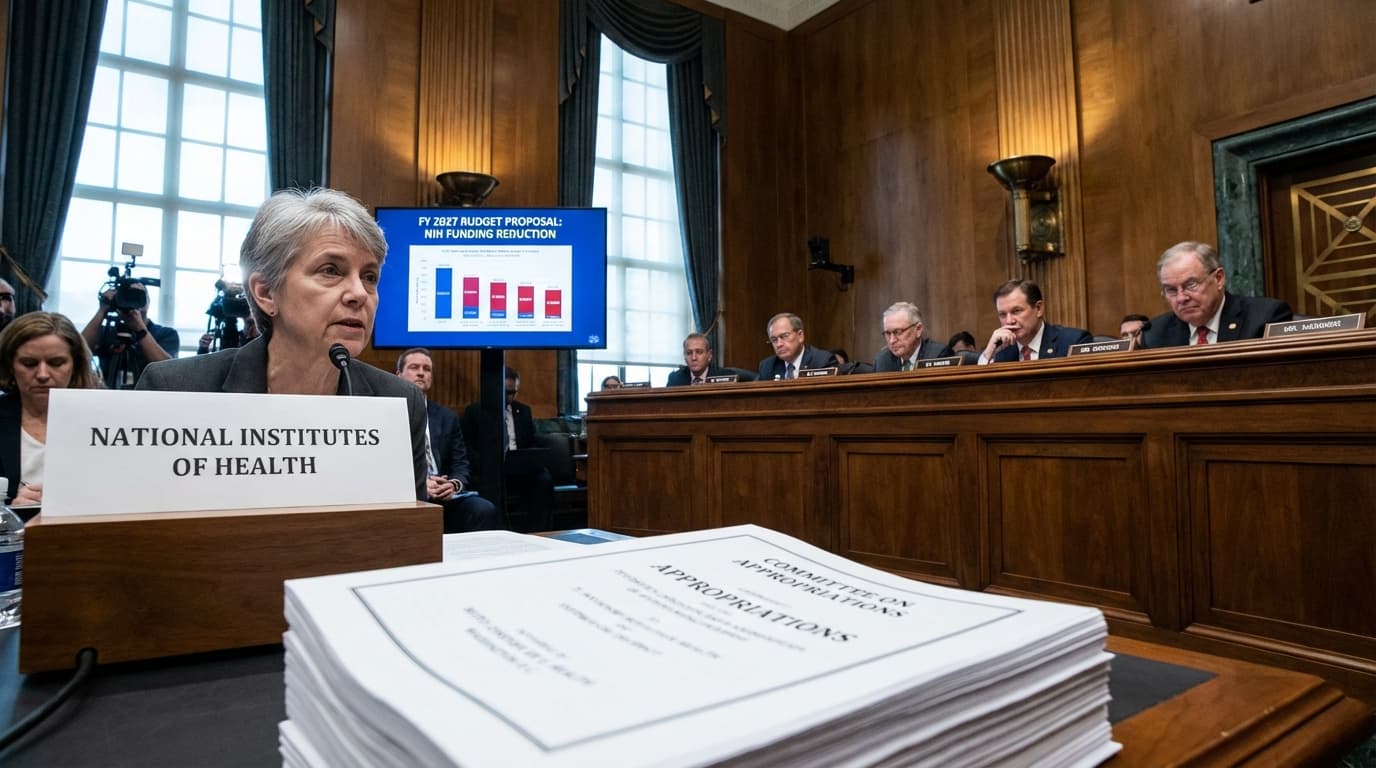
Trump Administration Proposes $5 Billion Cut to NIH in 2027 Budget Amid Congressional Pushback

The White House's 2027 budget proposal seeks to downsize NIH funding and restructure the agency by reducing its institutes and centers. This move could have broad implications for biomedical research and public health, but legislative resistance may temper the administration's plans.
The recently unveiled 2027 budget proposal from the Trump administration includes a drastic reduction of $5 billion to the funding of the National Institutes of Health (NIH), which represents one of the most substantial budgetary cuts to the agency in recent memory. Beyond the financial contraction, the budget plan also aims to restructure the NIH by shrinking the number of its constituent institutes and centers from 27 to 22, signifying a consolidation effort that could impact the breadth and depth of biomedical research supported by the agency.
The NIH stands as a cornerstone institution for health and medical research in the United States, facilitating discoveries and innovation across various domains of biomedicine. Funding cuts of the proposed magnitude raise concerns about the potential slowdowns in research activities, loss of scientific personnel, and delays in clinical trials that ultimately have downstream effects on public health outcomes.
In the administration's view, the budget reduction and agency consolidation represent a fiscal tightening aimed at streamlining operations and prioritizing strategic areas of research. However, this approach has ignited considerable debate among stakeholders, including lawmakers, scientists, and patient advocacy groups, who argue that the cuts risk undermining advances in disease understanding, treatment development, and global health leadership.
Congressional response to the proposal has been notably skeptical, with indications that bipartisan support exists for maintaining or even increasing NIH funding levels contrary to the White House's request. Historically, Congress has exercised substantial influence in protecting federal health research budgets, often through appropriations processes that reflect constituent interests and the lobbying of scientific communities.
The structure of the NIH, comprising a diverse array of specialized institutes and centers, supports a wide range of research fields from cancer and infectious diseases to neuroscience and environmental health. The proposed downsizing to 22 institutes could necessitate reallocation of resources and possible deprioritization of certain research areas, challenging the current ecosystem of innovation fostered by the agency.
This budgetary proposal arrives amidst broader concerns about federal health spending reductions. Accompanying the NIH cuts is a proposed 12% decrease to other federal health agencies in the 2027 budget, which collectively could constrain the capacity of the U.S. health research and public health infrastructure.
The fiscal tightening also occurs against a backdrop of escalating healthcare challenges, including the management of chronic diseases, emerging infectious threats, and the ongoing need for health equity and access solutions. Funding reductions could impact initiatives designed to address these pressing issues and slow progress toward medical breakthroughs.
From an industry perspective, the NIH plays a vital role in early-stage research that often underpins pharmaceutical and biotechnological development pipelines. Reduced federal funding could shift more R&D burden to private sectors, potentially increasing costs and slowing innovation cycles.
The Trump administration's budget proposal reflects a broader political and fiscal agenda emphasizing cost containment and government efficiency. However, the significant opposition in Congress underscores the complex dynamics involved in balancing budgetary constraints with the imperative to advance medical science.
If enacted, the NIH funding cuts and agency restructuring could trigger a ripple effect through academic institutions, research organizations, and health technology companies, influencing employment, grant availability, and scientific discovery pathways.
The unfolding budget debates will be closely watched by the research community, policymakers, and public health advocates as they negotiate the future funding landscape for one of the nation’s most critical health institutions.
Source: STAT+ - NIH would get $5 billion cut under Trump’s 2027 budget, but Congress unlikely to go along
Join the BioIntel newsletter
Get curated biotech intelligence across AI, industry, innovation, investment, medtech, and policy delivered to your inbox.