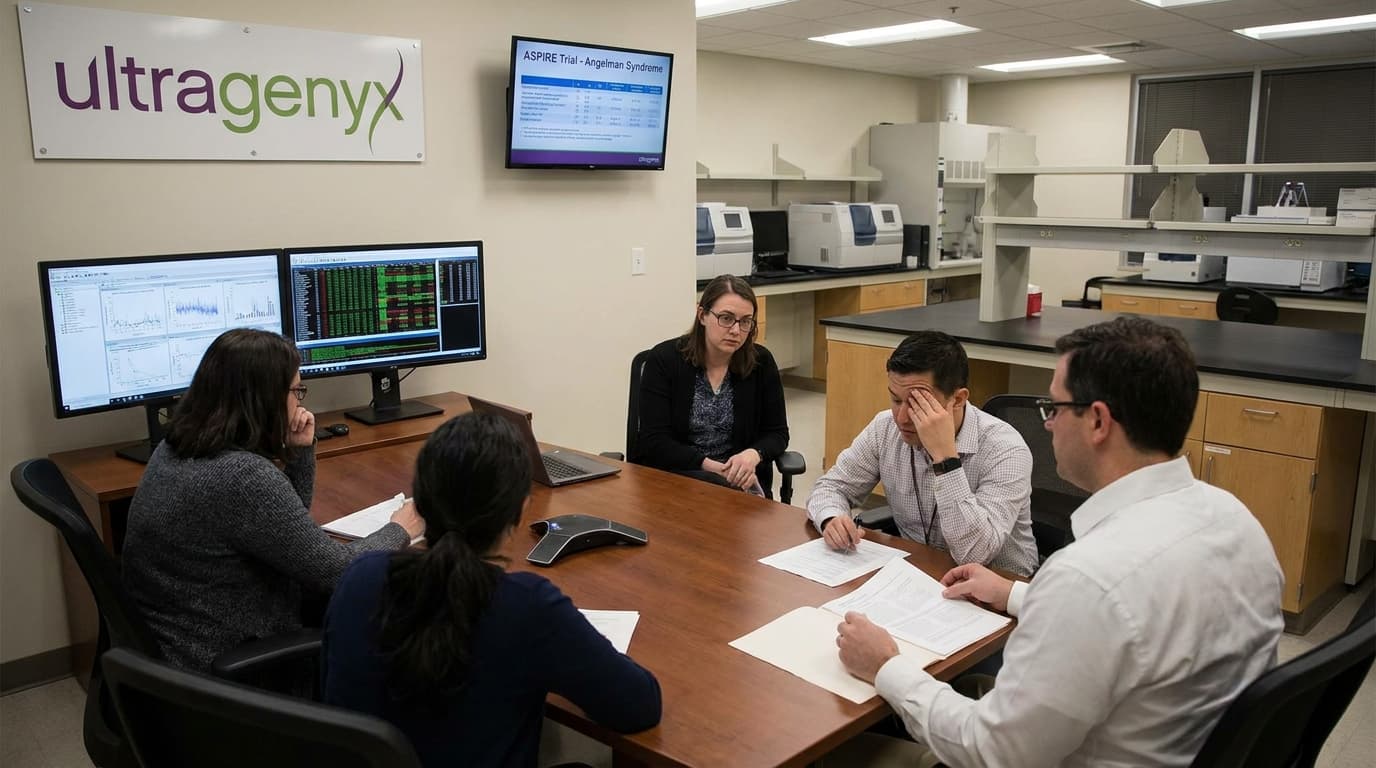
Ultragenyx Misses Phase 3 Aspire In Angelman Syndrome, Prompting Expense Reduction Review

The setback follows Ultragenyx’s recent approval for Genglycos and arrives just weeks before a PDUFA date for UX111 in Sanfilipo syndrome. The failed study also raises commercial and development questions for apazunersen beyond this single trial.
Ultragenyx said its Phase 3 Aspire trial of apazunersen in Angelman syndrome failed, missing both the primary endpoint and a secondary endpoint in a rare neurodevelopmental disorder with no approved disease-modifying treatments. The company did not provide specific figures or a trial breakdown in the report cited by Fierce Biotech.
The result was a sharp reversal after what the company described as a robust Phase 1/2 program and long-term extension study. Shares fell 43% after hours Wednesday evening, and Ultragenyx said it is now reviewing the apazunersen program and assessing planned operations to define and implement significant expense reductions.
The Data
Aspire evaluated change from baseline in Bayley-4 cognitive raw score as its primary endpoint. Ultragenyx said apazunersen missed that measure.
The drug also failed on the secondary endpoint of net response on the Multidomain Responder Index, which the source described as a measure of clinical function. Chief executive officer and president Emil Kakkis said the company was disappointed by the outcome and especially disappointed for the patient community that had invested in early-stage research aimed at bringing a first-ever treatment to children with Angelman syndrome.
William Blair described the study as high risk, high reward and said the miss creates a negative read-through for Aurora, another study of apazunersen that is enrolling patients with Angelman syndrome across genotypes and age groups. The firm added that even if Aurora meets its primary endpoint, commercialization could be challenging given the limited size of the addressable population.
The Company Response
Ultragenyx said it will make a decision on the disposition of apazunersen in light of the Phase 3 outcome. It also said it is assessing operations for significant expense reductions, but no further detail was given.
That language matters because the company has used similar wording before. Fierce Biotech noted that an earlier warning about expense reductions was followed by a 10% workforce reduction in February after two failed late-stage brittle bone disease trials.
The Broader Pipeline Context
The failed Aspire readout lands only two weeks after the FDA granted accelerated approval to pariglasgene brecaparvovec-opnr, Ultragenyx’s AAV gene therapy for glycogen storage disease type Ia, under the brand name Genglycos. The company is also awaiting a September 19 PDUFA date for UX111 in Sanfilipo syndrome.
The strategic signal is that Ultragenyx still has important regulatory catalysts, but the Angelman miss limits the cushion those wins provide. A late-stage failure in a high-need rare disease program can quickly shift attention from pipeline breadth to capital discipline, especially when management is already signaling expense cuts and the remaining program faces both development and market-size questions.
Other companies remain active in Angelman syndrome, including Ionis, which this summer completed enrollment in its Phase 3 Reveal trial for obudanersen.
Join the BioIntel newsletter
Get curated biotech intelligence across AI, industry, innovation, investment, medtech, and policy delivered to your inbox.