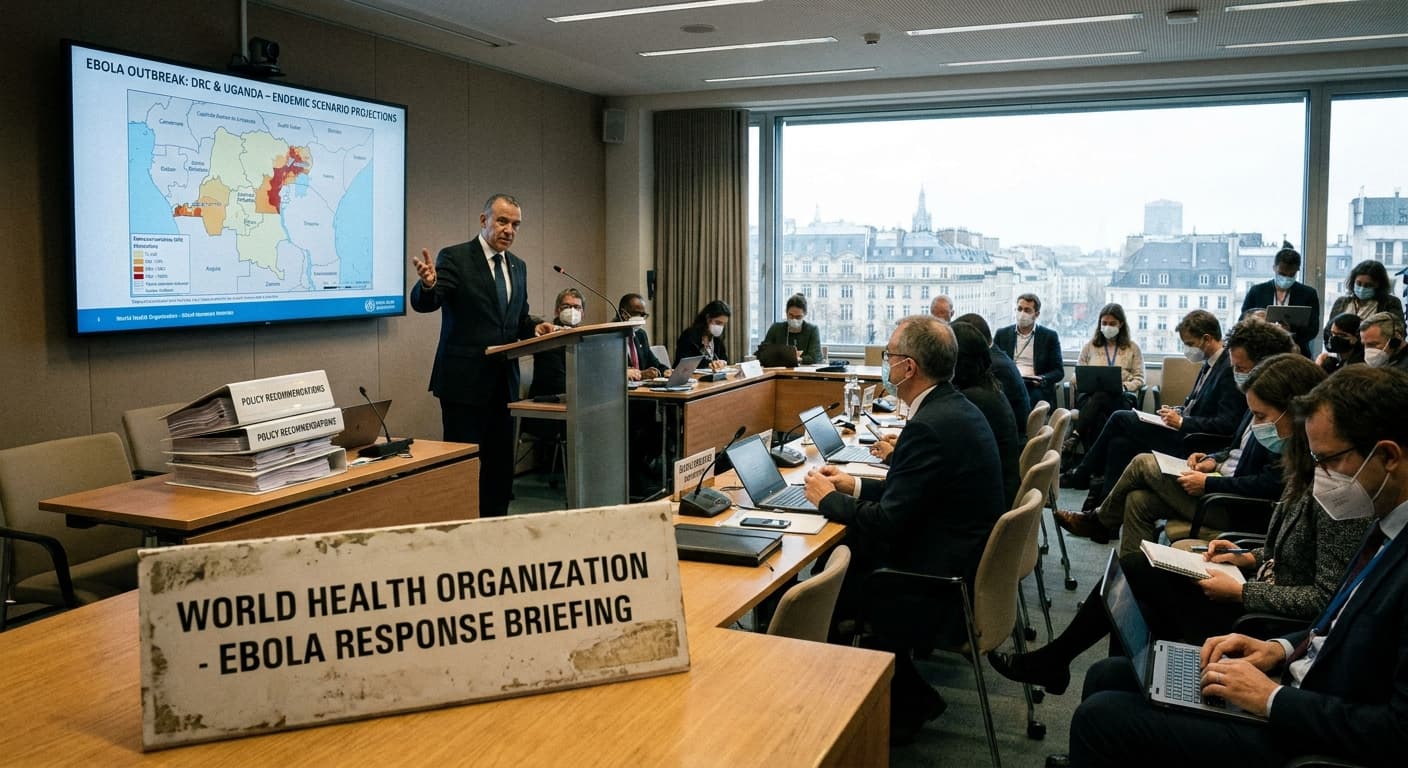
Opinion: What If This Ebola Outbreak Can't Be Stopped?

In an era when the idea of Ebola becoming an enduring presence in parts of Africa was once unthinkable, the current situation in countries such as the Democratic Republic of Congo and Uganda is forcing a critical reassessment. Could Ebola evade control and become a standing, unsolvable public health threat? This piece explores that sobering scenario, the stakes for local and global health authorities, and the lessons that must guide future response.
Introduction
Ebola has been a word synonymous with terror for decades—a disease marked not only by its high mortality rate but also by the devastating speed with which it can upend societies. For much of the world, the assurance has been that, with enough political will, comprehensive public health measures, and rapidly mobilized resources, Ebola outbreaks could and would be stopped. Yet recent developments have brought forward a critical question: What if that assumption no longer holds?
The ongoing crisis in the Democratic Republic of Congo (DRC) and neighboring Uganda is prompting experienced global health thinkers to pose an unsettling scenario—Ebola, once considered a disease that could always be contained, may now embark on a path toward endemism. In this in-depth analysis, we examine the stakes, the science, the policy questions, and the real-world implications if the world is unable to halt the current outbreak.
Historical Perspective: The Unthinkable Becomes Possible
In past years, the possibility of Ebola becoming endemic—circulating persistently in a region without full containment—was dismissed by many as unthinkable. Past outbreaks, while sometimes brutally lethal and disruptive, were ultimately halted with intensive international cooperation and concerted effort.
However, several evolving factors have contributed to a shifting reality:
- The virus's ability to persist in certain animal and human reservoirs,
- Increased frequency of outbreaks,
- Waning global attention during non-crisis periods,
- Structural health system deficits in affected regions,
- Growing challenges of political instability and conflict-related inaccessibility.
Leaders and experts—including Ivan Buendia Gayton and Eric D. Perakslis, as referenced by STAT—now argue that the current situation is markedly different from what has come before.
The Anatomy of an Outbreak That Escapes Control
When considering how an Ebola outbreak might evade all current containment measures, several interactive dynamics must be considered:
1. Reservoirs and Ecological Niches
In many regions of Central and West Africa, Ebola virus is believed to be harbored in wildlife, particularly fruit bats, with sporadic spillover into human populations. This ecological fact means that outbreaks can emerge with little warning and may resurface even after months or years of quiescence. Eradication is, therefore, unlikely; the best hope is usually prompt containment once cases are identified.
2. Health System Fatigue
With successive outbreaks, local and international health systems become stretched thin. PPE shortages, staff burnout, and a persistent lack of stable funding erode the effectiveness of response operations over time. When health services and supply chains break down, trust among local communities also suffers, further complicating public health measures.
3. Political and Security Barriers
Civil unrest, community resistance, and active conflict zones make certain regions difficult or dangerous for health workers to access. Security crises often result in suspension of vaccination campaigns, disruptions in surveillance, and breakdowns in case notification. In such an environment, the virus can circulate undetected or respond poorly to conventional control efforts.
4. Evolving Virus and Vaccine Challenges
Although effective vaccines and therapeutics have been developed in recent years, rollout is inconsistent and dependent on both financial support and infrastructure. Viral mutations could potentially complicate the efficacy of medical countermeasures, though to date, the focus remains on application and scale rather than viral escape.
Social, Economic, and Global Health Implications
If Ebola were to become endemic in parts of central Africa, the implications would reverberate far beyond the immediate region. These include:
- Chronic public health crises, with overburdened hospitals and persistent mortality from a disease that once demanded international emergency declarations,
- Downward pressure on economic prospects and foreign investment,
- Ongoing disruptions to schooling, commerce, and day-to-day life as communities struggle with waves of fear and recurring restrictions,
- Elevated risks for neighboring countries and, in an era of global travel, sporadic exportation of cases to higher-resource settings,
- A likely drop in international financial assistance as donor fatigue sets in, even as the underlying need remains acute.
Policy and Strategic Questions
What can national and global health authorities do in the face of such a scenario? Acknowledging the prospect of endemic Ebola may prompt actions that differ from traditional outbreak response. Among the issues now squarely on the table are:
- Permanent integration of Ebola management capacity into all levels of health systems, rather than surge-only interventions,
- Investment in community engagement and trust-building beyond short-lived campaigns,
- Institutionalization of regional rapid response teams, stockpiles of antivirals and vaccines, and robust surveillance networks,
- Innovative financing mechanisms designed to outlast the typical cycle of panic and neglect,
- Candid communication with local populations about risk, prevention, and realistic timelines for control.
Scientific and Clinical Implications
Ongoing research into viral persistence (including in survivors, who may harbor the virus for months in certain body fluids) highlights the scientific complexity of “elimination.” The question is not only how to stop immediate person-to-person transmission, but how to manage the long tail of Ebola’s presence in the population. This may require new diagnostics, survivor care, and stigma reduction strategies.
Rethinking Global Health Security
A persistent, endemic Ebola threat would demand that global health security frameworks transform from short-lived bursts of mobilization to long-term resilience. It would necessitate:
- Alignment of outbreak policies with sustainable development goals,
- Training and retention of local health workforce as a first line of defense,
- Inclusion of Ebola preparedness in broader pandemic risk-reduction plans.
Conclusion: Toward a New Paradigm
The possibility that this Ebola outbreak “can’t be stopped”—at least not with the existing toolkit—is a wake-up call to the international health community. Strategic, structural, and scientific adaptation will be necessary to meet this evolving threat. Whether the world can pivot quickly enough remains an urgent, open question that will help define the next decade of global health.
Source: STAT News – Opinion: What if this Ebola outbreak can’t be stopped?
Join the BioIntel newsletter
Get curated biotech intelligence across AI, industry, innovation, investment, medtech, and policy delivered to your inbox.