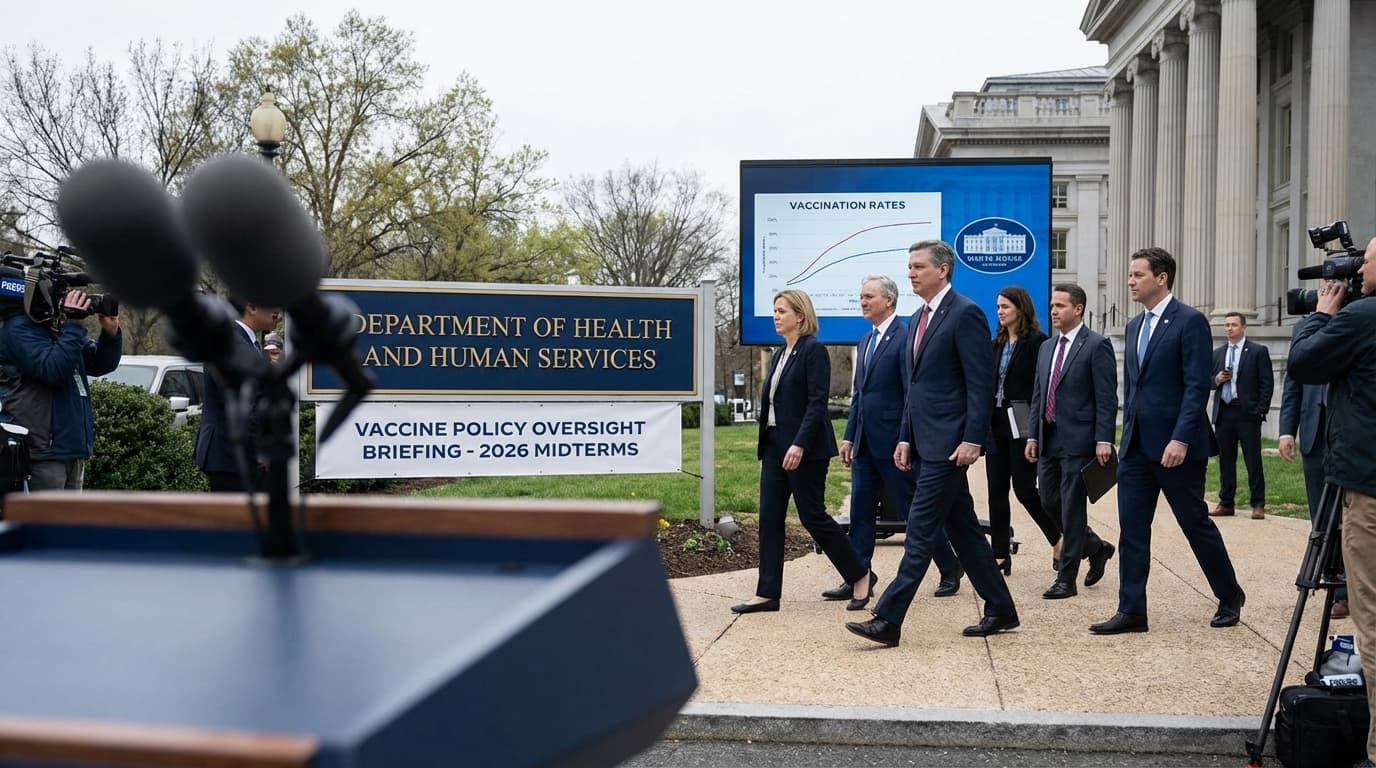
White House Tightens Oversight on RFK Jr.’s Vaccine Policies Amid Midterm Political Pressures

Robert F. Kennedy Jr., serving as Health Secretary, has generated significant controversy with his antivaccine stance and related policy decisions. As the political landscape heats up ahead of the midterms, the federal government seeks to counter and regulate these policies, raising questions about public health strategy and government cohesion.
The political and public health arenas are increasingly intersecting as the U.S. approaches the 2026 midterm elections. A notable development in this dynamic is the escalating conflict involving Health Secretary Robert F. Kennedy Jr. and the White House concerning vaccine policies that have sparked widespread debate.
Robert F. Kennedy Jr., known for his activism and vocal antivaccine rhetoric, holds an influential government position that directly impacts vaccination strategies and approvals. His policies have drawn criticism from various government officials who view his approach as counterproductive to public health goals, particularly in curbing vaccine-preventable diseases.
The White House response has been to crack down on Kennedy's policies in an effort to restore confidence in the national vaccine agenda. This crackdown includes tightening regulatory oversight, enhancing communication campaigns promoting vaccine science, and coordinating with health agencies to counter misinformation.
However, this pushback faces resistance, notably from the MAHA, an organization aligned with Kennedy's perspective. MAHA's resistance underscores the challenges of balancing public health priorities with differing ideological views within government and stakeholder groups.
In addition to vaccine policies, Kennedy's tenure has involved other controversial FDA decisions, such as the approval of abortion pills, which have further complicated the administration's internal consensus and external public reception.
The timing of these developments is critical, as midterm elections often serve as a referendum on incumbent leadership and policy directions. The White House's efforts to clamp down on Kennedy's policies may be seen as a strategic move to mitigate political risks and present a unified stance on public health ahead of the elections.
From a regulatory and policy standpoint, the situation exemplifies the complex interplay between science, politics, and public opinion. It raises essential questions about how health policies are formulated, communicated, and enforced in a polarized environment.
Moreover, the controversy highlights the broader challenge of combating vaccine hesitancy and misinformation, which remain significant barriers to achieving public health milestones. Effective governance in this realm requires navigating political pressures while upholding scientific integrity and public trust.
In summary, the conflict between the White House and Robert F. Kennedy Jr. over vaccine policies represents a microcosm of the current challenges facing U.S. health policy. How this fracas unfolds leading into the midterms may have lasting implications for vaccine programs and public health governance.
Source: As Midterms Loom, White House Cracks Down on RFK Jr.’s Vaccine Policies—but MAHA Resists
Join the BioIntel newsletter
Get curated biotech intelligence across AI, industry, innovation, investment, medtech, and policy delivered to your inbox.